
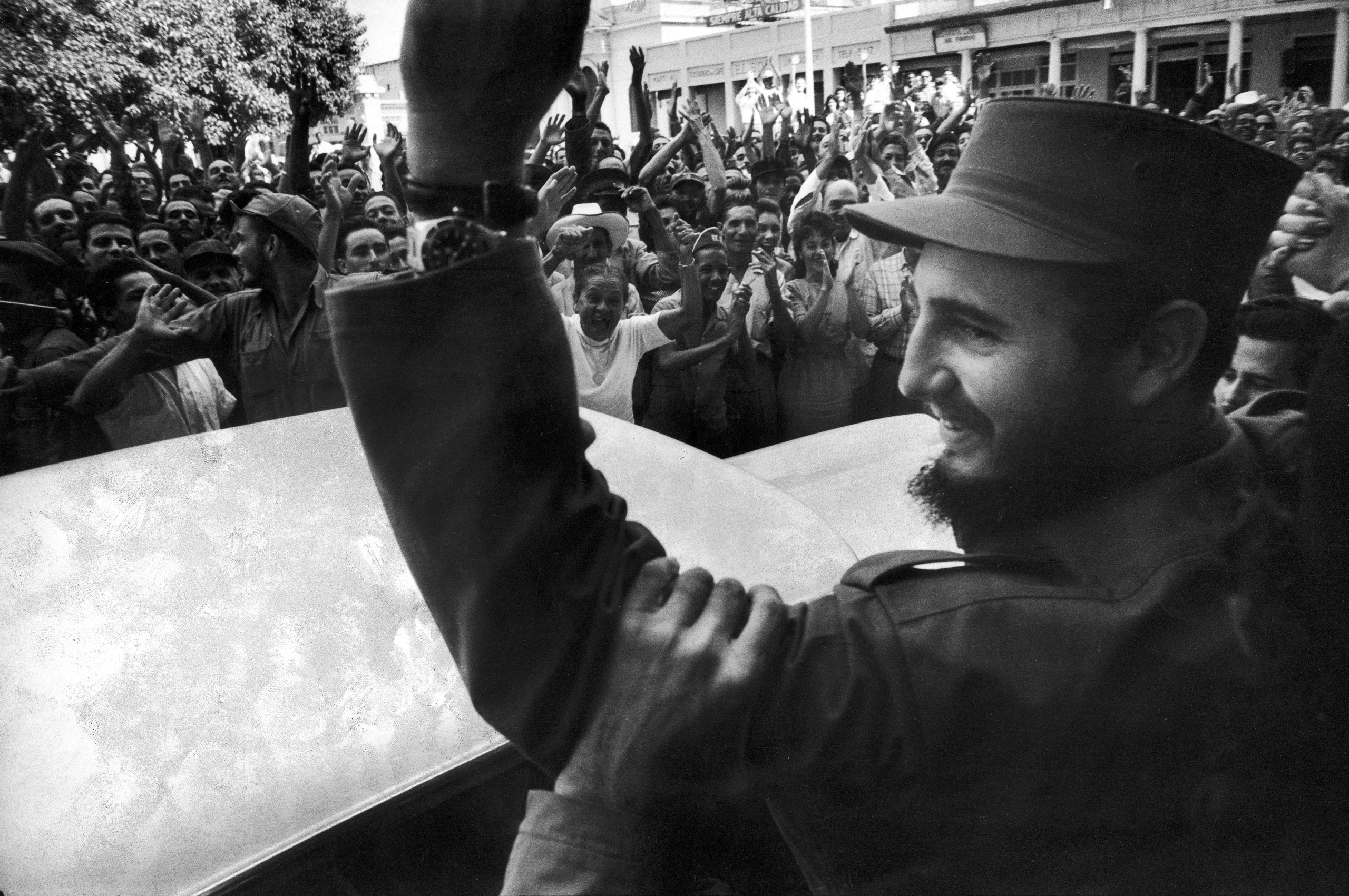
We are publishing the mission statement for the Saturday Free School’s celebration of the 100th birth anniversary of Fidel Castro, organized in Philadelphia on November 14, 2026 at Mother Bethel AME Church. You can register for the event here.
Our Moral Inheritance
The year 2026 marks the 100th anniversary of the birth of Comandante Fidel Alejandro Castro Ruz (August 13, 1926 – November 25, 2016). Fidel is a man of the future, representing the heroic struggle of the people of Cuba, and the revolutionary possibilities of all of humanity. He exemplifies that the power of an idea is not in the number of people defending it, but in the force of the truth, and that there is nothing more powerful than an idea whose time has come. His love for the people must be known. The struggle for freedom in this country, led by Dr. Martin Luther King Jr., was violently cut short, leaving our nation unable to complete its moral revolution and the triple evils of white supremacy, poverty, and war to evolve and fester. We look to Cuba as a revolution of values still valiantly marching on. Cuba serves as a mirror to the American people, reflecting the task before us and a human future worth fighting for.
The Origins of the Cuban People
Cuba and the United States share a common origin and common future as twin experiments in democracy and colored modernity. As a slave holding colony of Spain, Cuba always had to contend with the color line. Revolutionary patriots fighting for independence, black and white, such as Antonio Maceo and Jose Martí, opposed slavery not just to weaken the power structure they sought to overturn, but to uplift the moral basis of human brotherhood. They were not committed to a white identity and aspired to create a new people out of an anti-slavery and anti-colonial struggle and out of the oneness of Latin America. Fidel claimed that inheritance and sought to build civilization out of the natural expression of the best of all of Cuba’s people — African, European, and Indigenous — and to remake them into a new people through struggle. Yet Fidel was able to take this even further, conceiving of Cuba as defined by their bond to the world. The Cuban people were a people of the world and for the world.
The Cuban Revolution: A Triumph of the Human Spirit
Fidel recognized the divinity of man and committed himself to the transformation of human beings. He reorganized productive relationships, including the redistribution of land and expropriation of industry, to address the economic needs of the people. Yet more profoundly, he reorganized social relationships on a more human order and on the basis of love and brotherhood. The Cuban literacy campaign mobilized over 250,000 volunteers, many of whom were children, to scour every corner of the island to teach over one million people how to read. They lived and worked with the families they taught. The Cuban people became makers, creators, and thinkers who could govern society and guide the future to meet human needs. Most importantly, every person was made capable of being an agent of revolutionary change.
The Cuban people achieved dignity through service to others. First, by developing their own country and then through sacrificing for the world’s people. They chose to spend 16 years in Africa fighting white supremacy as a world system. There were more volunteers willing to serve in Africa than Cuba could send. Cuba sent not only combatants, but also doctors, engineers, teachers, and agriculturists to develop the continent. Those who could not go to Africa still chose to sacrifice. The entire island of Cuba mobilized to support the effort. Fidel said, “We staked everything in Angola.” Cuba ultimately defeated the South African apartheid army, taking “nothing home except the bones of our fallen comrades.” Cuba produces what Dr. King called “a dangerous unselfishness”, a people who are not able to live with injustice wherever it occurs.
Civilizational Ruptures of the 20th Century
European civilization sought to subjugate the whole world under its rule. It enslaved, colonized and plundered the darker peoples, then dragged the world into war over its colonies. It was a violent aberration in human history, interrupting the organic strivings of people for peaceful exchange and common development. After World War II, the shirtless and barefoot people rose up and achieved political independence. At the Bandung Conference in 1955, the newly independent Asian and African nations asserted their right to struggle for their sovereignty, to have a say in the moral remarking of the world, and to be a part in building the future. As Chairman of the Non-Aligned Movement, Fidel represented the aspirations of darker humanity for a just economic order, the cooperation of nations, and the remaking of themselves through their own civilizational paths. United with great leaders such as Indira Gandhi and Yasser Arafat, Fidel challenged the West with a program for positive peace, which is not the absence of tension but the presence of justice, and standing against all forms of war, imperialism, and racism, including Zionism. In this irreversibly globalized world, Fidel, like Martin Luther King Jr., recognized that “the world is wrapped under a single garment of destiny.” He clarified our current interdependence and responsibility to one another — that what affects one of us directly affects all of indirectly. Cuba understood that no people can solve its own problems separate from the world’s, and no one can truly be free while others remain in chains. Fidel put forward a vision of a world democracy, based on the rights of humanity, in which the people are a decisive moral and political force.
The Soviet Union collapsed in 1991, ending Soviet-Cuban economic cooperation and the World Communist Movement. The United States emerged unrivaled in their ability to impose their will politically, economically, militarily, and culturally. Cuba faced extended food and fuel shortages that threatened the material survival of their people. The end of the World Communist Movement ushered in an era of counterrevolution. Countless revolutionary governments, organizations, and leaders were unable to defend themselves against U.S. hegemony. Francis Fukuyama declared that we had reached “The End of History and the Last Man.” Cuba was singular in defending its revolution. The Cuban people’s consciousness and democratic commitment to struggle allowed them to march forward.
Cuba and Afro-America: A Futuristic Relationship Forged in Fire
During the special period in Cuba’s history, Cuba was not alone. In the midst of the U.S. empire, the African American people faced the attacks of deindustrialization, mass incarceration, and the assassination of their revolutionary leaders. Yet, they continued their embrace of Fidel as a leader of the Cuban people and representative of their revolutionary aspirations. When Fidel visited Harlem in October 1995 at the height of the special period, Reverend Calvin Butts opened Abyssinian Baptist Church to him. Rev. Butts said it was the church’s tradition to “welcome all who are visionaries, revolutionaries, and who seek the liberation of all people”. More than a thousand people packed the sanctuary. Minister Louis Farrakhan of the Nation of Islam, who had met and conversed with Fidel many times, including during the revolutionary organization’s World Friendship Tours, would say, “I firmly believe that Allah (God) has chosen you and the Cuban people to begin this process of servicing human needs, thus setting the stage for all people of goodwill to emulate this mode of service to others.” Cuba and Afro-America are united not just by their common experience of injustice and oppression under white supremacy and imperialism, but by their shared moral and revolutionary strivings for freedom.
From the Age of Empire to the Age of Humanity
America, in its 250th year, is facing a civilizational crisis. The Western world order is collapsing. The people do not believe in its economic and political systems and just as importantly, are rejecting its immoral values of war and white supremacy. The youth are seeking revolutionary alternatives of life and governance. As the U.S. plunges deeper into crisis with no resolution in sight, this government has intensified attacks on Cuba like never before. They wage economic and ideological warfare against Cuba, seeking to bring ruin to its society and a collapse of the state. They are inflicting collective punishment on the Cuban people and threaten genocide. The island does not pose an economic or military threat to the U.S. However, it is an existential threat because it is a living, civilizational alternative incompatible with the values of individualism, greed, racial superiority, economic exploitation, and violence.
As such, we declare that Commandante Fidel Alejandro Castro Ruz, like Martin Luther King, Jr. is a revolutionary who guides our imagination out of the current Western civilizational crisis and into the future. Fidel and King correctly identified the untapped potential of humanity waiting to be unleashed in the 21st century. They asserted that humanity is capable of love, nonviolent struggle, and peace. Human beings are conscious of themselves and of the world like never before. In this emerging epoch, it is not technological progress, advanced weaponry, or economic development alone that will make history. It is human beings with the moral courage to confront injustice and the scientific imagination to chart a path towards a future worthy of the children.
Ultimately Fidel and King leave us with the question of questions: How can the broadest number of people participate in deciding the future? It is in this spirit that we strive to celebrate the centenary of Comandante Fidel Alejandro Castro Ruz and to renew our friendship with the Cuban people. We invite all peace-loving people to join us, so that we may glimpse into the future and let freedom ring.
Leave a Reply