

What I have experienced in my life is a part of the broad problems that people of my ancestry face. These experiences connect me to the struggle for our times—the struggle to fulfill the Black Freedom Struggle of America and join the Afro-Asiatic Reconfiguration of the World. These are universal concepts that have a specific expression for our lives and history; they are a natural expression of our culture and values, liberating us with the rest of humanity. This is where we belong, but this is not how I always thought.
I resented this country growing up. I was mad that my mom could only work physically demanding jobs with no benefits. She kept getting fired from good jobs because they checked E-Verify to ensure she had a green card. I still feel for my cousins that go through the same thing because my tíos brought them here from Mexico when they were babies. I thought about my tío getting deported. He got pulled over for not using his turn signal; officers started asking questions because he was driving without a license that the government would not issue to him. Ultimately he was sent to Mexico and separated from his wife and children. What did my cousins do to deserve not having their father? Why are we treated as criminals just for existing? My family never allowed themselves to feel fear, so I felt I could be brave, but I was still angry. I didn’t yet have a sense of what this country really was, but I didn’t feel that I was wanted here or that I was a part of it. The good I aspired to was to allow more of my family to benefit from what currently existed in the society we happened to be in.
With this ill-defined goal and a general desire to know, I decided to go to college. In the end I didn’t feel like a person anymore. My education involved a quantity of work that kept me so sleep-deprived that I didn’t have time to ask any questions of purpose. A passing grade was always hanging on the thread of not turning in the next assignment. My once lofty goals of helping my family turned into a complacent hope for relief. I had been told that if I worked hard, I could get into a position of strength to better my people’s condition. My education did not discuss much about what that condition was, or why they had problems in the first place. But bad things were happening to my people, and the farther you climbed up in society, the farther up you could supposedly bring people with you. Yet it was clear that by following this path available to me, the most I would achieve was simply advancing myself. This life was ugly. Navigating this world meant being selfish and insincere. I got the best this country supposedly had to offer and I didn’t want it.


Left: Huey P. Newton surrounded by youth of East Oakland community, August 1970.
Right: Reies Lopez Tijerina speaking at a “Free Huey” rally in DeFremery Park, 1968.
Reading Huey P. Newton’s autobiography helped me reorient my life. Not only did I feel alive again, I felt alive like I had never lived before. There’s no way he could have predicted my exact circumstance, and yet I read the words on those pages as if he had written them to me. Huey and the Black Panthers initially drew me in because they wanted to do good and projected strength through physical force. Their self-defense program of openly carrying guns to defend their communities against police brutality spoke to me because of their bravery and willingness to take action. Only after reading Huey did I realize that the gun was the least significant thing about his life and the Panthers. He was a serious thinker and revolutionary because he engaged in the struggle of ideas.
Huey refused to let his spirit get crushed despite facing solitary confinement in prison and he did not stop asking questions. I needed this example at that time when my spirit was low and I was questioning the purpose of my life. He graduated high school unable to read, and yet decided to provide himself the education he was denied. He had seriously studied what was afflicting the people he knew in his life, and he was filled with love for people. By reading he found he was progressively able to explain his life and history thus far. With that he was better able to envision the future that he and the next generation deserved. He was able to put ideas into practice to uncover the tools that he would use to create this new reality. He did not have all the answers. But he marched onwards, searching in the uncertainty—illuminating truths I desperately needed. Like Huey, I did not have to live life on the terms that were set by the present powers that be. He started off as one young man with conviction, who then offered his life in service to others. By working tirelessly and sincerely, he was able to earn enough trust to build a united front to overcome oppression. A fire had been lit in my mind. Because of Huey I was able to envision a life of struggle, and began searching for the truth.
W.E.B. Du Bois’s The World and Africa explained the modern world to me, and provided me with a foundation to think about Mexico and Latin America. The foundation of our current world, based on war, economic exploitation, and racism, is the transatlantic slave trade. Europe built itself off of enslaving an entire continent, and the United States brought slaves to its land to do the work a small group of people would benefit from. Despite the elimination of slavery, prosperity today illogically demands exploitation of the many to enrich the few. In order to justify this, it was necessary to create a “white” identity, a “superior” people whose “natural” place is the beneficiary and steward of an “inferior people” who would supposedly fare worse if left on their own. This lie still scars the souls of young people and mitigates our social relations.
This global system explains my family’s immigration to this country, and existence in it. We aren’t less capable as a people, but Latin America like the rest of the “Third World” was designated as a place for resource and labor exploitation with no permissible path for economic development. We obviously aren’t lazy, but like the original slave, we must be kept at the bottom of this society so that others may become horribly wealthy. Letting a few people come to the United States, and even letting a few token minorities get ahead wasn’t going to change this fact.
Du Bois’s The Souls of Black Folk helped me understand that there was a knowledge of the self I deserved to know after emerging from this world system. He wrote this book after the defeat of Reconstruction, where Black people had just fought to overcome enslavement, were being plummeted into conditions not too different from slavery while being told they were less than human, and were still striving for a way forward. He saw that it was necessary for Black people to know who they were, what had happened to them, and what they were going to make of that terrible experience. Du Bois gave Black people a history they can be proud of. So they could know they have values, social relations, art, and culture that were superior to what produced world-wide exploitation, that could serve as a foundation for the full human beings the world needed them to be. I learned that the slave was everything that was African, and yet a new people emerged out of the new world they were struggling in. A people that sought education, economic opportunity, and political power all in conjunction for mutual elevation and true freedom. I needed this example because like the freedmen my people had been subjugated, lied to about who we are, and were in need of a way out. I was shown that all that was beautiful about yourself emerged from struggle. If you looked within yourself and studied the plight of your people, you could conceive a path to freedom that addressed your historic experience.
Before Du Bois, I didn’t even know there was a process my people emerged out of, so I knew even less how to look at myself in relation to the world. If I let myself, this low position held by our people within society could lead me to associate my people and culture with inferiority. It could encourage me to try to behave like the people with money and status. To try to be like white people, and have the white man’s approval. I feel fortunate to have my family. I didn’t feel this way as a kid because I was too young to think about my family’s income level. By the time I was older, I internalized the love I felt from them. I had so much respect for them because of the way they treated all people. This is who I wanted to be like and who I wanted to be around.
I didn’t want to be white, but I didn’t know how to be otherwise. When I wasn’t kept completely ignorant, the history and culture that I was being taught were filled with partial truths meant to make the present order of things acceptable. I could wear camisas charras, or guayaberas, eat beans and tacos plenty, listen to Corridos, Cumbias, and Duranguense. I could try to even think like my parents, with their creative positivity that can find humor in any difficult situation. There’s nothing wrong with any of this, but just this is not enough in America. I can do that and still live a decadent life for myself. Even worse, I could be Mexican by these standards and do harm to my people through the cholo or narco-traficante culture I was taught to be proud of. This conception limits my imagination of who I can be, where I only think about what currently exists, striving to be at the top of this misery and exploitation instead of seeking to create a new world. By living at the expense of others, I could assume the form of being Mexican but the substance of being white. The best of our customs came out of struggle. At the most basic level it was a struggle against poverty, to have enough to eat and a safe place to sleep. At the highest level it was an organized political struggle to remake society.
This anchoring in Du Bois helped me make sense of the historical identities that were offered to me. I was taught that I am a “mestizo,” supposedly the synthesis between the indigenous tribes of Mexico and the European colonizers. However, any serious discussion of this history only begins after the arrival of the Spanish who nearly wiped my people from existence. Black people also had a mixing of blood with European descendants, but with a one drop rule they were never allowed to be anything other than Black. For the oppressor this meant inferiority, but for the freedmen this was a position of struggle. They didn’t want to be what the oppressor told them, and didn’t want to be their oppressor either. This principle of inferiority was still operating upon the mestizo. Without any strict racial requirements, we could become closer to whiteness through renouncing our way of life and reidentifying with the “superior” West. Even if there was reference to something positive before the Spanish arrived, this was only meant to be a glorious past—not to get in the way of the aspiration to reach the American/European modernity we supposedly lack. Ultimately this identity meant learning to hate myself.
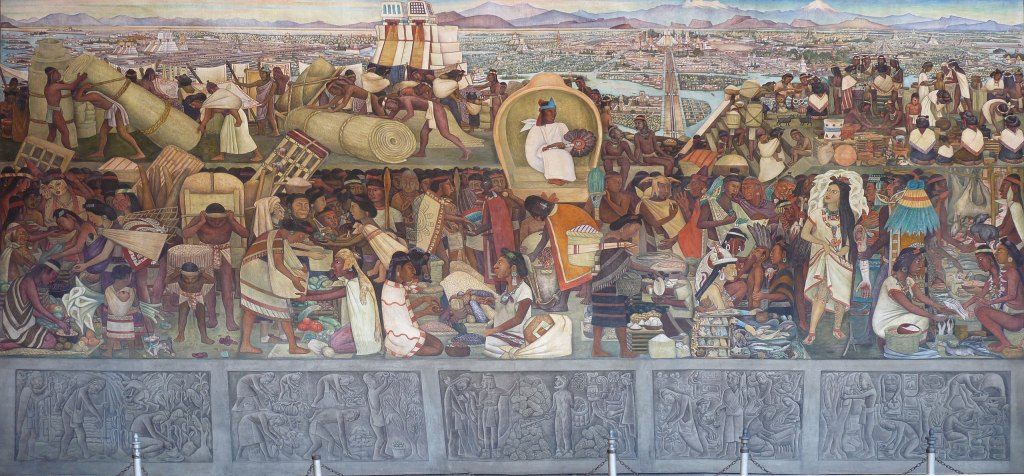
I felt elevated when I saw myself as indigenous. It meant I came from an ancient people with a high spiritual orientation, advanced science, and boundless human willpower. I was proud we produced cities like Tenochtitlan, with magnificent pyramids humans built stone by stone, which somehow precisely aligned with the movement of the heavens. I was inspired to live morally like my ancestors, who had communal land because the earth belongs to all of us—everyone deserves to work, and everyone deserves to eat. Being indigenous meant resistance against subjugation, an insistence on having self-respect, and being your true self. Yet I did not feel this idea in its current form was enough for this moment. The extreme version of indigeneity wishes for us to return to an idyllic glorious past untainted by sin. The world which produced that past does not exist; our ideas must deal with the present reality. I knew there were indigenous groups, like the Mexica, Mayas, or Tlaxcaltecas (who sided with the Spanish) but then and now there was lacking a sense of unity that would allow us to see ourselves as one people, boundless in variety, but fundamentally interconnected. Similar to the freedmen, I wanted to know what our common future was.


Left: Reies Lopez Tijerina with Martin Luther King Jr. in Atlanta, planning for the March on Washington, March 14, 1968.
Right: King marches from Selma to Montgomery, Alabama, March 21, 1965.
The ideas of Martin Luther King Jr. were able to answer this question and many more I didn’t realize I needed answers to. From him I learned that, “We are tied together in a single garment of destiny, caught in an inescapable network of mutuality. And whatever affects one directly affects all indirectly. For some strange reason I can never be what I ought to be until you are what you ought to be.” This addressed the condition of my family, Mexicans, and Latinos in general. Oppressing one people can strengthen the oppressor so they may do damage to others. The U.S. propping up drug cartels to control Mexico wreaks havoc on the country. This also brings drugs into the U.S., quelling rebellion and destroying people’s lives. Moreover someone else’s material and spiritual poverty diminishes you, the way seeing your friend down makes you sad, or even seeing a homeless person suffering on the street is painful. The flourishing of another people in their culture enlarges you, bearing fruit for all people to benefit from. This helped me to understand the universality of the Black Struggle for Freedom. It is not narrow in its conception, where you fight only for African Americans, or that only African American people can be a part of it. Yet it does originate from the perspective of an enslaved African people, striving for freedom. This is not the freedom of the individual, while his group is in shambles; nor is it the freedom of one particular group, while another group is further buried into the ground. It is an all-encompassing freedom for all of God’s people.
This did not suggest that I should engage in a transactional exchange of support with other groups on separate issues. Rather, it clarified that the underlying basis for all of the wrong in the world can and must be overcome together. King called for a radical revolution of values in the transformation of society. The two are inseparable. It’s worth changing structures, like laws and institutions, but it’s even more necessary to change people. If you produce a people who refuse to fight wars, who are unwilling to economically exploit or be exploited, and who can only see other human beings as brothers regardless of race, we would live in a different world. Through struggle, the heart can be expanded and the mind can be elevated. It’s possible to work through divisions and attain unity. We can become one people.
I want to be a part of building a new world worthy of the next generation. I believe this can only be done by engaging in a universal struggle for freedom that produces new human beings. I have found all of this in the Black Struggle for Freedom. It is on this basis that I can feel a part of this country, that I can feel American.
Without losing my conviction, I was not certain what this would mean for me as a Mexican. Through exposure to the ideas of the Nation of Islam, embodied by a Mexican member named Student Minister Abel Muhammad, I reached higher clarity on how I could be a part of the Black Freedom Struggle. I learned that I come from the Original People of this earth. That we are the creators of civilization. That we are endowed with an indispensable moral and spiritual foundation, making us the rightful inheritors of the earth. Facing specific problems that arise out of our particular circumstance, we developed novel solutions to general human life. These problems and innovations arise out of human existence, so our unique contribution to the human constellation connects us with all other peoples. What exists in our civilizations belongs to the world, and what other civilizations have produced is a part of us. Their struggles are for us. We can make their advances our own. We are truly one people and we belong together.
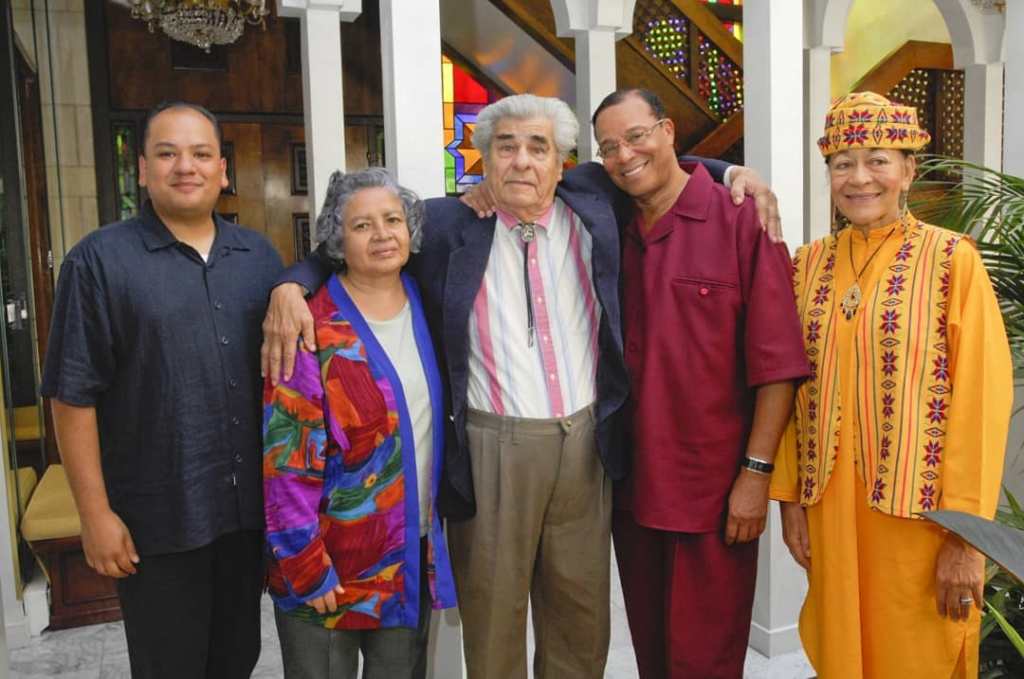
I saw this exemplified by Minister Abel. From him I saw the lived example that I could be Mexican by embracing the Black Struggle for Freedom. I didn’t need to cast off a part of myself. I didn’t need to try to be someone else—that’s impossible. Instead, I can add onto who I already am. In being a part of this American experience, I can be more Mexican. I cannot be Mexican in this country the same way my family is Mexican in Mexico. Even my immigrant parents cannot. We do not live an agrarian life in a village. Society is structured differently here. My Original culture has high values. However, values are lived, not only believed. Living these values in the Black Struggle for Freedom is a higher expression of myself and my culture. This idea of a human universality does not diminish who I am, it expands who I am.
The Black Struggle for Freedom connects me to the rest of the world, even to my ancestral home, Mexico, because it helps me see myself as part of the world revolutionary process of this moment. A world upheld by exploitation, with the West as its beneficiary, will not hold any longer. The world’s people are conscious like never before and are not accepting this injustice. With international agreements like BRICS+ and the Belt and Road Initiative, countries all across the globe are moving towards mutual development and prosperity. The people of the world are rooting themselves in their civilizations, finding a natural way of relating to one another as befitting an Original People. The clearest vision for change, which is also the most advanced in its concrete implementation, comes from Afro-America, Africa, and Asia. To make reference to that, we can say the world is undergoing an Afro-Asiatic Reconfiguration, but all of the world’s people are undergoing these changes. Mexico is going through “La Cuarta Transformación,” or the Fourth Transformation. This is a transformation of the state, undoing the privatizations that decimated the Mexican standard of living. Most importantly, this a “revolución de las conciencias”; a blossoming of the Mexican people who are learning their own history, and learning how to govern so they may never be exploited again. New human beings are emerging everywhere in this new epoch for humanity. Latin Americans can proudly link arms with all of our brothers and sisters as we march towards the future.

 Avant-Garde: A Journal of Peace, Democracy, and Science
Leave a reply to Raju Cancel reply