| October 31, 1945. Anthony Monteiro is born at Temple University Hospital in North Philadelphia. He is the firstborn son of Almena Monteiro, a Black woman whose family came from Greenwood, South Carolina, and John Barris Monteiro, an African immigrant from Cape Verde. | |
| 1952-63. He attends school in Philadelphia at Stevens Elementary, Wagner Junior High, and Central High School. | |
| 1963-67. He attends Lincoln University and majors in Philosophy and Political Science under the direction of Charles Hamilton, specializing in Immanuel Kant. He encounters students arriving from the Southern Civil Rights Movement as well as international African students who expose him to Pan-Africanism and the anti-colonial struggle. He is elected student body president. | |
| 1967-69. He begins graduate school at the University of Chicago. In 1967 he is arrested on fabricated charges connected to the Revolutionary Action Movement (RAM) and released on bail. In Chicago he meets Robert Rhodes, a Marxist-Leninist who introduces him to the Soviet Social Science Academy. He starts a study group with Fred Hampton, deputy chairman of the Illinois chapter of the Black Panther Party, and others to study Das Kapital and Soviet literature. | |
| 1969. He returns to Philadelphia, where his legal battle drags on, making it difficult to find work. He organizes study groups on Marxist theory in Harrisburg, PA as well as Philadelphia. | |
| 1969. Henry Winston, Chairman of the Communist Party USA, calls for a conversation with young Black people close to the party. Monteiro goes to Chicago and meets Winston, nicknamed “Winnie,” for the first time. | |
| 1970. He attends the founding convention of the Young Workers Liberation League in Chicago. He joins the Communist Party, helping to organize the youth movement to free Angela Davis. He makes his first trip to the Soviet Union, heading a delegation to the Congress of the Komsomol, the Young Communist League of the USSR. He then travels to North Vietnam. Returning to the U.S., he gets a job teaching at Antioch University, where he teaches Marxist philosophy. | |
| 1972. He runs for U.S. Congress in the Third Congressional District in Philadelphia as the CPUSA candidate. He is fired from Antioch because of his political campaign. | |
| 1973. In October, he participates in the founding conference for NAIMSAL (National Anti-Imperialist Movement in Solidarity with African Liberation). He starts working on the city’s waterfront. He assumes leadership of NAIMSAL at the request of Winston. | |
| 1974-75. He helps lead a campaign to expel apartheid South Africa from the United Nations, collecting 100,000 signatures for a petition he presents to the UN headquarters in December 1975. There he meets E.S. Reddy, Secretary of the UN’s special committee against apartheid, and Madame Jeanne Martin Cissé of Guinea, the committee’s Chair. He attends the Sixth Pan-African Congress in Dar es Salaam, Tanzania. | |
| 1975. He goes to Havana, Cuba as the executive secretary of NAIMSAL for an international conference on Puerto Rico, jointly organized by the Cuban government, World Peace Council, Puerto Rican Socialist Party, Afro-Asian and Latin American solidarity groups, and other organizations. He meets Romesh Chandra, leader of the World Peace Council. | |
| 1976. He attends a meeting of the Afro-Asian Solidarity Committee in Luanda, Angola, followed by a seminar on Angola’s independence struggle in Cuba. | |
| 1977. At the invitation of the new Ethiopian government, he travels to Ethiopia along with Somalia. He helps organize an international conference for solidarity with the Ethiopian revolution in Addis Ababa. | |
| 1978-1982. He visits Afghanistan after the Saur revolution, amid the internal political crisis of the People’s Democratic Party of Afghanistan. He also visits Algeria to attend a World Peace Council conference upholding the struggle against neocolonialism. | |
| 1983-85. He begins graduate work at Temple University in sociology. After more than a decade with NAIMSAL and the CPUSA, he begins to consider the remaking of Marxism to address the question of neocolonialism. | |
| 1986. Henry Winston passes away on December 3, 1986. | |
| 1989. He attends the Ideological Conference of the Communist Party in New York City in the midst of the crisis set off by Mikhail Gorbachev in the Soviet Union. | |
| 1990. A group of factionalists precipitate a crisis within the Communist Party USA. He stands with Gus Hall in defending the original project of the Communist Party and the vision of Henry Winston. | |
| 1991. A group called the Committees of Correspondence, including Angela Davis and Herbert Aptheker, leave the CPUSA, declaring Marxism-Leninism to have failed and aligning with social democrats. Monteiro is on the central committee of the CPUSA, leading its commission on Black liberation. He writes a rebuttal to Joe Slovo, head of the Communist Party of South Africa, who had declared the failure of socialism and denigrated communists. | |
| 1995-99. After 25 years in the Communist Party, he leaves the Party in 1995 over its refusal to support the Million Man March. He earns his PhD from Temple University and begins his first academic job at the University of the Sciences, where he holds annual conferences on W.E.B. Du Bois attended by well-known Black scholars. | |
| 2003-14. He is invited to bring these Du Bois conferences to Temple University with the promise of tenure. This promise is not honored by the department of African American Studies, even while he teaches undergraduate and graduate courses on Du Bois as a full-time Associate Professor. In the early 2000s he begins to rethink Du Bois, Lenin, and other philosophical questions. He receives an honorary doctorate from Lincoln University in 2006. | |
| 2012. While still at Temple, he starts the Saturday Free School for Philosophy and Black Liberation as a project to bring students together with the Black community in North Philadelphia. In 2013 the Free School moves to the historic Church of the Advocate. | |
| 2014. Temple’s College of Liberal Arts terminates his contract. A broad movement to reinstate him arises, drawing support from the local community and nationwide from figures like Cornel West and Angela Davis. Meanwhile Molefi Asante, the new chair of African American Studies and a proponent of Afrocentrism, fuels the ouster of Dr. Monteiro. The Saturday Free School continues. | |
| 2016. Thousands attend the Black Radical Tradition Conference. Cornel West and Anthony Monteiro give the keynote presentation “The Moral Bankruptcy of Capitalism: The Black Radical Tradition as Socialist Alternative.” Angela Davis also speaks. | |
| 2017. The Saturday Free School celebrates its Fifth Anniversary. | |
| 2018. The Saturday Free School organizes the Year of W.E.B. Du Bois in its first year-long campaign devoted to ideological struggle and political education with the people. | |
| 2019. The Saturday Free School organizes the Year of Gandhi; James Lawson speaks at the inaugural event celebrating Gandhi’s 150th birth anniversary. | |
| 2022. The Saturday Free School celebrates its Tenth Anniversary. Dr. Monteiro proposes the vision of a Fourth American Revolution fulfilling the unfinished democratic tasks of the Civil Rights Movement, the Third American Revolution. | |
| 2024. The Saturday Free School organizes the Year of James Baldwin: God’s Revolutionary Voice, dedicated to the Immortal Palestinian Children of Gaza. |

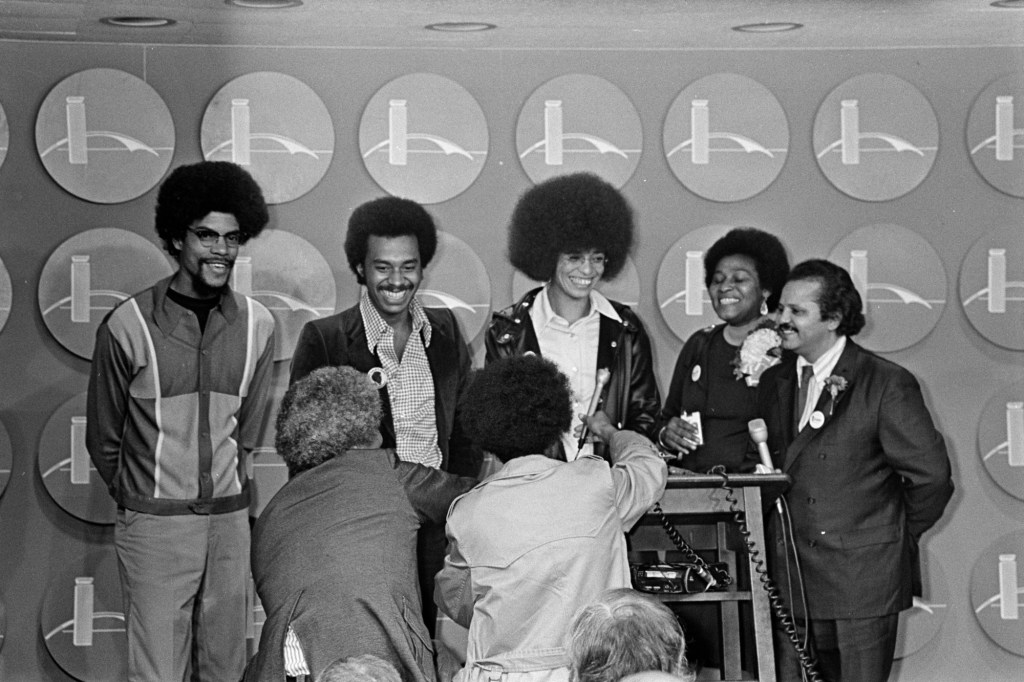
A Chronology of the Life of Anthony Monteiro
|
 Avant-Garde: A Journal of Peace, Democracy, and Science
Leave a comment