
“The deeper reason for the triumph of European civilization lie quite outside and beyond Europe,—back in the universal struggles of all mankind. Why then, is Europe great? Because of the foundations which the mighty past have furnished her to build upon: the iron trade of ancient black Africa, the religion and empire-building of yellow Asia, the art and science of the ‘dago’ Mediterranean shore east, south and west, as well as north. And where she has builded securely upon this great past and learned from it she has gone forward to greater and more splendid human triumph; but where she has ignored this past and forgotten and sneered at it, she has shown the cloven hoof of poor, crucified humanity,—she has played like other empires gone, the world fool.”
Darkwater: Voices From Within The Veil
W.E.B. Du Bois
“Out of black India, the world was born. Into the black womb of India the world shall creep to die. All that the world has done, India did, and that more marvelously, more magnificently.”
The Dark Princess: A Romance
W.E.B. Du Bois
W.E.B. Du Bois is a Black Swan. Black Swans are metaphorically and scientifically unexpected events which have huge and unusual consequences. Du Bois is that event in the intellectual and scientific history of modernity.
At the dawn of the 20th century, he began to see the world differently from almost all established philosophers and social scientists. In 1900 he declared the problem of the 20th century was the problem of the color line. He was insisting, in essence, that the problem of modernity was racial oppression and colonialism. He was also saying the crisis for modernity, democracy and social progress was the color line. He devoted his scientific and activist career to proving this and to scientifically showing the implications of this problem for the future and how to resolve it.
A New World Movement of Thought
His thinking in its most expansive sense constituted an epistemic and ideological break with the intellectual and scientific consensus concerning race and society. Looking at things from the vantage point of the 21st century Du Bois’s vision was the beginning of a new world movement of thought, which went beyond the West’s scientific, ideological and philosophical worldviews.
The history of modernity shifted, in the Du Boisian view, to the formerly enslaved and colonized peoples. Hence, the history of humanity going forward would be determined by the darker races. He saw the crisis of modernity increasingly in civilizational terms. The first 500 years of modernity concluded in a comprehensive crisis of Western Civilization and the beginning of the civilizational reconfiguration of the world in Afro-Asiatic terms. The Du Boisian regrounding of thought established a new way of seeing the 20th and now the 21st centuries.
The unprecedented crisis of Western Civilization is of such depth and magnitude that it makes Du Bois more relevant now than at the start of the 20th century. In essence, Du Bois is a prequel to the future.
European Modernity: A Stage of History
The rise of European modernity was a great occasion for humanity. Capitalism, a part of modernity, though historically necessary, was not. It came into the world dripping with the blood of the slave trade and the mud of exploitation. It did, however, emerge alongside modern science, philosophy and the liberal state.
Modern European philosophy, especially the German 18th and 19th centuries, and particularly Immanuel Kant, Georg Friedrich Wilhelm Hegel and Karl Marx, they are historically significant because they investigated the capacities of human beings to know the world and to remake it. They linked philosophy to science. Economic theories seeking to explain capitalism arose as well. Lastly, theories of revolutionary change discovered the European working class as the principal agent of revolutionary transformation. Socialism was declared the logical aim of the class struggle.
In significant ways Du Bois rethinks these European centered views of history and the locus of revolutionary change. He rethinks the history of modernity and the future. To do this he deployed a new science, sociology. It was sociology in his new scientific construal. Du Bois saw European modernity and capitalism as a necessary stage in the realization of human freedom, and ultimately an Afro-Asiatic reconfiguration of world human relationships.
Sociology and a New World Movement of Thought
Du Bois as he began his academic career said that he intended to make sociology a science as a way to answer the most pressing questions of the modern epoch. The historical and epistemological center of his sociology was dark humanity, which he also saw as the future of humanity. As he said, the darker races would remake the world, moving it from the Age of Europe to the Age of Humanity. He insisted the world was thinking wrong about race. To get it right required a new scientific sociology. Sociology would be foundational to a critical reworking of established histories of the modern world. He argued that he would look at the world as an African, and as he said, from “within the Veil,” as a part of the world’s racially and colonially oppressed.
While historically necessary European philosophy and science were incomplete. They explain part of the world; but are limited by Eurocentrism. Du Bois, to explain the present epoch and to plot a path to the future, sought to complete the uncompleted.
For many this is an over-the-top proposition. How could Du Bois — who was a Black man, who never taught in a great American or European university, who was silenced for a good part of his life by his own government and by the racialization of knowledge — how could he explain Karl Marx, Kant and Hegel? And how dare I compare Du Bois to the greatest thinkers of European philosophy? How is that possible? While I hope to explain this going forward, it must be recognized that most great scientific achievements begin as an imaginative leap. So it was with Du Bois.


Science, Philosophy, History and the Color Line
To explain the world Du Bois had to undo the racialization of epistemology and science. This was a necessary part of creating new knowledge and new science. Sociology and his sociological and historical investigations of knowledge were at the foundation of his work. However, he connected these investigations with empirical studies of Black folk and increasingly the colonial oppressed. While doing this, he invents a modern science of society, more complete than the European efforts that preceded him. He argued that the most pressing demand of modern science was to know Man. Science and philosophy in order to know Man must know Black Men. And to know Men meant scientifically knowing them in their totalities and in all their complexity. Forged out his philosophical, sociological and historical investigations a new phenomenology of the Black lived world emerged.
Du Bois says that to know modern societies, social science must explain both law and chance. Law, he writes in Dusk of Dawn, is the enduring patterns of social stability, the predictable rhythms and movement of society. This is but part of explaining society and human behavior. Chance, probability, variability, uncertainty and unpredictability are as important as law. Chance assumes in this moment of social instability a larger part in explaining societies and human behavior. You cannot explain this or these phenomena by rational laws of social development alone. Moreover, much of social behavior is unpredictable and nondeterministic at times like these.
He discovered that, for sociology and social science, we must know both law and chance. Law and probability, law and variability, the non-determined and hence what he called “uncaused causes.” In terms of social thought this constituted a paradigm shift and an epistemological rupture. It was new. Understanding Chance was and remains an enormous challenge for science and sociology.
Du Bois and Leonardo da Vinci
I began to understand the quest of Du Bois better when I was preparing for a lecture at the Central Branch of the Free Library of Philadelphia. I’d written essays on the art and science of Du Bois. I’d written and lectured on him as a philosopher and as an epistemologist. In preparing that lecture I realized I didn’t know as much as I thought I knew. As I’m researching for this lecture on “Du Bois’s Artistic Approach to the Social Sciences,” I suddenly ran across an essay that Du Bois wrote in 1890 as an undergraduate at Harvard, its title is “Leonardo da Vinci As a Scientist.” I had thought about Du Bois most of the time in relation to 19th century European philosophy and science. Suddenly, I discovered this essay and I’m thrown back to the Renaissance. Not the modernity of Kant, Hegel, Marx or Freud. Not the modernity of Bach, Mozart or Beethoven, but the painter Leonardo da Vinci.
Of course, Leonardo only completed maybe 10 paintings. Most of the paintings and sculptures Leonardo began, he never completed. What he left us are, however, 7,000 remaining pages of close to 15,000, of reflections, descriptions, diaries and scientific observations. Du Bois used these observations as evidence that Leonardo, the artist, was also the founder of experimental science.
The question is, why does Du Bois view the Renaissance painter that created iconic paintings such as the Mona Lisa and the Last Supper (that humanized European man and woman) as the founder of experimental science? Why not Francis Bacon, who is normally considered the founder of experimental science?
For my study, this essay says as much about Du Bois as Leonardo. Du Bois going forward in the practical work of creating and discovering knowledge saw an indispensable link of science to art. Indeed, his work acknowledges Kant’s search for rational and universal laws and Hegel’s search for the historical processes that produce reality and knowledge; but he insists that art and the imaginary are decisive in knowing.
Du Bois, A Scientist and Artist
I feel strongly that I have discovered something that defines what Du Bois was seeking to achieve. I have read carefully as much of Du Bois as I could. I’ve tried to read as much of Kant, Hegel, Marx and even the European existentialists, as I could. I saw something, I did not at first understand. So, I went back in order to rethink and relook at his oeuvre. Starting with his doctoral thesis The Suppression of the African Slave-Trade to the United States of America, 1638-1870, especially the seventh chapter on the Haitian Revolution. Du Bois makes an imaginative leap (an artistic leap, if you will), insisting that the Haitian Revolution as much as, or more than the English abolitionist movement, was the decisive part of legally ending the transatlantic slave trade. So already, we have in his work the centrality of the African human being in the fight for their liberation; meaning they were fully human. Such an assertion was an imaginative leap, something like an artistic leap. I look then at The Philadelphia Negro, the first work of modern sociology. I’m struck by its elevated prose and his hand-drawn maps, tables and charts. It effortlessly comes close to a scientific work that is artistic. Very much like Leonardo’s writing. With Leonardo’s diaries and observations, include drawings of the details of the human anatomy, biology, the heavens, botany and natural landscapes.
I moved then to The Souls of Black Folk. I began to see it both as a landmark work of sociology and phenomenology, and as a work of art; a more complete work of art than found in The Philadelphia Negro. In each chapter there is a poem by a European poet, and then there are bars from one of what he would call the Sorrow Songs, a Negro spiritual. Already you have poetry and music, but then you have Du Bois’s elevated prose and his uses of irony and metaphor. There is triumph and tragedy, pathos and sadness. There is beauty and death. There is a short story. But then there is his imagination, and his ability to foresee a future through struggle. Through it all he discovers Black folk, as a striving and special people. He locates their relationships to the world’s peoples and struggles for democracy. He finds something world historic in their historically constituted being. They are, as he will later insist, a civilization in potentiality.
Finally, his magnum opus, Black Reconstruction in America, where he brings it all together and puts it before the world. This work is a zenith, although not an end, to a project that began in 1890. We see a new epistemology, a phenomenology of an enslaved proletariat; he makes a new philosophy of knowledge concrete in an unprecedented social scientific research project. Again, his prose is poetic. The work is composed like a symphonic work of music. Read carefully it sounds like one of Duke Ellington’s works, like Black, Brown and Beige or Three Black Kings. In it there is the class struggle, now articulated through the strivings of Black folk. There is the enslaved Black proletariat, whom he says is “everything African.” Africa and African civilizations are a unifying thread of the work. We hear echoes of his “The Damnation of Women” where speaks of the “African Mother Idea,” as the originary civilizational ideal of motherhood.
Du Bois’s bold assertions concerning the general strike of the slaves, that forced the slave system into an economic crisis, the democratic dictatorship of the Black proletariat, and the centrality of the Black struggle for freedom and democracy to freeing the U.S. people, evidence a rich imaginary that is artistic in its breadth. This was a full acknowledgment not only of the humanity of the African, but their revolutionary humanity and potentiality. Going forward the future of this nation would rest upon their shoulders. All of this continues to unsettle liberal and radical theorizing about the world and U.S. history.
But without his recognition of the unity of art and science and hence a new way of knowing the world, he could never have arrived at these conclusions. Du Bois represented, therefore, a great leap forward in knowledge, a new and different way to achieve knowledge, a great leap forward in our ability to imagine a revolutionary future for this country and the world.
Even in the darkest of times, great leaps forward in knowledge are possible; knowledge that is revolutionary and can lead the people to struggle for positive peace and people’s democracy and against U.S. empire. If the U.S. empire is brought down, the world that comes after European modernity must rethink its position vis-à-vis humanity itself. For the first time European modernity with all its great achievements and with all its great crimes, with all its narcissism and egotism and self-celebration will be forced to reconsider its relationship to humanity and to Du Bois’s new movement of thought. As Baldwin says, white people must rethink whiteness if they are to become human in the ways that the rest of humanity is. The question no longer is, “Are Black people human?” but “Can white people be human and be white at the same time?”

Du Bois, Einstein and Kant: Philosophies of Science
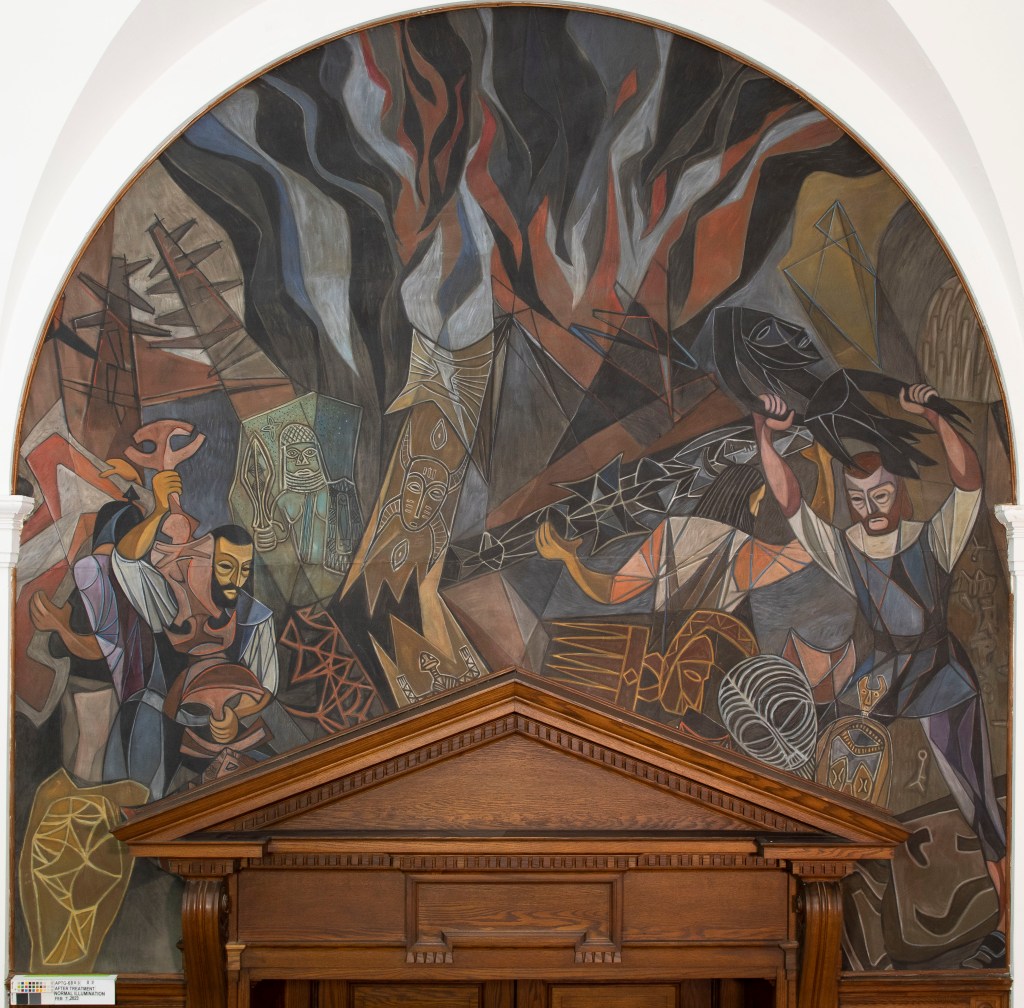
Du Bois, Albert Einstein and Immanuel Kant were in profound, though in differing ways, philosophers of science. Each sought to establish modern philosophy’s relation to science. For Kant and Einstein the question was philosophy’s relationship to the natural sciences, especially physics. For Du Bois it was philosophy’s relationship to the sciences of human beings. For Kant and Einstein their path was guided by hundreds of years of scientific and philosophical investigation. Du Bois forged a new way.
Kant’s synthetic philosophy was a synthesis of schools of philosophy and differing epistemologies concerning the possibilities of knowledge. His philosophy engaged questions of the existence of God and the doctrines of the Church; he asked, did a scientific epistemology demand a rejection of the ontological viewpoints and metaphysics of the Church; how much of reality could we know and how was reason connected to our experiences of the world. Kant proceeds through categories that mediate and structure experiences and the results of scientific experiments. His central categories are time, space and causality. Kant attempted to show that reason aligned with experience could discover general laws of nature, artistic judgement and moral choices. He asserts that knowledge has limits, however. He did, though, establish that human beings were the central agents of knowledge. There was, he concluded, a rational structure of knowledge. Knowledge and thus science, however, had limitations. We were limited to our experience and our capacity to reason. He boldly insists knowledge and science are human enterprises and humans are the exclusive agents of knowledge.
Einstein’s theory of relativity (a theory that forever changed theoretical physics) mathematically establishes the complex relationships between time, space and velocity. Kant and Einstein creatively deploy the categories of time and space. Einstein introduces velocity, which manifested as the speed of light. Time is reconceptualized to be dynamic, rather than static and structural. Einstein’s equation E = MC2 demonstrates the conditions under which mass is transformed into energy. Einstein, unlike Kant, presents an epistemology of transformation. However, like Kant, Einstein was seeking out universal laws of nature. Also, like Kant he believed in the capacity of humans to know the world and that reason was the central factor in achieving knowledge. Neither went far beyond scientific knowledge of nature and the laws of nature. Du Bois shifted the emphasis to Man and society.
Du Bois faced a more daunting task than either Kant or Einstein; to invent science from existing metaphysics and epistemologies, constrained by white supremacy. He faced the racialization not just of the world he lived in, but of knowledge. Hence, Du Bois faced creating social science out of anti-scientific and racist domains of knowledge. The central social science for Du Bois was sociology, what he considered a science of human beings, their societies and behaviors. Du Bois’s work influenced and in many ways reshaped the disciplines of history, anthropology, political science and economics.
He insisted that the urgent task of science was to know Man. This placed social science at the center of the scientific enterprise itself and put sociology at the center of the achievement of knowledge. For Du Bois, to know Man is to make it possible to free Man. And to free human beings was to free knowledge from racist dogma and speculation. Knowledge was the antithesis of unfreedom, racism and colonialism. More than Kant and Einstein, Du Bois ultimately shifts the civilizational assumptions of science and philosophy, suggesting a nonwhite and democratic epistemology. To deracialize philosophy, science and epistemologies, meant reclaiming their Afro-Asiatic histories and foundations. In subtle, but yet not fully realized ways, Du Bois was humanizing knowledge and science and thus making them enterprises by and for people; hence democratic.
The philosophical achievements of Kant, Hegel and Marx, of logical positivism, dialectical materialism and existentialism and other philosophical achievements of the modern epoch; alongside the scientific achievements of Newton, Einstein, relativity theory and quantum mechanics, exist within a world movement of thought that began with the European Renaissance, and as Du Bois claimed, Leonardo da Vinci. Du Bois, finally, at the beginning of the 20th century starts a new movement in world thought to understand Man and as such to understand the revolutionary possibilities of the world. On this basis a new way to understand human and revolutionary potentiality.
A Du Boisian Future: Communism Grounded in Afro-Asiatic Civilizational Values
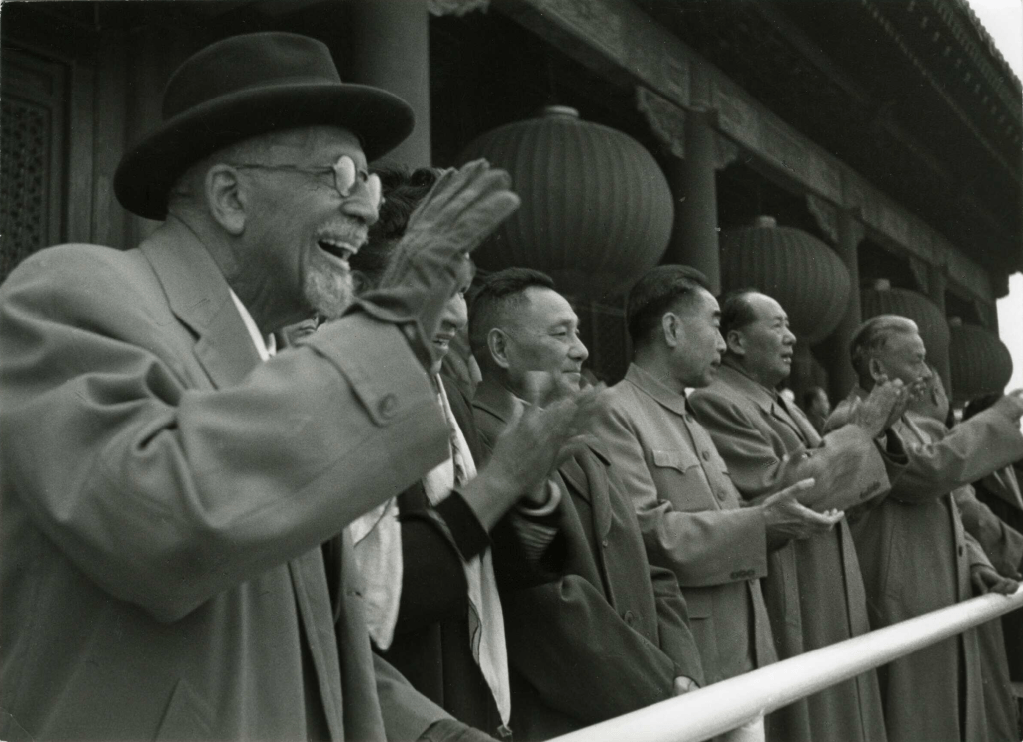
In 1950 W.E.B. Du Bois completes a manuscript, Russia and America, which seventy years later remains unpublished. It is a revolutionary book. It is a defense of socialism in the Soviet Union, a theorization of the possibilities of socialism becoming a world system, replacing world capitalism, and socialist globalization coming through Asia and how the probable path to communism would witness an Asian leap through the centuries. However, the transitions from socio-economic backwardness to socialism and finally communism would require social scientific knowledge and sophisticated planning. All of this would bring forth a new epoch, a new world socio-economic system and new human civilizations.
The prerequisites for communism were, he thought, more readily grounded in the values of ancient Asian civilizations, especially ones that had had socialist revolutions and established the democratic dictatorship of the proletariat. Du Bois thought creatively about questions such as forms of state power, including the dictatorship of the proletariat and the state of the entire people, which evolves from it, and what is today called the civilization state. He thought in new, unprecedented ways, about a new type of communism (“a different kind of communism”), based on a new way of thinking, and forms of state power and people’s democracy rooted in Asian civilizational values. He creatively synthesized several modalities of social scientific, philosophical and historical investigation: comparing civilizations and their possibilities to achieve communism. These interrogations have meaning in the 21st century; a century where Asia will overtake the West and the U.S. is confronted with domestic political instability and a rising crisis of government and bourgeois class rule. The manuscript is framed by Du Bois’s characteristic optimism, despite the Cold War and domestic police state repression; and even as he was being indicted as an agent of a foreign nation.
In 1961 before leaving for Ghana to restart work on his Encyclopedia of Africa and to live his final days, he joined the Communist Party of the United States, declaring, “I believe in communism.” The father of Pan Africanism, the towering theorist of race, a vanguard in the anticolonial struggle, was, as importantly, one of the great theorists of communism. For the final forty years of his life, he theorized and rethought possible paths to socialism and communism and the freedom of Africa and African Americans. After a month in the Soviet Union in 1926 he wrote, “If what I’ve seen is Bolshevism, I am a Bolshevik.” After being arrested for his peace activism he rebuked the U.S. government declaring, “Blessed are the peacemakers for they shall be called communists. Is that praise for the communists or condemnation for the peacemakers?” In substantial ways the manuscript is a theoretical outline of his rearticulation of socialism and communism, civilization, the state and the global liberation struggles. This manuscript and most of his last work was dedicated to tracking a path to the future.
The towering accomplishment of the manuscript is Du Bois’s theorizing of the relationships between civilization, socialism and communism and the multiple questions surrounding these issues. The Russian Revolution became for Du Bois a concrete area of research in history and sociology. It was part of his search for the truth that might make the future predictable. He studied the dictatorship of the proletariat as a form of people’s democracy and people’s defense of their revolutionary triumphs. He studied its main leaders as an examination of what revolutionary leadership looked like. He examined the careers and moral character of Lenin, Stalin and Trotsky. Lenin, he said, was “one of the great men of this century” and a social scientist. “Lenin was not the sort of modern Sociologist, who boasted of his science, and did nothing to discover its laws.” Du Bois concludes, “following Karl Marx, he saw the rhythm of history and determined to plan human life in accord with known knowledge.” And therefore, “He studied not only the written word of history and economics, but the actual current deeds of living men.” Stalin was from the East, Du Bois tells us. He was, “inconspicuous, cautious and taciturn.” He became a socialist while organizing among oil workers. “He followed the plans of Lenin.” “He sought methods of action to implement revolution.” Trotsky was a dreamer, a brilliant orator and inspirer, but in the end, as Du Bois insists, betrayed Russia and the revolution.
He saw the Chinese Revolution, like the Soviet Union, as the nation where the same questions could be studied as a way to think of the future and the possibilities of Afro-Asiatic revolutions. He considered the capacity to forge what he called the unity of Pan Africa and Pan Asia.
Ruined by civil war, feudal relationships of production and foreign control, China, for him, remained indispensable to understanding the possibilities of communism. “Any attempt to explain the world, without giving China a place of extraordinary prominence is futile.” Speaking of a new socialist economic system in China after the Chinese Revolution, Du Bois says, “It would take a new way of thinking on Asiatic lines to work this out, but there would be a chance that out of India, out of Buddhism and Shintoism, out of age old virtues of Japan and China itself, to provide for this different kind of communism (my emphasis), a thing which so far all attempts at a socialistic state in Europe have failed to produce; that is a communism with its Asiatic stress on character, on goodness, on spirit, through family loyalty and affection might ward off Thermidor (counterrevolution — A.M.); might stop the tendency of the Western socialistic state to freeze into bureaucracy.” He concludes, “It might through the philosophy of Gandhi and Tagore, of Japan and China really create a vast democracy into which the ruling dictatorship of the proletariat would fuse, deliquesce and thus instead of socialism ever becoming a stark negation of freedom of thought and a tyranny of action and propaganda of science and art, it would expand to a great democracy of the spirit.”
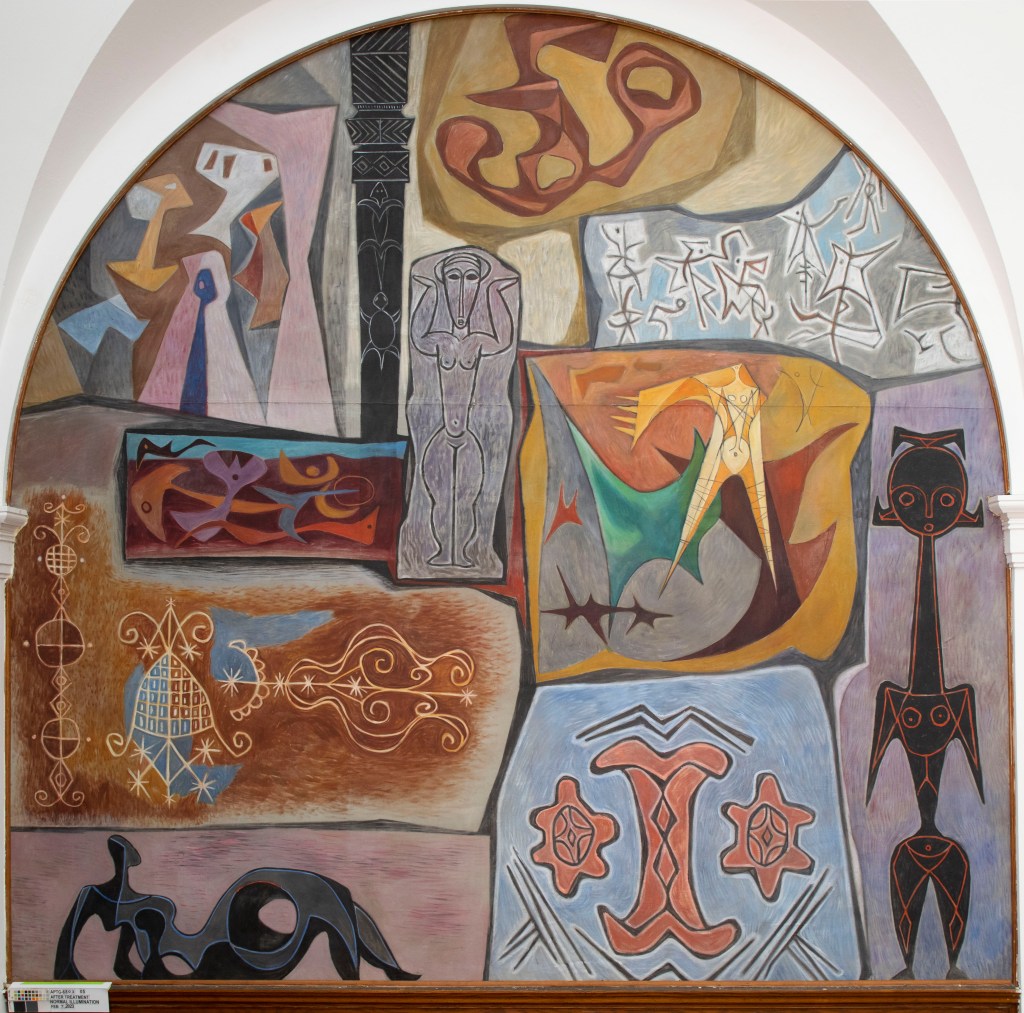
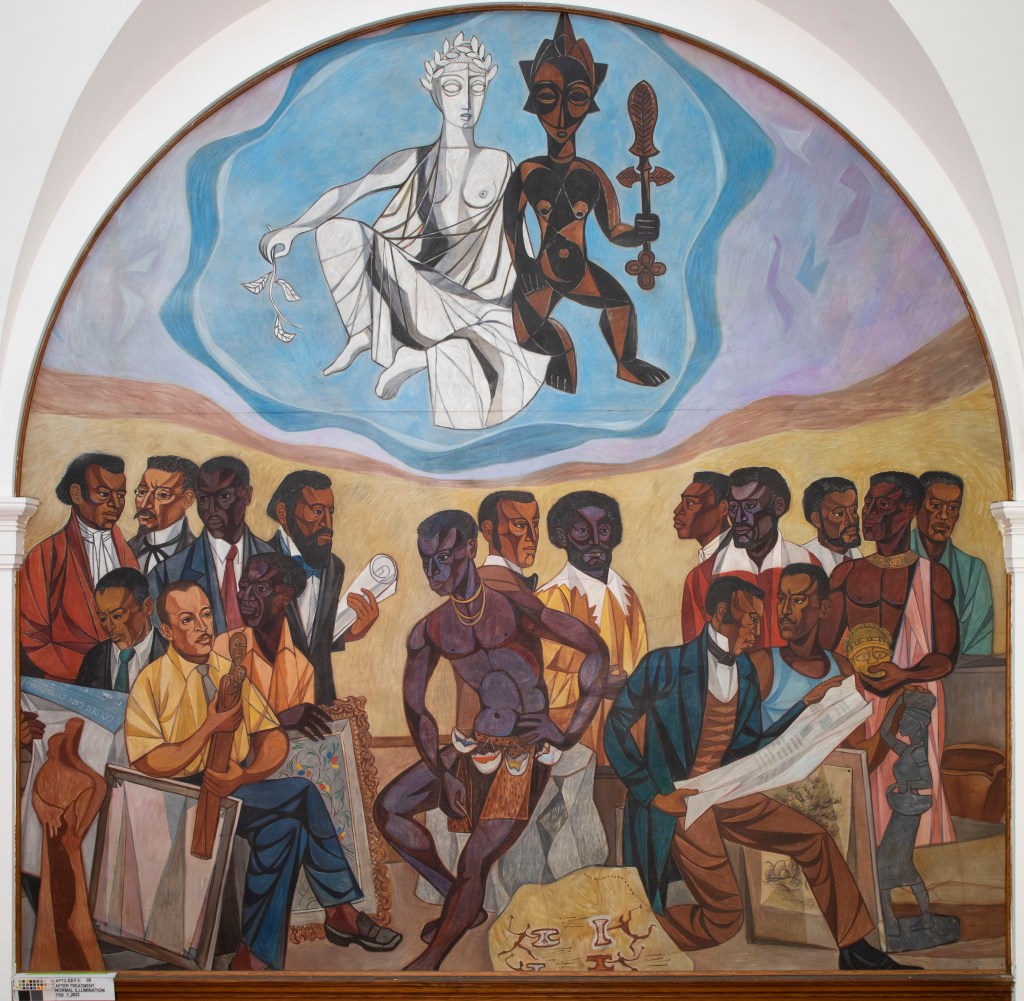
Critical to all of this is breaking the over-determination of capitalist laws of development over human social relations; they would be replaced with the laws of socialist development leading to communism and freedom. This, in Du Bois’s thinking, is the movement from Necessity to Freedom, from over-determination by the laws of capitalist development to full human actualization and the new human being. The great tragedy, however, for an emerging Pan Asian civilizational convergence, was that Japan “learned Western ways too soon and too well and turned from Asia to Europe.”
Russia and America is part of Du Bois’s most significant, innovative and creative period; it’s part of his magisterial research agenda, at his most mature, and a creative synthesis of multiple areas of knowledge. In the last 40 years of his life, he produced works that are a foundation for revolutionary thinking and practice in the 21st century; arguably some of the most important work in modern intellectual history. They evidence a revolutionary historiography, epistemological and philosophical ruptures from within modern European thought. He creatively relocates the center of revolutionary strivings to Asia and ultimately Africa.
He called Karl Marx the most important modern philosopher. He made no bones that much of his research considered Marx’s scientific discoveries. He’s always looking for empirical facts to support his assumptions; his experimental methodological apparatuses are his way of getting at difficult to discover truths, and he deploys historical logic in unusual ways, seeking laws, probabilities and variations of social development and what he calls “uncaused causes.” He bends and revises Kantian, Hegelian and Marxian assumptions geared exclusively to Europe; and explains how race, class and civilizational questions must be addressed in new Afro-Asiatic and democratic ways if we are to understand the forward trajectory of history to socialism and communism.
W.E.B. Du Bois, the Black Swan for a new epoch of modernity, is the originary figure in a new world movement of thought. His life’s work is an integral part of the 21st century, establishing him as a 21st century thinker. He ends his life triumphally proclaiming Man can be known and therefore must be studied scientifically. While human beings and societies are complex it is upon us to create methods of studying them. Human beings must be studied and known in all their complexity and studied holistically. Science is necessary to understand the many possibilities of establishing new socio-economic systems and new world civilizations. And finally new men and women.
 Avant-Garde: A Journal of Peace, Democracy, and Science
Leave a comment