
There is fear, antagonism, and competitiveness about the rise of China and little room to know the truth. However, while the American-dominated, neoliberal world order unravels, China is playing a major role with the rest of colored humanity in discovering and creating an economic, political, and philosophical alternative. As Americans question the legitimacy of our ruling class, it is untenable for us to ignore or remain ignorant of China and it calls for us to take up our own revolutionary traditions of learning, peace, and solidarity with the world. As such, I hope to identify some of the key accomplishments of new China, explore the defining role of its masses and revolutionary leadership in these triumphs of modernity, and propose that there is a path for America and China towards peace — that is, through the revolutionary vision and example of Afro-America.
Headlines on China center on its manufacturing and technology. China’s ripples in these areas are undeniable given that in recent years, China has dominated global manufacturing output and seen leaps in fields such as electric and solar power, information technology, and artificial intelligence. Yet what is life for millions of Chinese? Little acknowledged and less understood by the West are China’s achievements in poverty reduction, mass education, and transportation infrastructure. Within just a single lifetime, China has lifted nearly 800 million people out of extreme poverty, raised adult literacy to 97 percent (when it was 65 percent in just 1982), and built more than 40,000 km of high-speed railways since the first was opened in 2008.1,2,3 These astronomical figures can seem abstract until one has experienced or seen the change for themselves. People, many concentrated in rural, far-dispersed villages, particularly in the western and central plateaus and basins of China, who had little food to eat, lived in dilapidated conditions, or had limited means to earn a living were guided in agricultural methods or moved to more fertile lands, connected to electricity and clean water, and provided opportunity through industrial jobs and vocational training. Children whose parents could not read or write were the first in their families to receive an education, go to university, learn about worlds beyond, and bring back new skills, new experiences, and new ideas. Distances that once prohibited frequent exchange and travel between the varied peoples of China, of distinct dialects, religions, and ethnicities, have been bridged by high speed rail, mass transit systems, and roads. These are impressive milestones as each successive generation has seen their communities and children’s lives change and improve.
Vast changes are hardly possible without the large-scale mobilization of the masses and their talent. Where did the nation find the nearly 2.9 million public servants to travel to live for months and years among the poor, to understand the reasons for their poverty, and to share their knowledge, labor, and hearts? Questions of the economic, political, and civilizational development of a people do not lend to easy answers or simple paths. Following the oppression, humiliation, and civil strife of the 19th and 20th centuries, what gave the Chinese people the faith and fortitude to fight, make sacrifices, retreat, and then rise the way they have in the 21st century? The speed and scale of China’s achievements have been extraordinary, evoking admiration, jealousy, disbelief, and suspicion. What is China’s vision for the future and their children? Is it a vision of arrogant hegemony, or one closer to a world house as our own Martin Luther King, Jr. envisioned?
The Chinese People’s Democratic Struggle for Modernity
As an ancient people, the Chinese carry long-held civilizational values of reverence and deference to a political elite. These values extend back through its pre-modern dynastic system and its earliest proponents include Confucius, who sought for a philosophy of peace, harmony, and rule for the Chinese people. They assume that an elite with moral character, wisdom, and experience should govern the people with compassion and ability. However, these values faced challenges in the 19th century. The Chinese state had become a semi-colonial, feudal state riddled by the chaos of wars and extractive treaties. The Chinese were a predominantly poor peasant people and the Qing dynasty was unable to protect or serve their interests. The people were ignored and exploited and they rebelled to overthrow dynastic rule.
Following the collapse of the Qing dynasty, Mao Zedong and the Communist Party of China consolidated support to take state power for a people’s democracy. They fought for a modern state where the masses of people would have a voice in the affairs of their nation. When Mao declared the “People’s Republic of China” in 1949, it signaled the sovereignty of the ordinary Chinese against the interests of a few or the foreign. This state has continued to experience different stages and different problems. And as such, it has experimented and evolved since its founding to realize the meaning and concrete reality of its revolutionary ideals and of modernity.
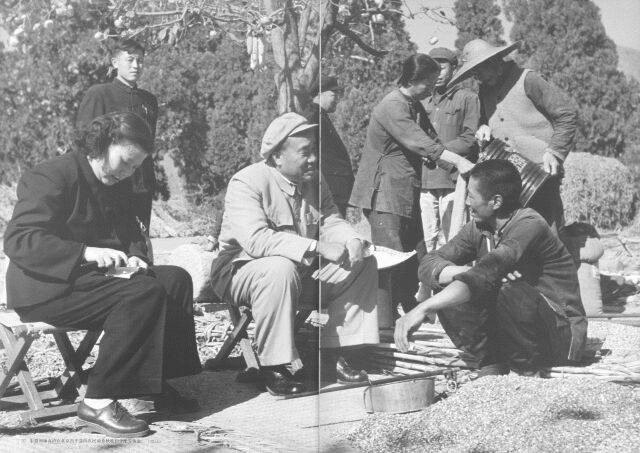
Though statehood was achieved in 1949, questions of the people’s livelihoods and of democracy remained — it was difficult for a people that were poor and mired in civil strife to participate and contribute to their society. Hence, the responsibility of the new independent state and its vanguard was to raise the material standards of the people and their capacity for continued governance. Deng Xiaoping, a veteran of the Communist Party of China and its next leader, restored political stability to the country and introduced reforms that would bring China out of economic isolation and deprivation. China established special economic zones for foreign investment and manufacturing during a time when the American ruling class sought higher profits by outsourcing to countries with lower labor costs. China’s students were sent abroad to learn the ways of Western science and technology. This philosophy of “韜光養晦” (tāo guāng yǎng huì) or “biding one’s time and keeping our head down while building one’s own strengths,” popularized by Deng, continued with his two successors at a time of Western financial, military, and cultural dominance in the late 20th century.
China’s current leader, Xi Jinping, picks up from this arc of modern Chinese history. Mao and Deng had represented the earlier stages of the Chinese people and the struggles of its leadership to achieve independence and economic modernity. The trials and toils of the nation in these earlier periods have resulted in its political and industrial development and Xi is a son of this maturation. He has continued to advance the political integrity and performance of China’s governing bodies to better represent and serve the people. Xi has mobilized and focused the nation’s material resources and human talent towards eradicating poverty and building a “小康社会” (xiǎo kāng shè huì) or “moderately prosperous society.” With the improvements in their general welfare, the Chinese people see the results of their sacrifices and support their government.4 These advancements have given the nation a newfound confidence and elevated the potential of the people and its leaders to believe, envision, and build a future.
At a time when the West faces a crisis of rule and stagnation, the Chinese are taking on new frontiers. They are making breakthroughs in science and technology. They are grasping for what it means to be Chinese — today in China, one sees a birth of Chinese aesthetics rather than a turn to Western styles and the revival in the studies of ancient Chinese philosophers rather than an imitation of the political and social theories of the Western elite. And they are facing the responsibility of being a nation that makes up nearly a fifth of the world’s population and has become an economic, political, and ideological force.
A New World Order: The Call for Peace
“It is, then, the strife of all honorable men of the twentieth century to see that in the future competition of races the survival of the fittest shall mean the triumph of the good, the beautiful, and the true; that we may be able to preserve for the future civilization all that is really fine and noble and strong, and not continue to put a premium on greed and impudence and cruelty.”
“Of the Sons of Master and Man,” The Souls of Black Folk
W.E.B. Du Bois
The modern history of the Chinese people is part of the world history of the previous century that has been marred by the development of the few at the cost of the many, by wars and the loss of human lives, and by dominance and immorality. Yet, it is also part of that wonderful history that has seen the greatest peoples’ struggles for freedom, the cooperation of once colonized nations, and the development of new principled relationships between men. To understand the current changes in the world now coming out of Asia and Africa, we need to understand the tasks and what remained unfinished of that revolutionary history. And in doing so, we are faced with the duty to know our revolutionary legacy so that we may join China and the world not in war, but in peace and brotherhood and answer the shared questions of modernity.

In April of 1955, the leaders of Asia and Africa came together in Indonesia for the Bandung Conference, “the first intercontinental conference of colored peoples in the history of mankind.” The conference represented nearly half the world’s population, with different languages, religions, traditions, and histories. Countries that had recently achieved independence or were still battling for independence, including China, India, Ghana, Libya, Afghanistan, Indonesia, faced the questions of modernity and sought dialogue with each other. At a stage of world history in which the masses of ordinary people were increasingly conscious of and in exchange with those beyond their immediate villages, tribes, and communities, what were to be the economic, political, and moral basis of their development and of their exchange? Due to colonialism, the rich civilizations of Africa and Asia were held back from these crucial questions of modernity. Bandung represented a new beginning of relations that would no longer be mediated by the Western colonial powers and their world view of supremacy, exploitation, and war. While there were differences against the backdrop of the Cold War, the countries conversed for seven days and laid down principles for national equality and sovereignty, economic cooperation, and world peace. Of most importance, the leaders emphasized a moral and spiritual framework for civilizational contact on the basis of respect, understanding, and cooperation. They underscored the need for people to know each other, exchange ideas, and collectively solve the economic, political, and moral questions of modernity. The transformation of ordinary men and women would be needed to actualize the Bandung principles and create a new world for all humanity.
Seventy years later, today, there is a revival of the Bandung spirit with the formation of BRICS+, led by Brazil, Russia, India, China, and South Africa, and the Belt and Road Initiative among others. Countries that have continued to face poverty, been dismissed within the framework of Western neoliberal institutions, and lacked alternative mechanisms for cooperation are finding new opportunities and real progress for the uplift of their people.5 The progress has been promising, including those in infrastructure development and financial modernization. Despite complexities, challenges, and conflicts, there have been sustained calls for peace and civilizational exchange. Notably, BRICS has opposed the attacks on Palestine with individual members taking a harder stance. In 2023, South Africa took Israel to the International Court of Justice of the United Nations for committing genocide.
The world is forging new relationships and the American ruling elite faces a crisis of rule as it meets the distrust and contempt of its people. Yet the dying order and its elaborate network of media reporting, universities, and celebrities still continues to be able to stoke disunity and provoke war. What will the American people turn to in this transitional moment in history? Will we follow the narratives of the ruling elite and face the changes in the darker world with hostility? Or will we turn to a different set of relations and take up our responsibility to bring about peace and a new world in becoming? The revolutionary history and example of the Black Freedom Struggle in this country point to a path towards the latter.
In the 20th century, the American ruling elite suppressed not only the freedom struggles of Asia and Africa — in Korea, Vietnam, the Democratic Republic of Congo, Libya, the list goes on — but also the sympathies of the American people through the “Red” scare. Yet despite the cost and dominant anti-human ideology, Black America has consistently sought to know and express solidarity with the darker world. In the 1950s, W.E.B. Du Bois was arrested and tried by the state for being a “foreign agent” for his peace activities towards disarmament and abolishment of the atomic bomb. Yet he continued to visit, learn, and write of the democratic experiments of the Soviet Union and China, stating that the great tragedy of the age was that “men know so little of men.” Paul Robeson advocated for the freedom of Black America and the unity of Africa. He sang the liberation songs of the Soviet Union and of China. For those activities, the state confiscated his passport for nearly eight years (which prevented him from attending Bandung in 1955). In spite of the persistent demonization of the North Vietnamese and glorification of war as patriotism, Muhammad Ali refused induction into the U.S. Armed Forces — “my conscience won’t let me go shoot my brother, some poor hungry people in the mud for big powerful America… and shoot them for what?” As a result, he was convicted, fined, stripped of his Heavyweight Title, and suspended from boxing.
Du Bois, Robeson, and Ali were able to see through the fog of the American consensus for war because Black folk in America have seen both the facade and the truth of America. From the days of slavery through the promise of Reconstruction to the Third American Revolution, they have both heard and felt what America said about them — that Black folk are backwards and have no history — and known and strove for who they are — a people capable of building civilization. Through their religion, art, music, literature, and revolutionary history, Black Americans have sought to answer the question of “What is the human and its relationship to others?” I argue that this profound endeavor and world view has created a new human being, able to see the downtrodden people of the world wherever they are in their struggle for peace and uplift. They have connected the Black Freedom Struggle in America to the anti-colonial struggles in Asia and Africa. And they have created a synthesis with world civilizations centered on the demand for freedom and dignity — Martin Luther King, Jr. adopted the philosophy of “satyāgraha” or “truth-force” and the Nation of Islam an Afro-Asiatic religion for the liberation of Black America.

We are surrounded by a culture that is pessimistic and skeptical of all — we are a lost people without a creative engine towards the future. However, as the revolutionaries of the Black Freedom Struggle exemplified, we must cultivate a spirit of optimism and curiosity about the world. As Asia and Africa battle to be born, we must seek to study and know the world’s revolutionary history and development for our fixed assumptions of our relationships to the world may be challenged. Is China really our enemy? And we must demand for peace — to resolve differences not through the destruction of man, woman, and child but through intelligent dialogue and creative solutions. For in peace, we may find that we and the world’s people share common questions of modernity that will require human fraternity to progress. How do we ensure that the material needs of 8.2 billion people are met? What is the purpose of our lives? Can the good, the beautiful, and the true in life triumph and become the guiding stars of human activity and striving?
Sources:
- https://www.worldbank.org/en/news/press-release/2022/04/01/lifting-800-million-people-out-of-poverty-new-report-looks-at-lessons-from-china-s-experience ↩︎
- https://www.statista.com/statistics/271336/literacy-in-china/ ↩︎
- https://www.statista.com/statistics/1265995/length-of-highspeed-railway-lines-in-use-worldwide-by-country/ ↩︎
- https://rajawali.hks.harvard.edu/wp-content/uploads/sites/2/2020/07/final_policy_brief_7.6.2020.pdf ↩︎
- https://thinkbrics.substack.com/p/what-has-brics-really-achieved-a ↩︎
 Avant-Garde: A Journal of Peace, Democracy, and Science

Leave a comment