
Introduction
1962. A young Archie Shepp with bandmates Bill Dixon, Perry Robinson, Howard McRae, and Don Moore, step on stage. They begin to play. It is the 8th World Festival of Youth and Students for Peace and Friendship in Helsinki, Finland. Among those in the audience are 18-year-old Angela Davis, traveling from Paris covertly to attend the conference. Youth from around the world, including Cuba, newly freed African nations, and the Soviet Union, have gathered in the name of peace, democracy, and anti-imperialism. Patrice Lumumba has been brutally assassinated a few months prior in the recently liberated Congo by secret Belgian and American mercenaries. Cuban forces have pushed back the U.S.-led illegal invasion of the independent communist island nation less than a year earlier. And in America, a new movement, the Civil Rights Movement, the Third American Revolution, is arising under the leadership of King.
When listening to the recording of the Archie Shepp-Bill Dixon quartet performance at the 1962 World Youth Festival, one wonders: who were these young musicians, and what gave them the courage and ingenuity to pursue this futuristic music of avant-garde or free jazz? From where did they trace their roots and in what tradition were they following? How did it come to be that this music would fit so aptly into the times and spirit of this momentous gathering, and articulate the future that this worldwide movement was collectively imagining?
It is important to categorically understand the significance of this performance, for then and for today, and what it meant about the struggle for freedom of the country and the city where they hailed from, the City of Brotherly Love, across the Atlantic. With the Black Freedom Struggle and anti-colonial struggles worldwide reaching an apogee during the 1960s, jazz offered a futuristic language for capturing new categories of knowledge together with the legacies of the past traditions, movements, advances of the Black freedom and progressive struggles of the world. Thus, the 1962 performance can be understood as a case study and historical touchpoint for understanding the implications of an avant-garde political philosophy and practice. This avant-garde philosophy must be understood and embraced to advance the struggle for peace, unity, democracy, and people’s culture for our times.
Free jazz, as practiced by the Archie Shepp-Bill Dixon Quartet and other countless jazz musicians of that era, served as an arbiter of the Black Proletariat Imaginary. This imaginary was guided by a scientific search for truth and knowledge drawn from around the world, leading its listeners towards the universal aspiration for humanity’s liberation. North Philadelphia, the lifeworld from which Archie Shepp, John Coltrane, Lee Morgan, and so many visionary jazz musicians rose organically, was shaped by the traditions and strivings of Black folk going all the way back to the aspirations for freedom from the Great Migration, held together by the blues tradition. This tradition pushed these artists to embark on a quest to know the world, not only to deeply study the Western classical musical canon but also the world civilizations in Asia and Africa that produced rich spiritual and music traditions rooted in peace and striving, whose influences were then reflected in their music.
However, this quest, when coupled with a powerful revolutionary and moral ethic, also drove Archie and many other jazz musicians to make a lifelong commitment to revolution. They engaged seriously with progressive, anti-imperialist, socialist, and peace organizations, at the risk of running against their own government’s repression of people’s movements, at home and abroad. Synthesizing three dimensions of thought and action—the Black Proletariat Imaginary, the rational-scientific pursuit of knowledge, and the revolutionary imperative—free jazz serves as an artistic, philosophical, and political framework for renewing the people’s capacity to unite, imagine, and create a new world worth struggling for. This was true then in the revolutionary 1960s, but it is also true now, when the war-weary, eviscerated masses of America and humanity at large, demand and seek to build a new world.
Jazz and the Blues Tradition of the Black Proletariat Imaginary
It is paramount to begin by defining and understanding the role of the Black Proletariat Imaginary in the shaping of free jazz. In order to accomplish this, an examination of free jazz in relation to North Philadelphia is required, as an example of the lifeworld of the Black Proletariat and the enduring spiritual and political tradition that produced this music.
Jazz represents a uniquely American art form, emerging from the struggle of Black folk to become a people, not in themselves, but as the vanguard and engine in reconfiguring the country toward a new culture, new democracy, and ultimately a new civilization. Jazz is a social process; it brings people together, sparks dialogue, develops new social relations, experimentation, and striving to reach loftier heights of knowledge and artistry. As such, jazz has been instrumental in generating a new kind of collective experience and consciousness—even during times of segregation, hardship, and poverty endured by Black artists, and the misconstruing of the music by white, mainstream audiences and critics. In spite of all this, jazz is an embodiment and catalyst for social evolution, and free jazz represents its most advanced and dynamic iteration—especially exemplified by free jazz’s linkage to the world communist movement and anti-colonial struggles. With these linkages, jazz artists prophetically asserted the arrival of a new, modern Afro-Asiatic civilizational reconfiguration of the world.
Playwright and cultural critic Amiri Baraka, in his book Blues People, traces the origins of jazz in the blues tradition. This tradition begins with the emergence of the Black Proletariat itself, undergoing a transformation from slaves that “represented everything African” (in W.E.B. Du Bois’s words), to becoming the first true Americans, a journey paralleled in the rise of spirituals or “sorrow songs”:
“The Negro as slave is one thing. The Negro as American is quite another… I make my analogy through the slave citizen’s music—through the music that is most closely associated with him: blues and a later, but parallel development, jazz. And it seems to me that if the Negro represents, or is symbolic of, something in and about the nature of American culture, this certainly should be revealed by his characteristic music… I cite the beginning of blues as one beginning of American Negroes… when a man looked up in some anonymous field and shouted, ‘Oh, Ahm tired a dis mess, oh, yes, Ahm so tired a dis mess,’ you can be sure he was an American.”
Amiri Baraka (LeRoi Jones), Blues People, Chapter 11 2
Following emancipation during the Civil War, it was especially the betrayal of Reconstruction—resulting in the disenfranchisement of Black folk, the rise of lynchings, and sharecropping—that marked the emergence of blues in the South. These were songs of disappointment and pain, yet they emanated from a people with their minds still bent on freedom. Around this time, the earliest forms of jazz emerged in New Orleans. From there, jazz and the blues traveled northward with the Great Migration of Black folk from the South towards urban centers in the 1920s and 30s, taking root in places such as New York’s Harlem, Chicago’s South Side, and North Philadelphia.
Within the cradle of North Philadelphia, jazz flourished in an enriched soil that consisted of the contributions and lifeworld of the Black working masses: housing projects, churches, public school music programs, and nightclubs, where blues, gospel, and jazz were played every day. It was this lifeworld which produced the most visionary jazz musicians of the coming era—Archie Shepp (1937-), John Coltrane (1926-67), and Lee Morgan (1938-72)—with the distinct Black Proletariat Imaginary illuminating their lifelong artistry, philosophy, and political practice rooted in the people and in struggle. The rich lifeworld of these artists as they grew up is a testament to the fact that advanced art and culture originate from the struggles of the working masses—and that high standards for art and social relations are in fact the birthright of humanity and the American people.
Archie Shepp was born in Fort Lauderdale, Florida, but his family moved to Philadelphia after World War II, as his father could work on the docks of the Navy Yard. They moved to the Brickyard section of Germantown, near North Philadelphia, where Archie attended the now-defunct Germantown High School. Archie would say of the city:
“When I was a boy, Philadelphia had long since been an American antique. Grumblethrope (the place where George Washington slept) lay crouched on a cobblestone hill like a fragile doll’s home—behind a shimmering gray-black brick facade—just beyond the Friend’s Free Library and the wretched squalor of the three streets I called home. Only a few blocks away was the place where Steam Mincer, a distant cousin, had been stabbed to death at the lonely age of 15. We lived then in awe of north and south Philadelphians because their ghettos were even more fierce than ours…”
Archie Shepp in “A View from the Inside” for DownBeat magazine in 1966
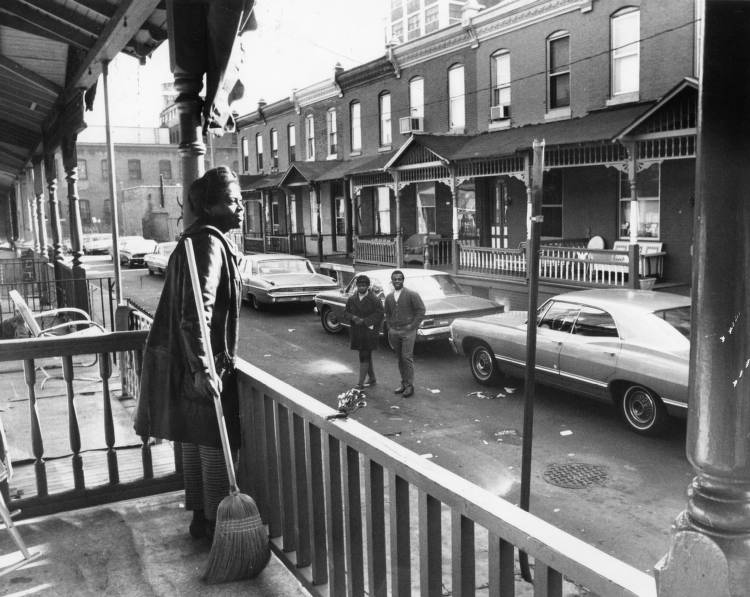
Archie Shepp would go on to meet fellow saxophonist Lee Morgan, who lived in the industrial Tioga area of North Philly. Lee grew up in a church-going family, with his older sister playing the organ and singing in the choir; she gifted Lee a trumpet for his 13th birthday. Lee demonstrated a complex mastery of the instrument as an adolescent. To foster his talents, Lee went to Mastbaum Vocational Technical High School, a long trek to the white neighborhood of Kensington, where he was provided a highly robust musical training at arguably the best program in the city at that time.3 It was then that Archie met Lee, both still as adolescents. Archie would later recount a story that captures their creativity as mutually anchored in the Black Proletariat Imaginary, in the blues. Shortly after meeting, Lee invited Archie to play something on the saxophone. Archie began playing from the white saxophonist Stan Getz’s repertoire:
“Lee was doing everything he could to keep from laughing in my face. But then he pulled out his horn and played the blues with me. The blues was something I’d been playing for a long time, because of my old man. I heard a lot of the blues then… I had to forget all about my Stan Getz stuff. Then I just played like I play. I didn’t know any chord changes at all, but I could hear the blues… It was my introduction to real jazz music. Lee was very influential to me growing up… Saturday afternoons I used to go to his mother’s house and very often I would either bring some music or play some music he had.”
After studying liberal arts college in Vermont, Archie moved to New York, where he would eventually meet fellow Philadelphian John Coltrane in 1965, who would mentor Shepp and invite him to play as a guest player, recording together a few early takes of “A Love Supreme.”
Son of a singer and minister from North Carolina, John Coltrane and his family moved to North Philadelphia when he was 11 years old. It was the city where he learned to play the saxophone, jamming with fellow young musicians in their parents’ basements.4
Together with Coltrane, Cecil Taylor, Ornette Coleman, Archie became a part of a distinct generation that pioneered avant-garde or free jazz in the 1950s, 60s, and 70s. Defined by a fearless, experimental departure from the conventions of jazz that had come before, amid the crescendoing Civil Rights Movement and anti-colonial struggles, this highly political cultural zeitgeist gave rise to a generation of artists who saw jazz not as disconnected, but in fact as part of the task of developing a new vocabulary for capturing the fundamental shifts of the world towards a qualitatively new stage of human liberation. Amiri Baraka would say of Archie that he was “one of the most committed of jazz musicians, critically aware of the social responsibility of the black artist…[for whom] ethics and esthetics are one.”5
For so many artists, particularly Archie, there was a distinct concern for developing a strong, political philosophy of their avant-garde jazz practice, not simply as artistry or entertainment.
“Jazz is anti-war; it is opposed to [the war in] Vietnam; it is for Cuba; it is for the liberation of all people. That is the nature of jazz. That’s not far-fetched. Why is that so? Because jazz is a music itself born out of oppression, born out of the enslavement of my people.”
Archie Shepp in DownBeat magazine in 19666
In a similar vein, John Coltrane’s own experimentations were guided by his deep studies of Asian and African musical and spiritual traditions, particularly of India’s renowned musician Ravi Shankar, the Ahmadiyya Islam sect, Yoruba and African percussion, and beyond. Studies of African and Asian civilizations were not singular to Coltrane, as many avant-garde jazz musicians were devout students of world religions and music traditions. Although it is not recognized as such, this search for a higher Afro-Asiatic synthesis was ultimately a philosophical endeavor—a marriage of science and art in the pursuit of truth, peace, and freedom.
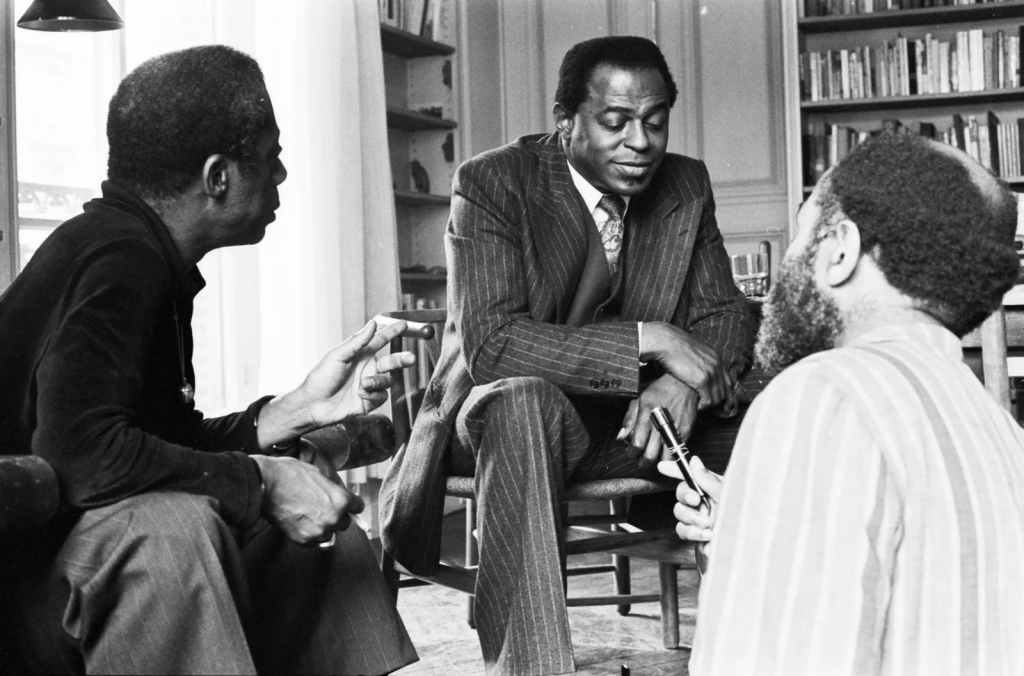
For these artists, the avant-garde never meant the separation of the artist or the art from the people or the struggle. While avant-garde jazz wasn’t always positively received by all listeners and critics of jazz, many of whom were white liberals, it represented a high degree of musical experimentation requiring both advanced knowledge and skilled artistry. For Archie and other avant-garde artists, it always meant a dialogue with the masses, their strivings and movements, evidenced by Archie’s lifelong commitment to his ideals and the revolutionary imperative.
“I leave you with this for what it’s worth. I am an antifascist artist. My music is functional. I play about the death of me by you. I give some of that life to you whenever you listen to me, which right now is never. My music is for the people. If you are bourgeois, then you must listen to it on my terms. I will not let you misconstrue me. That era is over. If my music doesn’t suffice, I will write you a poem, a play. I will say to you in every instance, ‘Strike the Ghetto. Let my people go.’”7
1962
Given the significance of free jazz as a genre in which art and music are inherently linked with the revolutionary imperative and the ideological struggle, this genre was uniquely positioned to be synthesized with the world’s communist and anti-colonial movements. Likewise, the global voyages of free jazz—carried by artists like the young Archie Shepp and his bandmates during the 1962 World Youth Festival—served as a concrete universal for the world’s people to relate to the Black Proletariat and its struggles, imaginary, and contributions to human civilization.
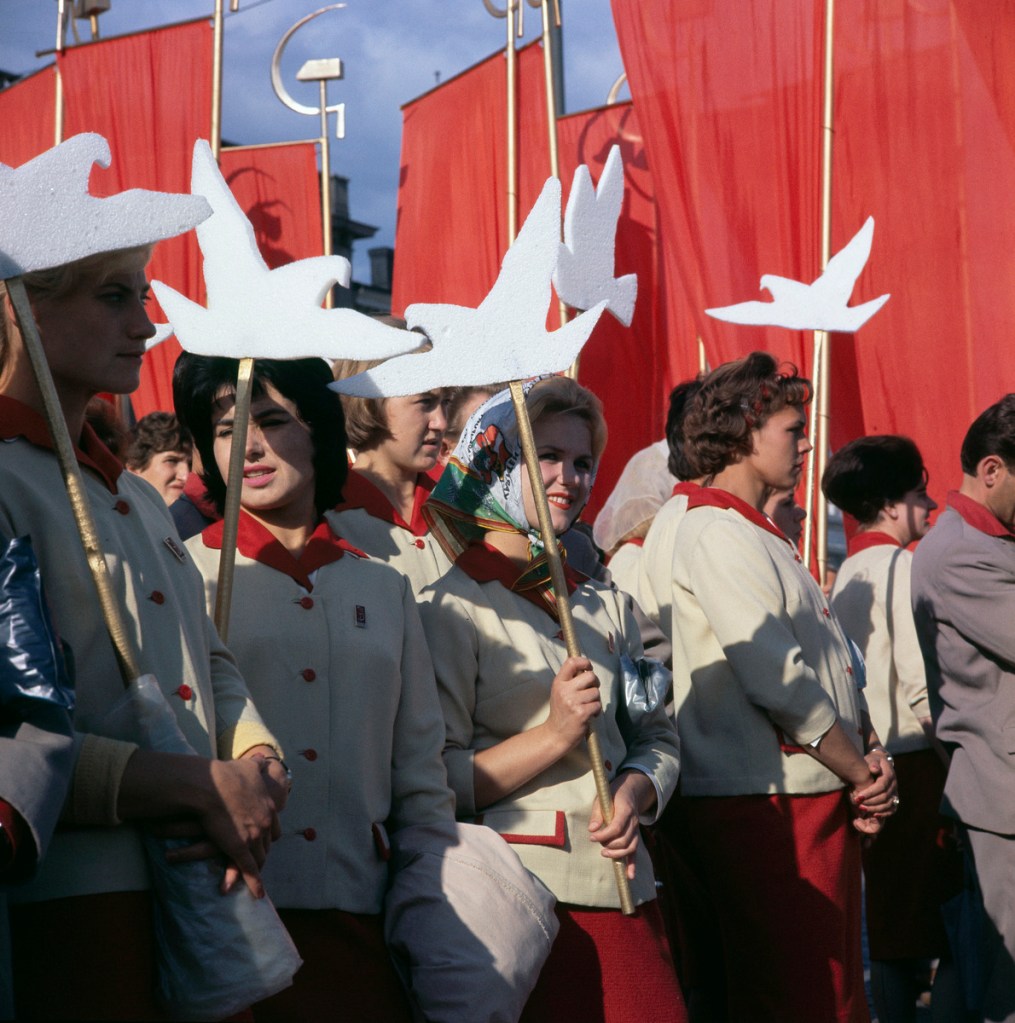
So, as we return to the summer of 1962 and the performance Archie Shepp-Bill Dixon quartet gave at Helsinki, I want to recapture the radical possibilities of the World Youth Festival as a whole, and the belief in what principled cultural contact and exchange between the world’s youth in the name of peace and democracy can achieve.
The World Festival of Youth and Students, held every few years around the world beginning in 1947 by the World Federation of Democratic Youth, followed a tradition of the world communist movement hosting pivotal conferences for peace, anti-imperialist, and democratic causes.8 Asserting the enduring notion that the youth carry an organic revolutionary optimism, courage, and consciousness, these festivals provided a principled place for multiple generations of young, politically engaged people to develop new social relations with one another, defying partitions and the anti-communism of the West.
It was the world communist movement and Black Freedom Struggle that made the global reception of free jazz possible, just as these struggles were committed to making people’s liberation, anti-imperialism, and world unity possible. The Communist Party of the United States sponsored the Archie Shepp-Bill Dixon Quartet in New York and their various gigs, and also funded the group’s travel to Helsinki, as well as their travels to additional destinations in Europe after the World Youth Festival, including Moscow in the Soviet Union.9 It was in such a liberatory, generative environment, that free jazz could be shared and belong so aptly with the rest of the cultural performances at the 1962 World Youth Festival. The spirit of this music could then inspire the pioneering young people of many nations to take responsibility for their people and the struggle for world peace.
As for the music itself, there exists only one recording so far of the performances by the Archie Shepp-Bill Dixon Quartet at the Festival.10 The remaining YouTube recording is 28 minutes long, split into several distinct acts. The first movement, slightly more structured and distinctly festive in its tune, reflects the development of this music from its bebop roots, as Shepp himself proclaims free jazz being “the logical extension of things that had been intuitively at work in the minds of [Charlie] Parker and [Thelonius] Monk.” The second portion of the recording embodies more of the free jazz spirit, less tethered to chord progressions, harmony, and rhythm than the first act and instead bending the notes, timing, and tone of the music towards something fearlessly new. With a 5/4 meter, Shepp’s dexterity, inventiveness, and raw emotion as he handles the saxophone are put on full display, evoking noises resembling groans, cries, and shouts, woven between a dialogue with Bill Dixon on the trumpet and Perry Robinson on the clarinet. The rapid fire drum beat from Howard McRae and bass line from Don Moore run in the background, evoking the forward, even leaping march of a movement. The music captures the initial challenges of gathering peoples from distinct parts of the world; but eventually the energy kicks off and creates its own lightning-speed momentum for the rest of the world to chase after and catch up to—as if jumping forward in time and history, as dictated by the people’s revolutionary will.

Herein lies the magic and potency of free jazz, as crowds of thousands of pioneering youth present came together as a collective to be transformed and unleash their imaginations towards envisioning a new future and world, with a braggadocio that could only be matched by a music equally as revolutionary. Hence, the Archie Shepp-Bill Dixon Quartet performance fit perfectly into the zeitgeist that was put forth by the World Youth Festivals, which shaped several generations of freedom fighters and transformative movements. Together with the youth of the world, Archie and his bandmates declared that the future can be won, if we struggle for it.
Concluding Thoughts
There is much to understand and recapture in the revolutionary spirit of the avant-garde jazz tradition for today. We require a new language to renew ourselves, as human beings and as Americans, to prepare ourselves to build a new world, out of the ruins of a war-hungry, culturally staid, and politically bankrupt and collapsing Western world order and civilization. The political philosophy of avant-garde jazz can serve not simply as a cultural contribution, but as a dialectical, dynamic framework for understanding the ideological struggle as the task of our times. Contained within this music is the assertion of the centrality of ideas to the liberation of humanity and oppressed peoples around the world.
Hence, rather than a historical oddity, the episode of Archie Shepp’s World Youth Festival performance in 1962 actually represents a broader, more universal phenomenon of the intersection of jazz, communism, and the youth of the world. Archie was pulled toward this new horizon by a Black radical imaginary and a scientific quest for knowledge, directed towards revolutionary struggle and the advancement of human civilization. The question of today remains, how can today’s youth rekindle and inherit this spirit of free jazz, the World Youth Festival of 1962, and the revolutionary world movements of that period, amid today’s moment of vast world realignment?
The ramifications of this dialectical process have transformed the world, America, and even Philadelphia, through the creation of a new generation of human beings whose imaginations soared to higher heights, and were capable of developing a new vision of society in the name of peace, world democracy, and the people. Jazz thus serves as a sharp criteria to elevate the people’s consciousness today, as we imagine and build an alternative world and future beyond the current ruling order, beset by crises of legitimacy, imperialism, and cultural decadence.
Communism and free jazz are not often associated with each other in the dominant narratives of the 20th century; yet both were endeavors of ordinary people to strive and struggle for a higher truth, ideals, and organization of human beings. Thus, they are naturally linked, as demonstrated by Archie’s insistence on participating in the 1962 World Youth Festival and in the world communist movement, at the height of anti-communism. Therefore communism and free jazz both had to be violently suppressed in the United States, hence the obscurity of this chapter of history despite its broad significance.
Anti-communism took the guise of attacking, smearing, and punishing public communist figures, especially Black public figures aligned with communism, from the blacklisting of W.E.B. Du Bois and Paul Robeson, to the imprisonment of Henry Winston, chairman of the Communist Party of the United States from 1966-86. On the other hand, free jazz has been suppressed through the erosion of the source from which this music descends: the lifeworld of the Black Proletariat. This can be seen in North Philadelphia, with deindustrialization, gentrification, and disinvestment inflicted by institutions of the professional-managerial class and the policies of the financial capitalist ruling elite. Across Philadelphia, Archie’s Germantown High School has been shuttered as of 2013, nightclubs and record stores across the city have closed, and the church leadership and buildings of the Black working class have sold out or been sold. In their place, inorganic, nihilistic, and materialistic forms of music and culture have been propped up by the ruling class, including postmodern culture and hip hop, and peddled widely to the youth of today.
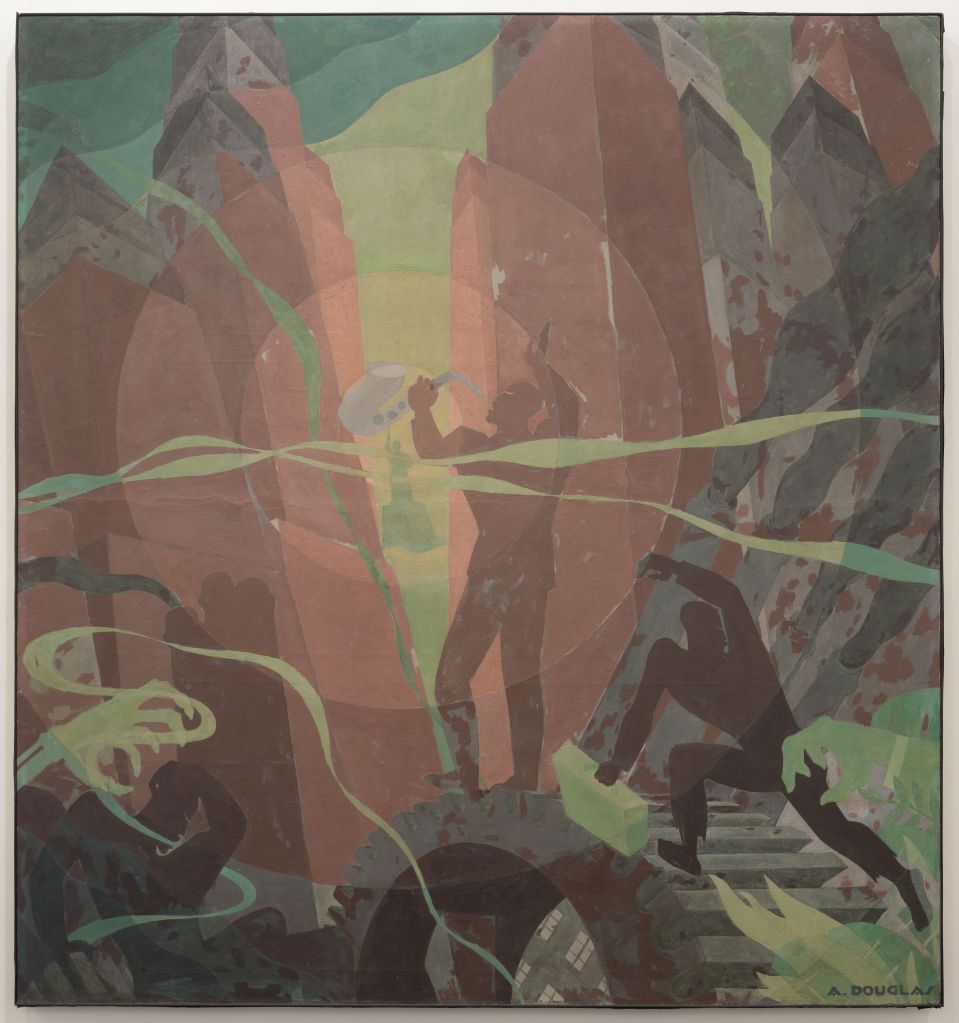
In 2023, there is increasing reason for all American people, including white people, to unite with Black folk and see the completion of the Black Freedom Struggle as the path to realizing a new American people. This includes the full recognition of the contributions of Black America to a new American culture. What better genre than jazz to capture this futuristic vision? This is the music through which white musicians have sought to find a principled place for decades, rich syntheses with Latin music have been achieved, and by which Black jazz musicians explored the civilizations of Asia. The same spirit that free jazz embraced and was embraced by the World Youth Festival of 1962—the spirit of Afro-Asiatic realignment of world humanity—is poised to transform the American people into the best that it can become and rejoin world humanity. Jazz’s capacity for cultivating advanced social relations, under the banner of struggle and principled unity, is precisely what makes it the most apt genre for a renewed, unified American people, as we must inherit this sacred tradition as our own birthright.
America’s future desperately depends on a radical, moral transformation, and its people must embrace the responsibility of becoming citizens of a country not yet born, as Civil Rights Movement forerunner Rev. James Lawson puts it. Thus, the liberatory possibilities of avant-garde jazz for the ideological struggle are what is needed for today: a dialectical methodology combined with the historical, spiritual grounding in a tradition of the blues, as well as the embracing of values of peace and humanity and world civilization. Perhaps the radical vision of Archie Shepp and his fellow free jazz luminaries of a revolutionary new world order—with the Afro-Asiatic reconfiguration of the world’s people, including Americans—are being fulfilled as we speak, although it may be different than how he originally imagined it.
Further Readings:
- Baraka, Amiri. Blues People: Negro Music in White America. New York: Perennial, 2002.
- Free Jazz Communism: Archie Shepp, Bill Dixon Quartet at the 8th World Festival of Youth and Students in Helsinki 1962 / edited by Sezgin Boynik, Taneli Viitahuhta; contributions by Sezgin Boynik [and 11 others].
- Black reconstruction in America: an essay toward a history of the part which Black folk played in the attempt to reconstruct democracy in America, 1860-1880 / W. E. B. Du Bois ; introduction by David Levering Lewis.
- McMillan, J. S. (2001). A Musical Education: Lee Morgan and the Philadelphia Jazz Scene of the 1950s. Current Musicology, (71-73). doi.org/10.7916/cm.v0i71-73.4823
- A View from the Inside, Downbeat 1966; An Artist Speaks Bluntly, Downbeat 1965
Footnotes
- “The unending tragedy of Reconstruction is the utter inability of the American mind to grasp its real significance, its national and worldwide implications… We apparently expected that this social upheaval was going to be accomplished with peace, honesty and efficiency, and that the planters were going quietly to surrender the right to live on the labor of black folk, after two hundred and fifty years of habitual exploitation. And it seems to America a proof of inherent race inferiority that four million slaves did not completely emancipate themselves in eighty years, in the midst of nine million bitter enemies, and indifferent public opinion of the whole nation. If the Reconstruction of the Southern states, from slavery to free labor, and from aristocracy to industrial democracy, had been conceived as a major national program of America, whose accomplishment at any price was well worth the effort, we should be living today in a different world. The attempt to make black men American citizens was in a certain sense all a failure, but a splendid failure. It did not fail where it was expected to fail… only in his hands and heart the consciousness of a great and just cause; fighting the battle of all the oppressed and despised humanity of every race and color, against the massed hirelings of Religion, Science, Education, Law, and brute force.” – Du Bois, Black Reconstruction, Back Toward Slavery ↩︎
- This formulation of jazz and the Black Freedom Struggle’s reconfiguration of America, its people, culture, and political fabric in new, democratic terms, goes beyond the liberal understanding of jazz’s role in helping create a form of multicultural democracy, as it is often proclaimed, especially by Wynton Marsalis and other artists highly lauded by mainstream institutions. ↩︎
- “Public school programs, interaction with professional musicians, numerous performance venues, and a civic emphasis on the performing arts combined to nurture talent in the city’s youth and encourage them to pursue a creative life in the arts. For jazz musicians like Lee Morgan, these elements were further complemented by the proactive attitudes of many of the city’s families, clubowners, disc jockeys, and, most of all, musicians, to provide the city’s aspiring young players with an invaluable foundation. This network can be called the Philadelphia jazz community.” McMillan, J. S. (2001). A Musical Education: Lee Morgan and the Philadelphia Jazz Scene of the 1950s. Current Musicology, (71-73). doi.org/10.7916/cm.v0i71-73.4823 ↩︎
- Trane also played R&B in North Philly clubs, as well as throughout the networks of clubs that stretched throughout all neighborhoods of Philadelphia, from North to South to West, where the Philadelphia Sound came to influence his music. For more on Coltrane, see For the Heart and Humanity – John Coltrane, by Serafina Harris. ↩︎
- A Voice from the Avant-Garde. Amiri Baraka, DownBeat Magazine 1965. ↩︎
- Archie Shepp in a roundtable discussion in DownBeat Magazine in 1966. ↩︎
- After 1962, Archie continued developing and asserting his militant political philosophy: He brazenly wrote the play The Communist, after his performance at the 8th World Youth Festival and the Soviet Union, at a time of heightened anticommunism Shepp also attended and played at the first Pan-African Cultural Festival in Algiers of 1969, reflecting his continued studies of West African and world music. He also went on to compose the album Attica Blues on the violently quelled uprisings of inmates at the Attica prison in 1972. It is evident that the Afro-Asiatic reconstitution of humanity and America and the West remained, if not grew, in importance to Archie’s highly advanced jazz practice and philosophy. ↩︎
- Later notable festivals were held in Havana, Cuba in 1978, and Pyongyang, North Korea in 1989. ↩︎
- It must also be said that there were attempts of American ruling elite then, to disrupt and counter the natural congregation of the world’s youth, the reconstitution of humanity along Afro-Asiatic lines, with a counter-festival titled Young America Presents in the city (featuring rock and roll, MoMA exhibitions of abstract expressionism, but was not as widely attended) and instigation of riots at the Helsinki festival (the CIA would later freely admit this), representing a threat despite their own citizens attending and performing. Just as there were attempts to disrupt this international gathering, along with assassinations and coups and wars waged abroad in Africa, Asia, Latin America, etc, we see the hand of the ruling class in the disinvestment and deindustrialization and gentrification of working class — this is a ruling class that sees this avant-garde political philosophy and art as its enemy. ↩︎
- While the quartet would have usually featured bassist Reggie Workman in their New York gigs, Workman was not able to attend and travel to Europe then. Instead the lineup at the Festival in 1962 deviated to include Howard McRae and Perry Robinson, on top of the usual musicians Archie Shepp, Bill Dixon, and Don Moore. ↩︎
 Avant-Garde: A Journal of Peace, Democracy, and Science
Leave a comment