

Read the Introduction, Part 1, Part 2, and Part 3 of the interview series with Catherine Blunt.
You talked about how the church was an important space, not just for worship and spirituality, but also for organizing. We’ve seen through Paul Washington and through Martin Luther King Jr. that the church is a real space for a mass movement of and for the people. What has happened since? You mentioned the decline of the black church. Why has there been a decline?
So the ministers that King hung out with in Philadelphia – they were an interesting group. My mother belonged to Bright Hope at the time, and King did come to Bright Hope. Those ministers that King aligned himself with were the ministers who were attempting to make changes in Philadelphia in conjunction with Cecil B. Moore. The ministers continued what Cecil B. was about, in terms of jobs and education, and especially education. They had big congregations. They were interesting because they were not seen as holier than thou. They were a little rambunctious – and so was King, and that was okay. (Laughs) They spoke truth in their churches. It wasn’t this mythical prosperity in heaven and on earth. It was about living a decent life and organizing to make significant changes within the communities and to serve the people. These churches also had young people in them as well.
Over the years, as these ministers – the Weeks and the Shepards and Reverend Gray – died off, as that generation died off, the newer generation did not understand the leadership that was provided by the previous generation and so they became separated from the people. Some of them became interested in their own prosperity, and others went strictly religious.

(Courtesy of the Special Collections Research Center. Temple University Libraries. Philadelphia, PA)
A lot of people who went to those churches and if they were professionals and had money moved out of the city. And the churches did not reach out to the newer residents within their communities. The churches died for the most part. For ones that are still around and have members – like Bright Hope – the members tend to be older.
The social culture of young people shifted to what we see a lot of now. Unfortunately, I think the interests of the youth tend to be directed and to some degree controlled by technology. The church no longer had a place in young people’s lives. The youth don’t see the church as meaningful anymore and are not going to church. It’s not just the churches’ fault. And perhaps, the youth do not understand the purpose and the need of the church – not just as a sanctuary, but as a place to go and help provide meaning and organization. I don’t see the black youth doing much of anything in Philadelphia right now. I’m not sure what they’re doing. I don’t see it. And it could be that I don’t see it.
It’s in part the churches themselves and the leaders who have been co-opted. Across the nation, some of these churches joined George Bush Sr., his “thousand points of light”, whatever that garbage was. They bought into that. And then, after that, they were co-opted by money and influence, and they ceased to serve the community. Unfortunately, they lost their way. What King did, with and through the church, was lost by these current ministers whose agenda is not consistent with his. They weren’t interested in the people at all. And they didn’t reach out to young people. But I have to say, the young people themselves are not interested in the church. They have more of an individual perspective rather than a group perspective. It’s more about “me” rather than we. Identity politics slips right in there. If all I’m going to do is think about me then I’m going to concentrate on my identity and not the identity of my people. I think that that has a lot to do with it.
You mentioned how in the churches today, it’s mostly older people. How do they remember this history that they were a part of or that was happening around them?
So you know the interesting thing is that when you talk to the older generation – which is my generation, I’m an elder – they will identify, they will remember. But it’s not passed on to the younger generation. We go out and do petitions around gentrification, and before Covid, we did community meetings around zoning and the impact on community members. Individuals, including homeowners, were open and welcoming to that information. I believe that the older generation are the keepers of the history. It was mostly folk who were 50 and above who came out. It was not the youth at all. I do believe that the force in the black community now is that generation, between 50 and say 80. We were just beginning to do our education in the community around these issues until Covid hit. A lot of the older generation are still strong but they’re impacted of course by Covid. We are separate now and it’s more difficult to transmit those experiences and that understanding. Covid has shut down recreation centers so you can’t have a meeting in a recreation center. You can have some Zoom meetings, which we have done previously. But getting out and collecting signatures and information has become very difficult.
The older generation is also the group who are the homeowners. They are the ones under assault. They are the ones who, when they went out to vote, could no longer pull the big lever. They voted for Biden, but when they had to then go down and vote for the individuals for state government, they didn’t vote for them! They voted Biden and that was the end of it. The interesting thing is this: under the guise of good government and democracy, the state legislature – and the Democrats supported this – decided that it was no longer feasible to offer that option to be able to pull the big lever and just vote everybody in the ticket. When judges of election had to run for office – these are all elected positions – they had to go online to do this. Most of your judges and majority inspectors are people who are 60 and older. Are they technology savvy? You understand what I’m saying? This was all by design. And I trace this back to Philadelphia 3.0, the Committee of Seventy, and all of those people who want to take over Philadelphia because of the particular power that Philly has. So the youth have yet to connect with homeowners. And for the most part, if they’re millennials, they don’t care about that group.
Can you speak more about how forces such as the impact of drugs, the universities, and gun violence are affecting community cohesion and the consciousness of the black community that has historically created movements and produced leaders?
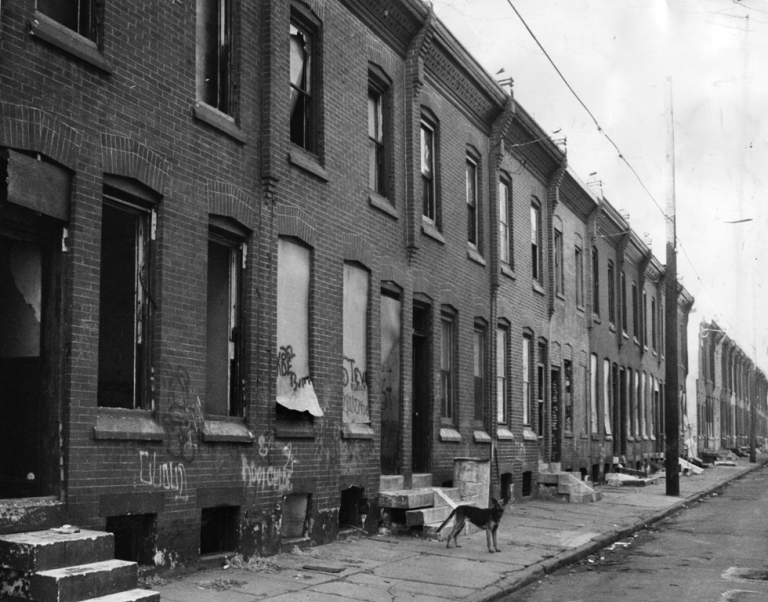
The black community is always under assault. Always. It’s just unbelievable. How we survived is just amazing. Things are allowed to happen. The community is allowed to deteriorate. Houses remain abandoned. Street services and trash services are not done. Dumping is allowed. We’ve had drugs before. We had heroin and even cocaine. For heroin and cocaine, particularly in the black community, it was mostly men.

(Courtesy of the Special Collections Research Center. Temple University Libraries. Philadelphia, PA)
In the 80s, I worked on Model Cities around Fifth Street. Around there, it looked like they had bombed out Beirut. All these abandoned houses. That neighborhood was left to deteriorate. But there was still cohesion. David Richardson was really someone. He was a young guy. He was Afro-centric. He was community-based. He was out of that Black Radical Tradition. He was a state legislator. He said we have to unify, we have to have a black agenda, we have to have a black coalition. As a young and upcoming elected official, he commanded the attention of young people the same way Stokely and the Panthers did. So even in the 80s, there was still unity within the community. We were doing our anti-apartheid work and our international work. We still had access to a media that was not dominated by corporate control. We were still able to get information out. Father Paul Washington was around and we had all the ministers.
Nothing was like crack. Crack hit in the 80s. I moved onto my block in ‘85 and young women on my block were on crack. Crack got to the female and got to the black community. I think for all communities, if you get to the women, you break that community. Drugs were filtered into the community to destabilize that community and destroy the backbone of that community. If you got the women, that was it. These were the mothers. These women bore crack-addicted babies. I don’t think we ever recovered from that.
Then, by 2012, the city had decided that it wanted to reshape and remake itself into an international but mostly white (and anybody who identified as white) city and marginalize and remove large segments of the black community. Houses on my block weren’t turning right then but surely after. People owned their houses. But then they lost their houses or they had to move. The children couldn’t stay because they were strung out. The young men on my block were drug-dealing. Though, the pusher in my neighborhood was a white guy who graduated from Penn, had a degree in law, and owned a lot of property. At some point, he lived next door to me. He called himself a contractor and he developed that farmers’ market. He would go to New York, which is where he was from, buy the drugs and bring it down.
We had the junior Black mafia. It was drug infested. A lot of crime. We had the Jamaicans. A lot of crime. We had the drug houses. A lot of crime. And it was allowed. Nothing was being done at all. People who could afford to run, ran. They didn’t want that. The same thing is going to happen with these guns. West Philly has been hit hard. People who don’t want guns in their neighborhood, people who are tired of gun violence – they will sell their houses, sell them cheap, and they will leave.
Daniel P. Moynihan coined the phrase “benign neglect”, which is the policy of “Well, we’re just gonna neglect them. We’re not going to do anything.” And that’s what happened. You have neglect by the city. You have policies that are not enforced. You have services that are not carried out. You have people who lose their houses. You have folks losing their jobs. When the city suffers a recession, jobs that should be filled, like trash collectors, are left unfilled. It’s only being filled by temp workers – people who won’t get any benefits. That’s a kind of assault that the city and all these various forces wage against communities of color as well as poor communities, but especially the black community.
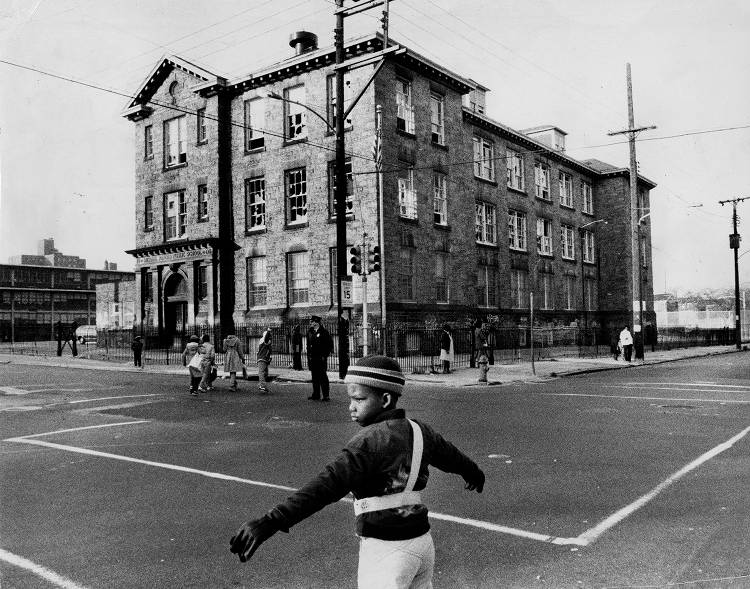


Images of ‘benign neglect’ in Philadelphia, 1960s-80s
(Courtesy of the Special Collections Research Center. Temple University Libraries. Philadelphia, PA)
If you go to where Councilmember Quiñones’ District is, which is District 7, the area around Huntington Park, oh my god, it’s terrible. Talk about density – people living on top of people. Density is not healthy. That’s a whole ‘nother thing. It is not healthy. These are conditions that support the capitalists and their rape of the city. They are dismantling the community because when you have a transient rather than stable community, you break the continuity and cohesion of the community. Moving in, moving out that kind of thing.
Another piece that you have to look at with gentrification is not just the large scale developers, but smaller scale developers that will come in and buy up a whole lot of housing and then try to turn them into Airbnb’s or short-term leasing. That’s what they’ve done across 52nd Street.
Property taxes were supposed to be used to fund public education in Philadelphia as is done in most municipalities with elected school boards. But because Philadelphia has a school board appointed by the Mayor, property taxes are controlled by the city and not by an elected school board. Frank Rizzo was the first mayor to use property taxes as income for the city. At that time, he took 15%. Under Mayor Street, the city took 33% of property taxes to fund city operations.
And in 2012, under former Mayor Nutter, the city began taking 46% of the property taxes meant for public education. In addition, under Nutter, the Actual Value Initiative (AVI) increased property values over 100-500% in neighborhoods targeted for gentrification, which caused property taxes to also increase 100-500%. Primarily Black, Latino and mostly working class poor communities, especially in West Philadelphia, North Philly, and South Philadelphia were targeted. Through gentrification, particularly around the universities, this was the beginning of the agenda of making the city white again. But it was also a tool to enable the wealthy to purchase and repurpose land in order to build huge apartment complexes that equal and or rival entire communities with respect to the number of people residing in them. Generally, these provide for transient populations who tend to be the young technical and managerial class and not engaged in the neighborhoods in which they reside. They are numbers such that, particularly in local elections, they can outvote the local community around long-term community concerns and issues. It’s a generational, economic, and race divide. For the transient, upwardly mobile technological and managerial class, it is important for the city to focus on putting bike lanes on major streets. However, for local communities, quality education and employment are more important.
The city revenues are declining because of the displacement of home ownership and gentrification that is replacing home ownership in Philadelphia, particularly in the communities targeted. With a poverty rate of 25-26% in Philadelphia and the intentional assault on home ownership, the city is contributing to its declining secure revenue base. The 10-year tax abatement [on new construction and the value of new home improvements] is also a major contributing factor.
Now, the city is looking at property taxes as its almost exclusive revenue because they’re doing a 10-year tax abatement and they’re not really taxing the businesses the way they should. For 2023, the city has increased the property taxes in these targeted neighborhoods 50% or more, which again is putting Black and poor home ownership in jeopardy. Property taxes are paying for the city, but we have a dwindling homeownership, so that’s a contradiction. If you’re against homeownership and you’re assaulting homeownership, then what do these apartments pay in terms of taxes? How is a city going to recover from a 10-year tax abatement? Where is revenue coming from? It’s not coming. It’s not. I’ve never seen anything like it. This is a city that has a declining revenue base. So where’s the revenue going to come from?
Then with the money it has, the city is going to neglect the communities that it neglects and focus on the communities that it wants to develop. It allows for communities to be destabilized, cohesion to be disrupted, and people to be chased out of the city with the notion that new people want to come in and want to live in the city. Now, will it really happen? I don’t think so. But do they care? The developers make money after they develop those buildings. What happens after that? I’m not sure. The thing that I can say is, there is no plan. Even with Philadelphia 2035, which is the city planning plan, there’s no real plan for the viability of the city. And so when you leave capitalism to its own devices, this is what you get. You don’t just get it in Philadelphia. You get it across the country, particularly in urban areas.
This issue of homeownership is absent from what you would call the modern day leftist agenda. Overall, what has been the impact of gentrification, on the black community, especially in terms of the level of cohesion and consciousness among people in the city?
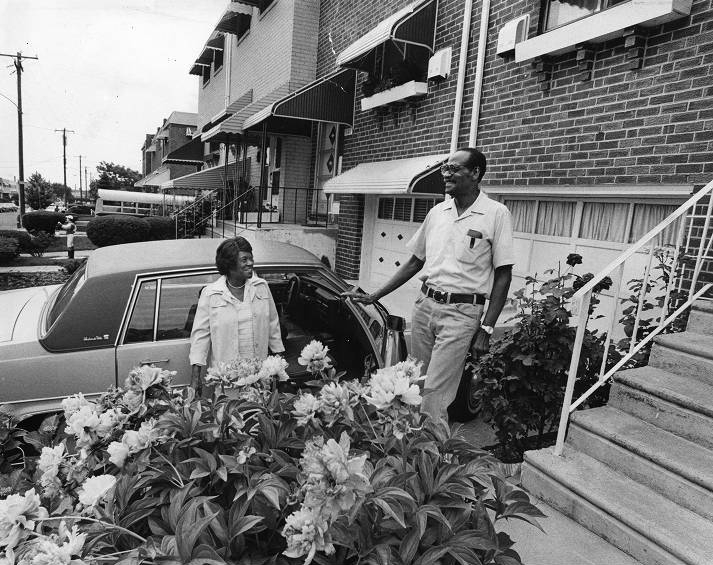
Homeownership is important. If you own your home, you have a stake in your neighborhood. You will work with your neighbors to maintain your community. You look out for your children. You care about your schools. You can do mixed housing – homeownership and rentals. Doesn’t matter. On my block, we have rentals too. We try to embrace everybody and everybody kind of has the same vision about the community. It’s self-determination. People’s right to self-determination. We’re talking about communities. We’re talking about sovereign communities with rights of self-determination – rights to determine what their community should look like, how it should exist, how it should develop. Since we have a country that doesn’t support the right to self-determination on an international level, do you think they support it on a community level?

(Courtesy of the Special Collections Research Center. Temple University Libraries. Philadelphia, PA)
Housing not only provides structure and a sense of value and of worth, but also wealth and generational wealth. We live in a society that is about consumerism, where selling becomes more important and getting that little bit of money becomes more important than maintaining your house for your heirs.
I’m kind of brand new to this. But I saw things happening in the community that I did not like after I retired from the school district in 2013. I live in an expanding University City neighborhood called Cedar Park. I am passionate about Cedar Park because their agenda as I witnessed it has been against black families and black homeownership. They promoted and are part of the gentrification of the neighborhood. I watched my block, which was 100% black at some point turn 75% white. The last two-story house on my block sold recently for $550,000. Small backyard, small frontyard, finished basement, four bedrooms, maybe one and a half baths. A half a million bucks. The house next to it sold for $440,000, same scenario. Another house sold for $430,000. My neighbor’s house sold for $670,000. So I know that black folks will probably not be able to remain given the speculative housing pricing and the increasing real estate assessment by the city along with the increasing property taxes. Since we are a historically organized block, we need everybody to be open, friendly and engaged. Some are great neighbors who have moved in and come concerned about block issues as well as overall community issues. Others are not necessarily as engaged as the block needs them to be. The challenge for the block is the same challenge for the neighborhood, that is to build unity among its black, white, Asian, Latino neighbors. Gentrification works against building that unity.
I moved into my house in ‘85 and it cost $35,000. At the turn of the century, this was all white and Irish Catholic. It was called the trolley car suburbs. As those folks moved out across 63rd Street, Drexel, and other places, black people began to move in. The houses then were $5,000, $6,000. Some of the big houses on 46th Street went for $11,000. I lived with a family on the corner of Spruce and 47th. They got their house for $29,000. Now that house is worth like $700,000. I and many others began to see that the development of the neighborhoods was taking a turn that would definitely push black and poor people out. With speculation, housing prices and therefore property taxes rose so quickly and so high. People were being pushed out through the property taxes. People were also being pushed out because of the tangled titles where a house was owned by a mother who passed. The title was never transferred to the children, or the house was passed to the children and they fought and they lost the house, or the children didn’t pay the bills or the property taxes and they lost the house.
Black homeownership had been very high in West Philly, North Philly, not Kensington, and certain sections of South Philly. Now, all these areas have been highly gentrified. When Jannie Blackwell lost the election in 2019, a group of us approached her about forming a registered community organization (RCO). The RCO would deal with zoning matters on behalf of and for the community. The reason we wanted to form our own RCO was because our established community groups, like Cedar Park, Spruce Hill, etc., have RCOs but the RCOs are not of, by, or for the community. They generally went along with gentrification. We knew that we needed to have a voice in what was going on, particularly since Jannie Blackwell was not going to be our councilperson.
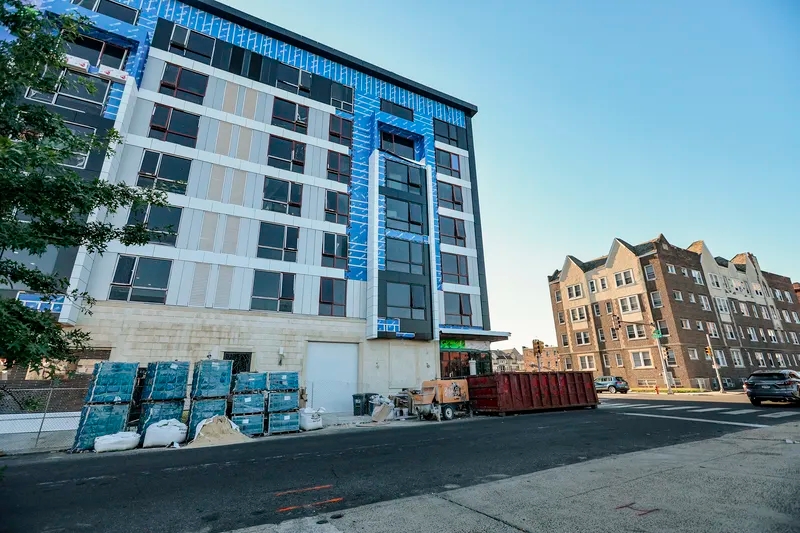
In 2012, [Mayor] Nutter remapped a lot of areas in the city on behalf of the developers and turned many neighborhoods that were residential single family into residential multifamily (RM). Under RM, a developer can build on a two-story block a house that is larger than two stories that included some sort of roof deck. When we formed the RCO, our first task was to do what we call “safe zone” or “down zone” or “correct zone” the zoning in the neighborhood. We did a petition drive. We did community meetings. With the help of Councilwoman Blackwell, we wanted to remap so that we could rezone significant areas of the 46th and significant areas of Kingsessing. She introduced that legislation for us. Usually, City Council members will go along with the member of City Council who’s introducing legislation. The legislation was passed and we were able to “correct zone” from residential multifamily to residential single family and this was good because these neighborhoods were still overwhelmingly single family neighborhoods.
(Courtesy of Steven M. Falk. Philadelphia Inquirer. Philadelphia, PA)
Now it doesn’t save the neighborhood entirely. But what it does is that if developers, even small developers, buy property and want to turn it into a duplex or triplex, they have to request a variance through Licensing & Inspections (L&I). This kicks off the RCO variance process in which there’s a community meeting where the community has a discussion and votes. It then goes on to a Zoning Board of Adjustment (ZBA) hearing. ZBA members were initially appointed by former Mayor Michael Nutter and were then reappointed by current Mayor Jim Kenney. The members have a stake in the development game and are not independent people. They have corporations or are members of corporations, etc. And so, everything is stacked against the community. But still, we used and still use the ZBA process to inform and organize the community about what’s happening and to get them to show up to the community meeting, as well as the ZBA hearing, to confront the developer. But it’s up to the Zoning Board to support the community, which it does not. City Council President Darrell Clarke had done a study and it said that 98% of the time, the zoning board supports the developer and not the community.
Progressives critique what Blackwell and you were standing for because the progressives stand for “density”.
And “affordability”.
But it’s just a guise for the developers and their work in changing this built landscape that has housed single families for a long time and still remains that way.
Individual home buyers cannot afford the two-stories, so people have been gradually turning them into apartments, which was okay. People would also rent a house, which is also fine because we have to find creative ways to provide housing. And we’re talking about affordable housing. The 46th Ward RCO along with some other RCOs similar to mine, decided that we’re moving away from the term “affordability”. We want to talk about low-income minority housing based on a minimum wage, because that’s the only thing that’s affordable. They use Area Median Income (AMI), which is bullshit.
Having been part of the movements you were part of and seen the changes in Philadelphia and the world in recent decades, how have they influenced your teaching and organizing work today?
As a teacher, whatever I learned, I brought to the classroom. I would have young people reading what I read. When I was in Temple, I had a course called “The Nature of Modern Man in Twentieth Century Thought” and it was about existentialism, Marxism, religion, etc. That course was very informative and eye-opening. I didn’t know about existentialism when I was growing up but I saw that as part of the human condition so I brought that into the classroom. I brought the anti-Apartheid work I did into the classroom. I brought the anti-imperialist work I did into the classroom. I brought guest speakers into the classroom.
So somehow or another, we’ve got to get back to connecting with people and connecting with communities to work with them around their issues and their concerns and to be part of their organizing and in confronting the city government about their issues. And that’s why I do the anti-gentrification work – to try to use that as a vehicle for me to connect with the community around issues of housing and quality of life concerns that gentrification impacts. This is something that would allow us to have meetings in churches, to have meetings in recreation centers, to train people about responding to gentrification, etc. As part of that, I work with Jannie Blackwell who is the Ward Leader of the 46th Ward. But, Jannie came under attack by Jamie Gauthier and the [Philly] 3.0 money folk. And the Ward came under attack by Reclaim. They want to take over the Ward, and Jamie Gauthier wants to be the Trojan horse for the gentrifiers. And so that then got me more involved in the ward in terms of helping to organize the Ward and being involved in planning the meetings and distributing information. I’m also the block captain of my block and the judge of elections for my division.
What these positions do is give me access to people and allow me to appear legitimate in the community. I need the community to see me as someone who is principled, who will stand up for what is right and will advocate for what is right, and who will not back down from a challenge. That legitimacy allows me to enter into community meetings and host community meetings. And then that enables me to make the links between the housing problems in Philadelphia and with housing problems, you know, across the nation and internationally. It leads to the struggles of folks seeking self-determination, and it leads to an understanding of what U.S. imperialism is. When you look at Iraq, it’s unbelievable. They have destroyed a civilization. You look at Afghanistan, unbelievable. But, you can make those links. Those links can be made. Once you get people to understand that, they can struggle against the oppressive nature of the state as they are experiencing it in Philadelphia.
 Avant-Garde: A Journal of Peace, Democracy, and Science
Leave a comment