

Read the Introduction and Part 1 of the interview series with Catherine Blunt.
So in terms of your own personal journey, it was the barbershop and meeting Tony Monteiro that got you more personally involved in these different political struggles?
Yes. So I graduated high school — I was considered smart but I wasn’t considered academic. Shoot, I just went to school (laughs) you know, but I had no particular interests. I had friends who knew they wanted to be secretaries and all that stuff. I didn’t know what I wanted to be. So when I graduated with no particular skills, I could only get a job in a clothing factory, which was boring. So I decided — a history teacher of mine said, “You need to go to college. You should consider that.” And I decided to pursue that. And when I got into Temple in the 60s, around ‘64, you know, my first year there I was acquainted with the black sororities and I was not into that at all. I couldn’t see [myself] pledging or anything like that — it didn’t make sense to me. I was still part of the community, rooted in the community, but I had been influenced by the guys in the barbershop, my friend Earl, and my sister and her sense of internationalism. So for me, I just didn’t see joining a sorority as something that I wanted to do. So I went to school. And I particularly liked my English teacher, who was very political, and he had us doing a lot of political work.
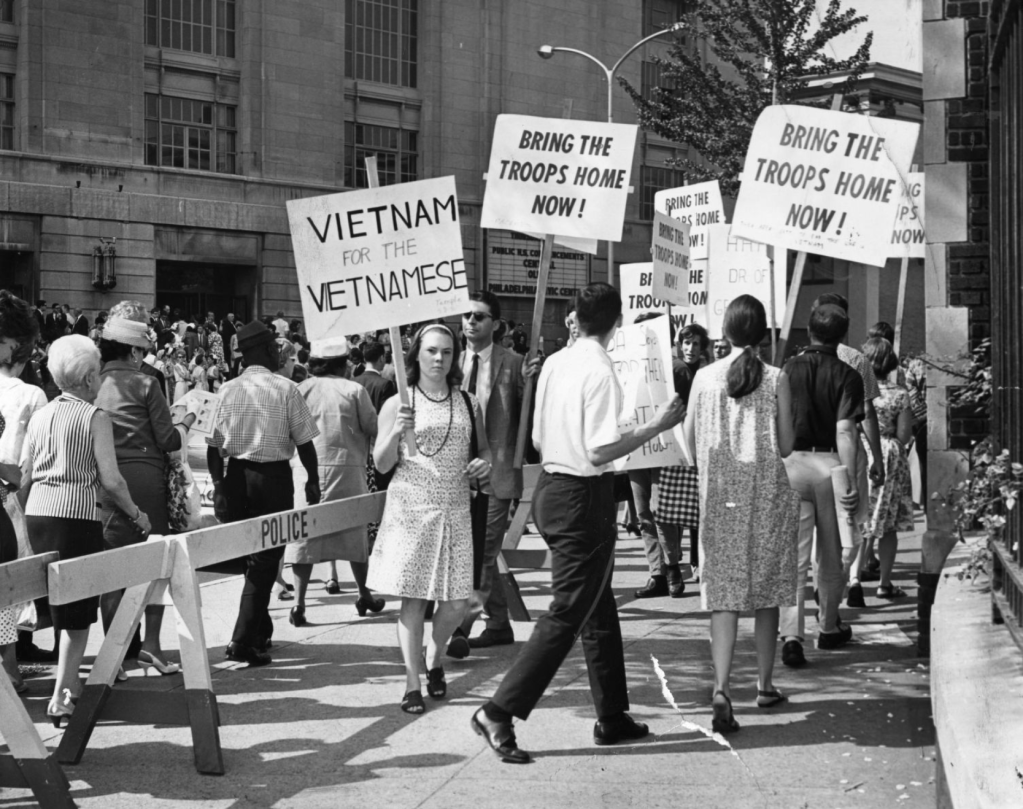
But by my sophomore year, that’s the year that I really got involved in political activity. And that was the anti-war movement, initially. The organizing against the war in Vietnam. So I and my friend, Lenora, whose family background is interesting because they’re from the Bahamas and her aunts are the Fernandez sisters who created Odunde — they had an identity with Africa, and they wore African garb back in the 50s. I couldn’t believe it, you know. But now in the 60s, I’m realizing who and what they were about. And they practiced the religion of Yoruba, and they were politically active in the city. And these were women that I looked up to — I didn’t actually know them, but I looked up to them. It was sort of like calling me home, calling me to identify with Africa and my roots, so to speak. And so Lenora, their niece, and I were just among the few blacks who got involved in the fringes of the anti-war movement along with an African woman by the name of Julia Dube. And she was from what was called Rhodesia then, and Namibia. So we operated on the fringes. And then, at some point, I gravitated toward the African Student Union, which was a student union of African students who were in the Philadelphia-Delaware Valley area, who went to local schools like Penn, Lincoln, etc. And they were mostly from southern Africa. And that was my first acquaintance with southern Africa — not specifically South Africa but southern Africa. And basically then, I became more concerned about, more engaged with those issues. And at the same time, there was my friend Brenda Ithana who had an affinity and affiliation with Namibia or Rhodesia. And of course there was Tony.
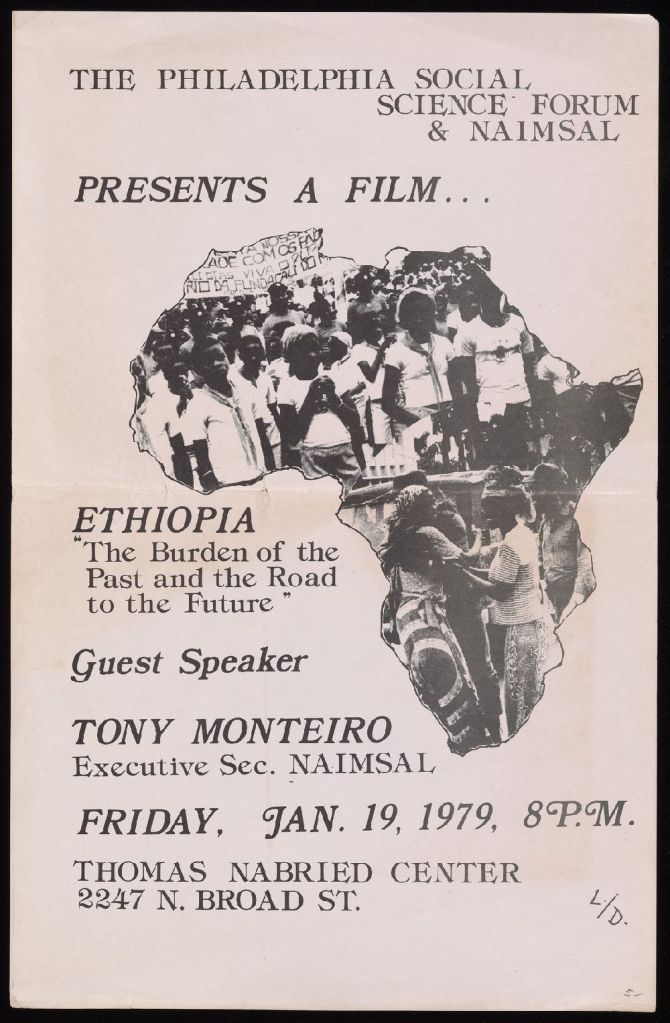
So Tony had created a group called NAIMSAL — and we used long titles back then. (Laughs) NAIMSAL stood for the National Anti-Imperialist Movement for Solidarity with African Liberation. And that basically began my political work in terms of identifying, or engaging with the struggle of southern Africa, specifically, and Africa in general — and linking those struggles to my understanding of what was happening in the United States, with black people especially. It actually helped clarify issues because I could see that situation with apartheid — I could see those tentacles of apartheid present in US society. I could see how the apartheid government acted against the well-being of the black people of Africa and southern Africa.

And so it became clear in doing this work, and learning about South Africa, that the struggle in the United States for black liberation needed to take on some of the tactics that were being used by the ANC in South Africa, and SWAPO in Namibia, and Zimbabwe — it was ZANU, I think, in Zimbabwe. So that’s what we did. With NAIMSAL, we did community outreach, we did radio shows. It was work that helped communities in Philadelphia see the connection between southern Africa and Philadelphia, and what we were struggling with — with respect to jobs, education, etc.
Of course we certainly publicized some of the massacres, like the Sharpeville massacres, the Soweto uprising, etc. And of course Nelson Mandela played a big role in what we educated about. And Winnie Mandela was very instrumental in galvanizing women in the peace movement to embrace the struggle of southern Africa and the struggle to free her husband. She doesn’t get the play she needs, she doesn’t get the play she deserves, but she was instrumental not only in Philadelphia but across the globe. She wrote a book called Part of My Soul Went with Him, and this book was sold throughout the world and it talked about her story and her support of her husband and how she was banned in South Africa because of her allegiance to the ANC, the Communist Party, and her husband. She was fierce, alright. If you haven’t seen the Netflix movie about her life, I highly recommend it.
So that goes to one of our questions. This era you’re describing in terms of the mid-60s and the 70s and going into the 80s. For you, who were the leaders you trusted whether that was in Philadelphia or in the US or even internationally, as you mentioned Winnie Mandela and Nelson Mandela?
Of course there was Cecil B. Moore, Paul Washington. Everybody loved Father Paul Washington. He was fierce but he was a humanitarian. He opened his church to us. He was about love and humanity and truth. He gave us a place to have our meetings and to have our events. He made the Church of the Advocate a very important part of the history of struggle in Philadelphia and the history of movement in Philadelphia. Of course there was Martin Luther King. The other ministers, but not as much. Bill Gray who was the minister of Bright Hope. Basically what I liked the most about that era was that the churches were used to inform, engage, and mobilize people. That was significant. They were used during the Civil Rights movement in various campaigns down south. But they were also used in Philly and parts of the North because we had significant problems in the North and King did not realize these problems until he left the South and went to Chicago. And he saw how virulent racism was among the white workers in Chicago. I think that turned him around a bit. He did not know or realize until his campaign for fair housing in Chicago, affordable housing for black people in Chicago, how disconnected the white community was with any concept of humanity and “do unto others,” Jesus’ last commandment. And it became strikingly apparent to him that the struggle for civil rights was beyond the south. It was throughout the country, and it was a struggle for human rights and human decency. And that I guess began his trajectory as well.


(Courtesy of the Special Collections Research Center. Temple University Libraries. Philadelphia, PA)
And of course Stokely Carmichael was very flamboyant. He adopted another name, an African name. And Jesse Jackson. He ran for president twice. He built the Rainbow Coalition. Yes. It could have morphed into a third party. But again he went back to the Democrats. And that mobilized a lot of people as well. And you got Fannie Lou Hamer. You just have a host of these wonderful women and men and young people who stood up against the oppression of the legal, economic, and political system of the south. Jesse Jackson came back to Chicago and did PUSH. He was flawed, but we’re all flawed. But he did do some significant work around pressuring these corporations to provide jobs for black people. And that’s important. Without jobs, decent jobs, the lives of black people would just be drudgery, and the only outlet would be drugs, which happened in the late 80s and 90s, alcoholism, violence and crime. So he was important.
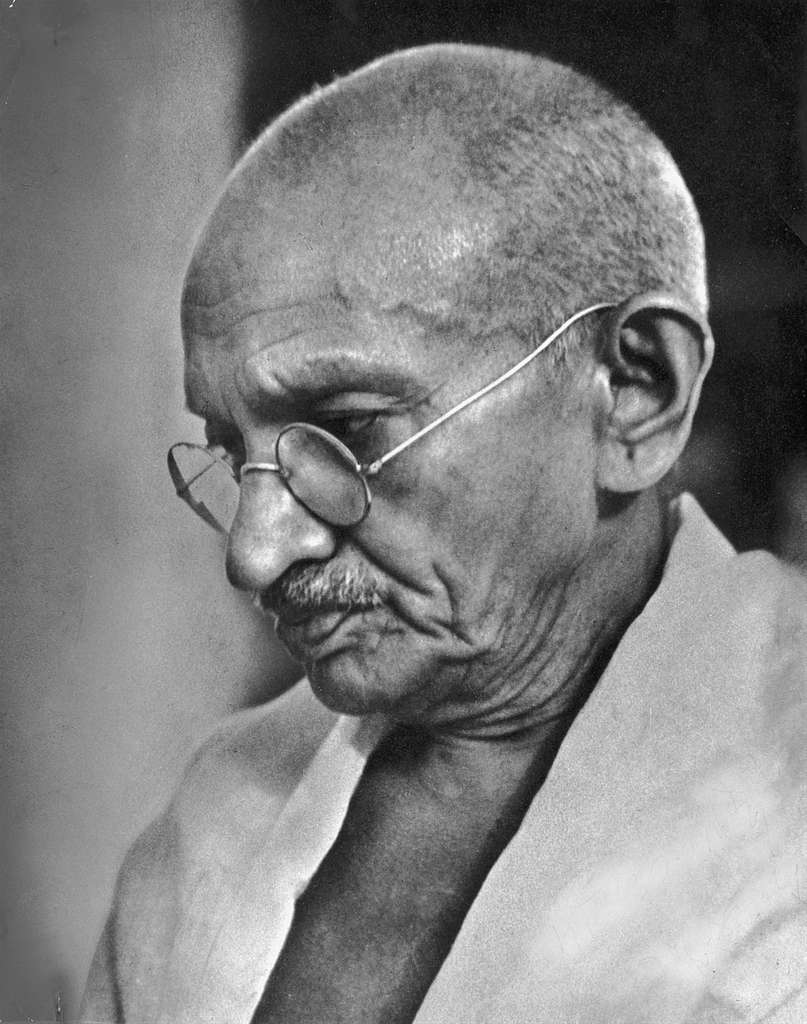
Internationally, Fidel. We loved Fidel. Fidel — when he came, we were so pleased. Fidel captured our hearts because of what he stood for and what he did. Again, another link to internationalism that was available to us back then that is not available now. It was a clear link in which the black community, unconfused, embraced him. And then of course Lumumba and that struggle. Gaddafi. (Laughs) Yeah, we loved Gaddafi for what he was trying to do with his people and his place environmentally, what he was trying to do economically. He was a flamboyant character, but he was a person of the people. And that is what we were seeing. These were leaders of the people. Nkrumah. Of course Gandhi, which King brought to us. There were many more. Sekou Toure. There were many more that became our heroes.
In terms of nationally, Shirley Chisholm was a hero. These were people who were trailblazers confronting racism and segregation and discrimination in the United States, and making that confrontation public. So we kind of understood who we were and where we were, rather than this naive allegiance to America.
I stopped saluting the flag in my senior year of high school. I stopped saluting the flag. It didn’t make sense because it became apparent it wasn’t aligned. It’s not one nation under God, indivisible with liberty and justice for all. That whole business of liberty and justice for all was a lie. Because racism was alive and well. It was at that time in my senior year in high school, that I became aware of the inequality in the United States, particularly as it related to black people. It became known to me. The other piece was that I was also aware of Appalachia and the fact that this country did not care for its poor white people either. The pass they had was that they were white. But they lived worse than I did in the projects. Appalachia was dirt poor, and there was no outreach or commitment to the poor white community, to the very poor white community in rural America and middle America. So I was aware of that as well. So basically as we grew older and became more aware of the inequality, the system of inequality, [that] it just was not someone’s preference. We became aware it was a system. And we read these great books: Wretched of the Earth, The Spook Who Sat by the Door, there were a whole host of books. There were black book stores and we went to those book stores, and we bought books and we read books and we discussed those books in our social circles. And those books helped inform us in terms of the community activities we engaged in.
What you said about the anti-war movement in the mid-60s and going forward — did you view that as a white movement? How did you see it in relation to the black freedom struggle?
At Temple they had teach-ins, and we had progressive professors who were part of the anti-war movement. But the anti-war movement was white basically. That was why I gravitated away from the movement. It wasn’t that I gravitated away from the issue because I was still concerned about the issue. But the anti-war movement did not connect itself to the liberation struggle in the United States or to the liberation struggles happening abroad. And so it was very precise in its identification of its issues. The good thing was that it challenged the system. It challenged the system publicly, and it had white youth questioning the system which they had not done before. Some of these people on college campuses went to college because they didn’t want to go to war. Those who avoided the draft also went into teaching, and some went to Canada. But it basically was a white movement. Like I said, there were a few blacks I could see [at Temple]. It was me, Lenore, and Julia, and maybe a couple more with the focus of black students being either about sorority/fraternity issues whatever they were, and the more political ones, gravitating towards the civil rights movement. And some went south. There were local chapters and so some got engaged in local chapters as well. SNCC and CORE. We had options. It wasn’t that the anti-war movement wasn’t important, because we were against that war. It was just that we did not and could not identify with how they were organizing and engaging their activities against the war. At some point we had to move on, and engage in activities that were more about us and the international scene.

(Courtesy of the Special Collections Research Center. Temple University Libraries. Philadelphia, PA)
One of the things I hear you saying is that, the white students who would lead the anti-war movement, they wouldn’t have seen the anti-colonial struggle as part of the struggle for peace.
They wouldn’t. The peace movement was altogether separate from them. You know, ‘cause there was a peace movement that I later affiliated with. I mean, there was just a lot going on. And at some point, they all just kind of intersected: the peace movement, the anti-apartheid movement, the struggle for liberation — black liberation in the United States — at some point they all came together. I mean, they dealt with other issues, but the anti-war movement, from what I remember, was mostly against the war in Vietnam. And I think that may have come about because of the draft, and young white men were being drafted into a war they didn’t want to fight. And I can understand that, nobody wants to go to war and die. The other piece about the anti-war movement, the anti-Vietnam War movement — we learned about the Vietnamese people and the struggle that they had engaged for over a hundred years to be free. And that was important, that was very important. Because that again became part of the puzzle for us as we tried to learn about the struggles of the people seeking self-determination, because these were struggles against imperialism, particularly US imperialism, you know, after some of them overcame European imperialism.
So, for me, learning about the Vietnamese people came as a consequence of my learning about the anti-war movement and engaging in the anti-Vietnam war movement. And, of course, King wrote his piece and we all listened to King. And, you know, [James] Baldwin was a hero. And [Paul] Robeson, at the time, I didn’t know much about Robeson and I didn’t know much about [W.E.B.] Du Bois. But they were in the background. And, you know, the Communist Party had a significant influence in a lot of the movements because Communist Party members were involved in many of the movements and helped shape those movements. Tony [Monteiro] being a member of the party at the time. And, of course, I knew Henry Winston and Gus Hall. And actually, a lot of my circles and a lot of my work involved working with members of the Communist Party. I didn’t know of any Communist members involved in the anti-war movement. But I didn’t get deep into it, I was on the fringes. I came out to demonstrations, I did the teach-ins, etc. But I did not join any of their groups.
And so it was more in terms of the anti-apartheid struggle that you worked more with people in the Communist Party?
When I became a teacher, there was a caucus called SEAC in which I worked with members of the Party. My union was the Philadelphia Federation of Teachers, and our caucus was the School Employee Action Caucus. It was a caucus that had Communist members and in leadership. And there was a Black caucus of the Philadelphia Federation of Teachers and that too had Communist members and in leadership. Then there was the peace movement which also had Communist members and in leadership. There was the Soviet American Peace Council and it had Communist members and in leadership. So, the Communist Party did play a significant role in developing awareness and guiding political activity. It was not that they took over the groups but that they supported and informed the groups to help the organization have a more sincere perspective and outreach to the community.
Could you tell us more about the Martin Luther King Jr. Anti-Apartheid Coalition? How was that formed, and why did you choose to specifically connect it to King?
So from NAIMSAL, which is what Tony formed, Brenda Ithana and I formed something called CAFSAN. Coalition for a Free South Africa and Namibia. And we did that because we wanted to focus on Namibia and South Africa. Brenda was particularly interested in Namibia. And so we became CAFSAN. We went to the UN, testified at the UN. We went to meetings, community meetings in New York. So we were, along with NAIMSAL, the organization doing the anti-apartheid work in Philly.
And so there was a call, not by me but by other forces and agencies — I’m trying to remember who it was, maybe the American Friends Service Committee because we worked with them as well — to do an all-night demonstration downtown at City Hall to emphasize the evils of apartheid. And it was a coalition of groups which came together, which included CAFSAN, and out of that all-night activity, the Martin Luther King Anti-Apartheid Coalition was formed. And it was formed because of his position, Martin Luther King’s position, on apartheid in South Africa. Or at least the event was called for that reason, and I think it was on the anniversary of his death. I can’t remember exactly the date that we started it.
But the event was an attempt to take control of the narrative away from NAIMSAL and CAFSAN. So yes. It got real deep. (Laughs) Especially since we were now talking about the linkage between Israel and South Africa. And we were opposed to the Sullivan Principles [by Rev. Leon Sullivan]. We supported the cultural boycott, and we boycotted performers who came to Philly who went to South Africa. So it was an attempt to take the narrative away from us, which was primarily led by black people and some communists, and to make it more white and more legitimate.
So we joined with the other groups. We had speakers come from various places — the peace movement, etc. We had speakers, international speakers, etc. So when it was over, there was a call for the formation of the Martin Luther King Anti-Apartheid Coalition. They wanted to put Jerry Herman, who headed up the southern Africa desk at the American Friends Service Committee, into leadership even though the bulk of the work was being done by CAFSAN. It was Jerry Herman who they wanted to anoint and appoint. That did not go down. It was then suggested by organizations who came to that meeting to form the Martin Luther King Anti-Apartheid Coalition that I be the other co-chair. They did not want that at all, but they had no choice. I had more legitimacy — or equal legitimacy with Jerry Herman. The other piece was that a lot of progressive good folk were part of the work we were doing because we worked together with other organizations. You didn’t have to be a member of CAFSAN. We all kinda came together and worked together. And so the Martin Luther King Anti-Apartheid Coalition was formed with Jerry Herman as co-chair, and me as a co-chair. Ultimately I became the chair. So that’s the formation of it.
So with me and the forces in the anti-apartheid coalition, the Martin Luther King Anti-Apartheid Coalition, we pursued the international perspective and we relayed it to home. We also linked up with other groups. Really it was the freedom fighters, the Nicaraguan freedom fighters, El Salvadoran freedom fighters, and even in Northern Ireland — Sinn Fein and those folk. And of course the Palestinians. So that was big. And Zimbabwe, because we had folk from Zimbabwe. Namibia, South Africa. All of that came. And many of the people, when South Africa and Namibia became liberated, they went home and became ministers, etc. At the time initially when they were here, they were students, grad students, etc.
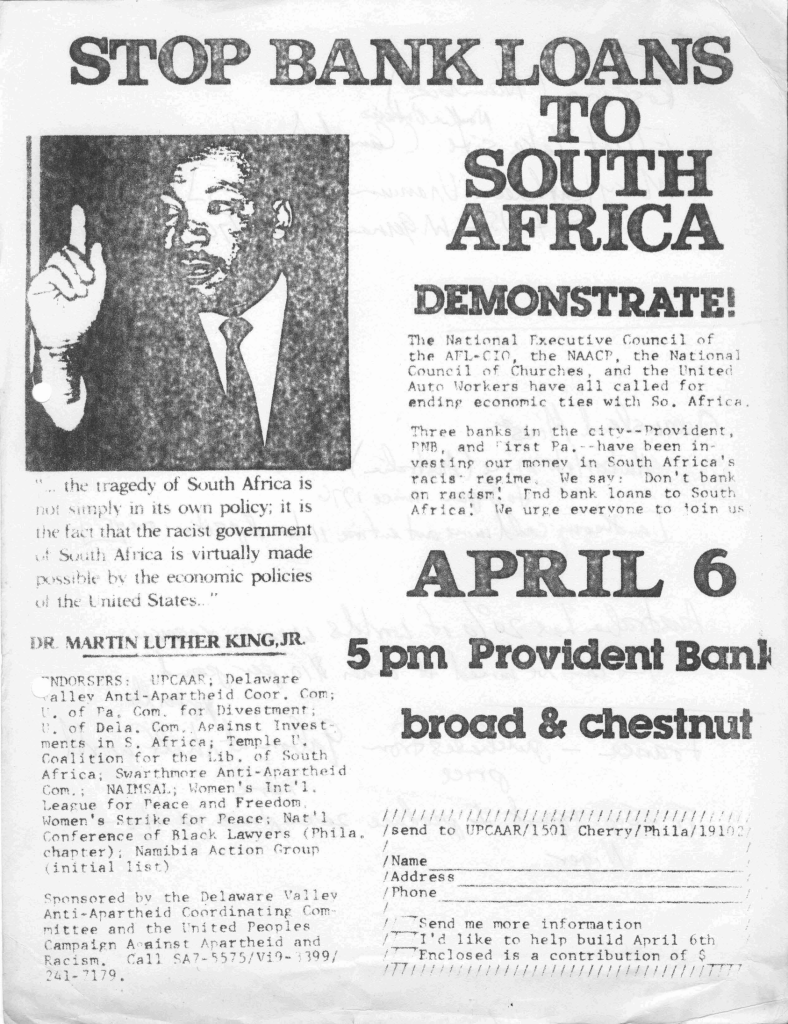

So at any rate. The linkage with Israel and South Africa loomed large, and that was not something that the United States or Israel wanted. Let me say this — that was not something the United States or the Zionists wanted exposed. Yeah, the Zionists. I’m not talking about the Christian Zionists. I don’t understand how there’s such a thing as a Christian Zionist but that’s a whole ‘nother matter. You know back in the 60s, Zionism was racism. And Zionism was equated with racism as defined by the UN. So the UN did have a proclamation naming Zionism as racism, proclaiming Zionism to be racism. So again that relationship with South Africa and Israel was supposed to be and needed to be, from their perspective, hidden — particularly as it related to Palestine, to the Palestinian struggle.
And we came together, and we did events focusing on the various struggles, peoples of struggle, and the issues of those struggles. And there was a Jewish rabbi from South Africa that forces tried to promote as someone who was anti-apartheid. He had attempted to divide the group and mostly work with white Jewish members of the group and exclude black members. And Brenda Ithana went to an event in which that occurred. And she called them out on it. And of course, he got upset. We were having an event and he wanted to speak at that event and I would not let him speak because of his behavior. And then a letter was sent to, I guess, one of the peace groups that was part of the Anti-Apartheid Coalition. A group called SANE? Headed by Miller — I think it was Joe Miller. To call for a meeting. To talk about how the rabbi had been “discriminated” against. It gets deep. (Laughs)
And this is the kind of underhanded stuff that is done to preclude clarity from being a unifying point by which we organize and do activities. And we had the meeting, and so Joe Miller was there and other people were there. We talked about the event, but it boiled down to essentially that the whole approach was racist. And anti-black and anti-woman. Because I was a black female in leadership. They were calling my leadership into question, thinking that I could not handle this situation. And indeed I sent the rabbi a nice letter in which I told him the same thing with respect to him and his relationship to Zionism. And he backed off. And they backed off because they always tend to use their muscle to talk about how they are being mistreated, sort of like identity politics. And it takes the focus away from the issue. And that’s what this was all about — trying to muddy the water so people are not clear. And what he was trying to do, I can’t remember his last name, he was trying to then promote South African-Jewish involvement in the Anti-Apartheid movement so as to take away the relationship between Israel and South Africa. And he was doing it in such a way that he was excluding blacks in events and activities that he was doing, but he got caught. So I mean it got deep. And I suspected some Mossad [the National Intelligence Agency of Israel] agents in the organization. Yes. Mossad spent a lot of time in Philadelphia. They had agents in Philadelphia because of journalists working for the Tribune who took a very positive stand regarding the Middle East and other organizations. This was huge. And I didn’t realize particularly until this incident how huge it was basically in terms of how Zionists attempt to control the dialogue and to control political activity. So I haven’t bothered to do much in depth research on it, but I know that from talking to people in the media and from looking at politics in which you better not to do and say, I look at that and I can understand the impact that Zionism, and the money that Zionists control, has on electoral politics in this country.
Can you tell us more about how you were connecting local Philadelphia politics with what you were doing at the UN as part of CAFSAN and NAIMSAL? Did you give testimonies at the UN?
The testimony at the UN talked about what was then the South African policy of creating these so-called homelands for the African population of South Africa and what was happening with the West Bank in Gaza, and related the two settler regimes of South Africa and Israel and what they were doing with the population. Because we realized there was a link between the two. And it also spoke to, or was reminiscent of, the kind of redlining that was occurring in the US and Philadelphia with respect to limiting where black people could live, the jobs that they could do, etc. So apartheid South Africa and Zionism in Israel were reminiscent of discrimination, segregation, and Jim Crow laws in the United States. So we could relate to that. We could gather support from the black community because people were aware of the situation that we were experiencing here. So when we talked about the experience of the African population specifically, they could identify with that. And they could also identify with what was happening to the Palestinian people in Gaza and Israel proper. So it was like shared experiences — and the fact that, of course, both struggles held respect for Martin Luther King, and saw what he did particularly in the later years — as something that they could identify with. So that’s the connection. The shared experiences. That even though they were worlds apart and miles apart, the experiences were the same; the discrimination, not being allowed to live where we wanted to live — you know for us it was the “last hired, first fired”. Just the lack of equal treatment was something that enabled us to make the connection and to gain support in Philadelphia for the anti-apartheid movement but also help people understand the struggle of the Palestinians at the time. But it was also Northern Ireland as well, which was going through a similar situation with the Protestants.
What year were you giving that testimony at the UN and what do you remember in terms of its impact, or how was it received?
Well it was part of the general anti-apartheid movement and testimony that was requested with respect to apartheid in South Africa and Namibia. So it wasn’t in isolation. The UN was certainly a lot more credible organization at the time and had a lot more impact than it has now, because it was not so much under the control of the United States. So what happened was, they used the testimony from us to create policy, and that was the purpose of it. Developing UN papers on apartheid, there was a UN paper on the relationship between South Africa and Israel. Namibia was a trust of the UN. So it was the UN gathering information, developing documents in support of their position against apartheid, their position against Zionism, which was known as racism at the time, and their position in support of the people of Namibia.
One of the other questions we had was about the 1955 conference in Bandung, the Asian African conference, and also the Non-Aligned Movement. The different Asian and African leaders at Bandung focused a lot on the UN. Today, the UN is viewed as maybe less credible or more serving the interests of the US, but it seems that at the time, there was a much greater faith, sense of hope and optimism in terms of what the UN could accomplish and what it could stand for.
That’s true.
Since you were hearing about stuff that was happening internationally in the 50s and 60s, we were curious — did you hear anything about the Bandung conference?
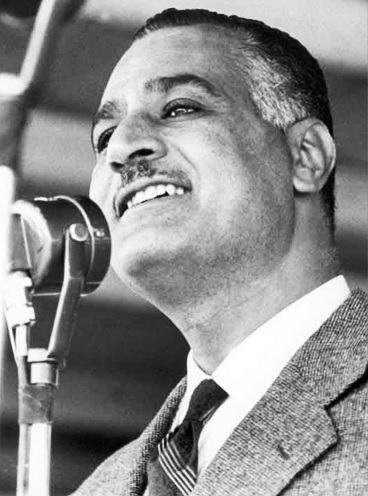
No, Bandung was not part of common knowledge. However, we knew of people like Gandhi, Nkrumah, Nasser, etc. All those people were important, and we knew there was an international movement for liberation of people of color. And so what we did was in conjunction with that, but was never necessarily directed by that. It was like the spirit of the times. A sense of liberation, especially Martin Luther King and his work — that was very, very key. And Malcolm heavily influenced us. Martin — whether we agreed with him or not — if you ever see the footage of those demonstrations, and the firehose trained on those young people, and the dogs sicced on those young people, and the brutality, whether it was in the South or even Chicago, you know it was clear that there were some serious issues within this country around race that had not been dealt with. And this division that people talk about now, it was evident then. But Malcolm, Martin, Baldwin — very, very key, because the Civil Rights movement and the Black Power movements, and even the Nation of Islam, all of that kind of helped form a consciousness that we had about struggle and about the international perspective that the struggle had to take, which of course Martin Luther King especially talked about. So again, we didn’t know about the conference, but it was the impact of the conference and the after-effects of the conference that influenced what we did.

(2nd photo courtesy of the Special Collections Research Center. Temple University Libraries. Philadelphia, PA)
In relation to what you’re saying about Palestine and South Africa — do you have thoughts on the current boycott divestment sanctions (BDS) movement regarding Palestine?
So, you know, what has happened since those days when the UN was really credible and Zionism was labeled racism is that the UN took that back. They backed off of that and put out a position in which they backtracked and they dropped the notion that Zionism is racism. Now this is the result of the strength of the Zionist movement and the impact it is having on national and international affairs. And it is now impacting the boycott movement, and in fact, universities are clamping down on students who are involved in those movements. Zionism is now branched out into some Christian Zionism that I never knew existed until recently. The Christians were not so much anti-Jewish, but they did not necessarily connect with or identify with the Jews — or Israel. Not the Jews, but Israel, because we have to separate Zionism from Judaism. But Zionism has taken over, for the most part, the identity of what Judaism — Jews are. And the whole religion of Judaism, except for the more conservative Jews who don’t believe in the creation of Israel as a state. But the whole creation of Israel as a state, as a homeland for the Jews, which was an end product of Zionism, actually now has morphed into something much larger and bigger. Few people running for office in this country will say anything against Zionism. Nor will they say anything in support of the divestment movement of Israel. And Israel is now seen as the modern-day apartheid South Africa. And that divestment strategy that was used in South Africa is now being used with Israel.
Now, the understanding about the nature of Israel and the relationship between the black community and the Jewish community — that relationship has become murky. People are not clear. And it’s not that there’s a relationship against Jews, but there’s a relationship against Zionism and what it stands for, because it is racism, just like apartheid was racism. But the problem is, if you say that now, there is a pushback. And they are equating anti-Zionism with anti-semitism. And they are now using that notion to then attack that movement. So now, I have not been able to connect with that movement, except through an organization called Jewish Voice for Peace.
I think that what also is happening — there’s so much that’s happening just within the United States and the struggle that we have for survival in this country. That has made it very difficult for us to even focus on some of the international issues that we should have. The clarity is not there any longer. And building that clarity is problematic because we don’t have access to the media like we used to. Because back then, the media was not so focused on disinformation, misinformation, nor was it controlled by the state. We now have a media that is controlled by the state. We also have people who are in a deep sense of poverty now and there are lots of struggles, and trying to now do the international piece with them is difficult because we have to address the prevailing problems in this country. Gentrification being one of those issues, but it is a signature issue that impacts black, brown, and poor people. And it is one that will, and has destabilized the community and has displaced people and has also led to confusion about elections, etc. So, yeah. This is a different time, and it’s difficult to maneuver, and to manage, and to mount an international position and support for an international position. And it’s even more difficult to deal with all the strands of assaults that are coming against the black community and working people — it’s just a difficult time.
How do you strategize in terms of confronting the system and rallying the community and mobilizing the community around issues? How do you decide the tactics of certain struggles? Was there a sort of evolution?
You know you learn through engaging in the process. You make discoveries that you will not have thought of. You learn that you have to have principles of unity. You really have to have that. Because the principles of unity help you stay focused and help you avoid people who are not going to be about the same things that you are about. So when you first organize your core group, or what I call your steering committee or ad hoc steering committee, in forming an organization and reaching out to the community, you first have to develop a mission and a vision. It’s the same thing that I did when I was planning school improvement. It’s the same process, but what’s different is that your vision and mission must be based on principles that support and encourage the betterment of humanity. It must be based on truth and it’s got to be rooted in history.

So your principles of unity, by which you try to attract people, have to be basic humanitarian or humanistic principles. And that’s why I like so much — and I use it all the time now — I like the Beloved Community, I like the Single Garment of Destiny, and I like the World House. Those now are my three main principles of unity, you know. Because I think that the Beloved Community talks about engaging the community around issues important to the community and engaging in a moral, principled way. Kinda like what Doc (Tony Monteiro) says, “Whose side are you on?” And then understanding that’s your side. You know who your other side is. They might not necessarily be your enemy, but you know they’re the other side. And you decide how you’re going to engage the other side. You also then develop steps that you have to take, to engage the community, to work in the community, to encourage leadership in the community, to use that leadership in the community, not in a negative sense, but in a positive sense to become more outspoken regarding community issues, and then become the leaders of the community to confront, let’s say City Hall or the mayor, whatever. So that’s the Beloved Community from my perspective. The Single Garment of Destiny means that we are all in this together. Black, white, whatever — doesn’t matter. We are all in this together, and we need to find ways to connect that we are all in this together and that we have to be a united front based on principled-ness and based on morality and based on a love of humanity to confront the forces that intend to keep us apart and intend to exploit. And of course, the World House is the international movement. So this is something that I picked up from the Free School that helped me finalize the three principles for me that are significant for doing this community organizing and attempting to do international work.
There’s more to it than that, but those are the three principles that I use to go forward with. And I’m beginning to incorporate that into the work, into the dialogue and narratives around gentrification. And around quality of life concerns, and around education. That’s the other thing I do, I still do education. I’m still involved in education, and I’m working in a couple schools, and being on some committee with the Board of Education. Because it’s actually organic, as you engage your work and the people involved in your work, you do have a plan, you do have objectives and steps that are achievable. You need to have some success. So for us, one of the plans was to educate. And we did that through community activities, radio shows, you know it’s like what you guys do now through Saturday Free School — the streaming, the various articles you guys have written. That’s the education process and it’s very important and you cannot leave that out. And that education process is your outreach. And then there has to be some goals you want to achieve aside from education and aside from outreach. You have to select some activities either like a campaign with city council to pass legislation that would do X, Y, Z. Although I don’t particularly care about legislation, what I care about with respect to legislation is the fact that it provides an educational tool. And that’s important as an objective and as a goal.
But I think that in order to get big change, you have to have a mass movement. These are like the beginnings. Use this as a beginning of a mass movement where people are engaged toward some action that will make their lives better in Philadelphia. Also to turn the attention of people from Philadelphia to the broader international community, to then engage in activity around that. The problem is now, what will that activity be? Because this is huge. The state is unbelievably embedded in everything that we do. So as Doc says we have to look backwards to see how to go forward. And I think that some of the work that King did in terms of his organizing, some of the work that the Panthers did, and the organizing work that they did is important. I don’t know how we kill this beast. I really don’t know how. But you guys are young, and you have time to figure it out. We’re gonna leave it to you guys, but the intent of course is to kill this beast at home and internationally.
 Avant-Garde: A Journal of Peace, Democracy, and Science
Leave a comment