

By Meghna Chandra and Archishman Raju.
Every generation seeks to understand its place in history. In this quest, they turn to the intelligentsia, whose role is to assess the world and provide a vision for the future. We believe that the Indian intelligentsia today has completely failed the youth, leaving them rudderless in our times. In this series of articles, we seek to understand the crisis of the Indian intellectual and look to the past for answers about how to redeem the promise of our history.
We do this in a time of shifting epochs. The Western world is in an existential crisis. The period of Western domination which has so shaped the last four centuries is set to become an aberration of history as the world returns to its natural center in Asia and Africa. It is clear to all competent observers that Western political and economic domination is waning as a multipolar world arises driven by the rise of China. This is a time ripe with possibilities as we enter into a battle of ideas to reshape the global order.
The global political and economic decline of the West is not commensurate with the ideological power that the West continues to hold in India. Westernized Indian intellectuals who are either in the West or of the West continue to be enslaved to a colonial past and a neocolonial present. Despite being inheritors of one of the foundational mass struggles in world history, they espouse ideologies which are completely separated from and antithetical to the Indian masses. This complete separation of the intelligentsia from the masses has created a dangerous ideological landscape which has completely diverged away from the mainstream of our Freedom Struggle, and left a generation without the tools to grasp their place in history.
The Indian intellectual and their ideological landscape
The ideological landscape of the westernized Indian intellectual today can be judged by a few representative examples. Ranajit Guha and colleagues see the Indian Freedom Struggle as a power grab by the leadership, their identification with the masses little more than self-interested manipulation. Arundhati Roy questions Gandhi’s leadership of the poor and oppressed and consequently sets out to de-deify him. Sunil Khilnani sees the idea of India as democracy, by which he means Western liberal democracy. Jagdish Bhagwati busts “myths” about socialism and the incorrect direction of Indian economic policy up until the 1990s.
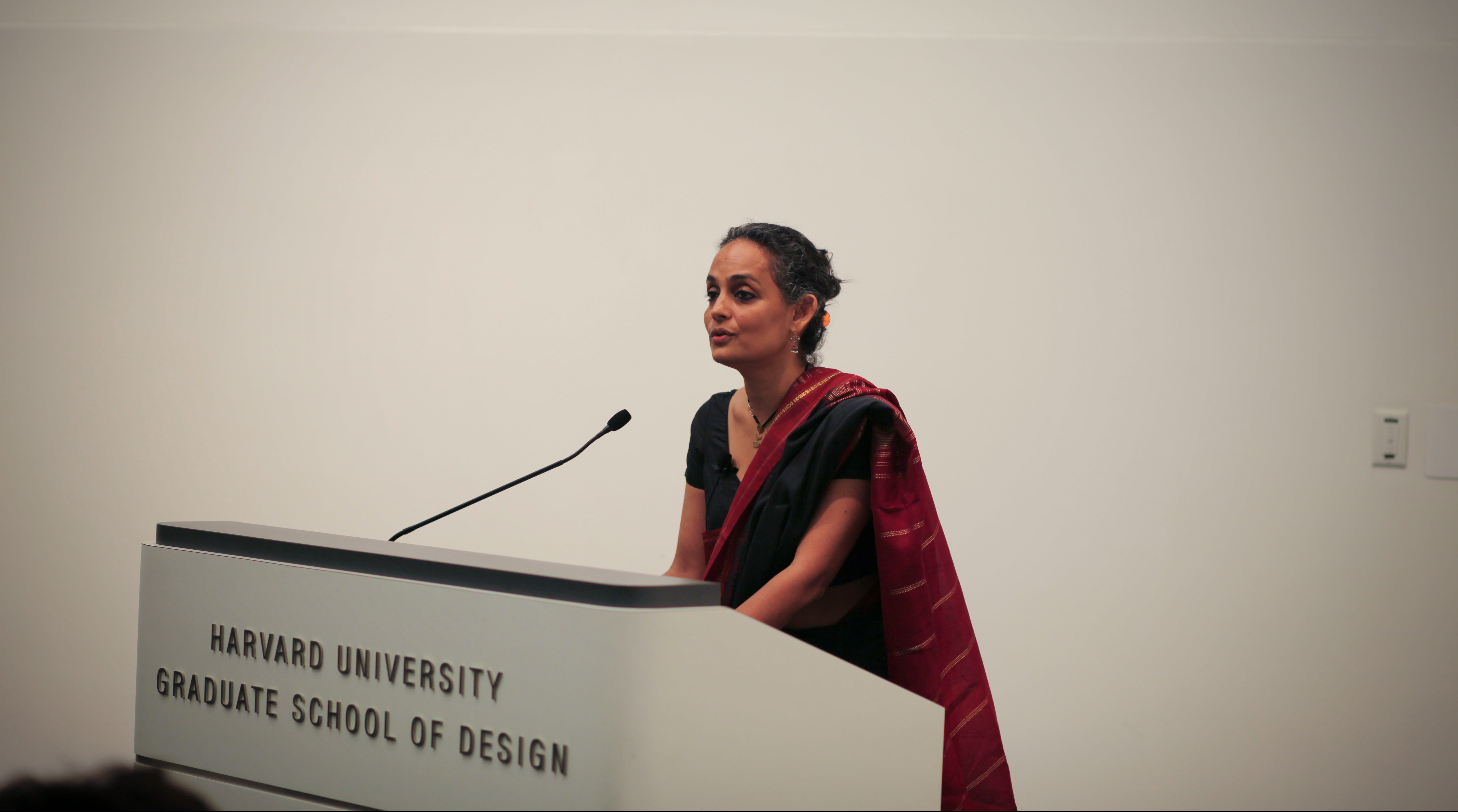
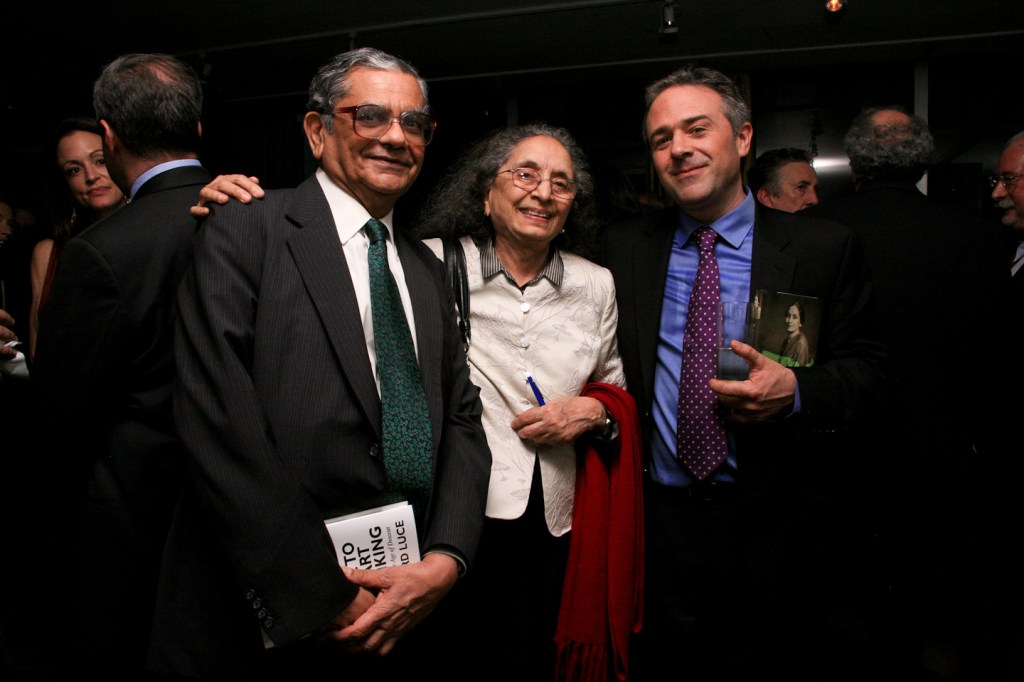
While these positions seemingly have vast differences between them and are even seen to be in opposition to each other, they have an underlying unity. What unites them is their active opposition to the essence of the main revolutionary struggles of the 20th century, the Russian Revolution and the anti-colonial struggles—expressed in the joint struggle against imperialism and poverty. This is proved by their anti-communism, silence on imperialism and attack on the leaders of the national liberation movements. In removing themselves from the foundation which provided sustenance to intellectuals of the past, the current intelligentsia has lost its way. In our times, it must choose whether it will return to this foundation or die a slow death along with the West.
The roots of western influence on the Indian intellectual have a long history. As D.D. Kosambi would say, “The most noticeable feature of the Indian city bourgeoisie is the stamp of the foreigner…The intellectual apes the latest British fashions not only in clothing but even more in literature and the arts.” As the centre of empire has shifted, the Indian intellectual in the United States is now the most visible face of the continuation of the colonial strategy to rule the country through a minority elite. Indians have been accepted into the highest levels of American intelligentsia in a way that no other non-European group quite has. American students learn from Indian intellectuals that “the subaltern cannot speak”, about the “hybridity” of cultural encounters, and that European history and historiography must be “provincialized”. On the other hand, they learn why capitalism is a superior system of economics, and how the poverty in third world countries is a consequence of their own mismanagement. This discourse has little meaning to the lives and struggles of the Indian peasantry or working people but earns the intellectual endowed chairs in the most prestigious universities: Princeton, Harvard and Columbia.
The field of “Post-colonial studies” has almost entirely been defined by Indian intellectuals and their white American colleagues even though its name seems to imply that it refers to the experience of all colonies. In essence, it is a nuanced reconstruction of the pro-imperialist Cambridge school of historiography for it ultimately views the Indian Freedom Struggle as a failure. This assessment of the struggle is not only untruthful, it furthermore insults the sacrifice of the great masses of people for our freedom.
The Freedom Struggle, the Indian State and the Attack on It
The legacy of the Freedom Struggle is faced with an unprecedented ideological attack. During the struggle itself, there were always criticisms and debates, though these were done by participants in the struggle. The Communist Party of India, for example, declared India’s independence to be a lie and for a brief period waged armed struggle against the newly independent state. The Dravidian movement sought an independent state within the South. The assassin of Gandhi was a member of the Hindu Mahasabha. However, at best, none of these movements could effectively show in practice that they had a strategy to unite the country against British imperialism, and at worst, they were actively aiding the imperialist strategy of divide and rule. If anything, we should learn in retrospect from the strategy that did succeed in uniting the people and gaining freedom rather than from those which remained marginal.
All movements that were marginal during the Freedom Struggle now hold ideological sway over the intelligentsia. Slogans that belonged to the mainstream of the movement like national unity and development are now seen as “reactionary”. Leaders who were held in great national esteem are now seen as precursors of “Hindu chauvinism”. Even just eleven years after independence, Aruna Asaf Ali had come to the conclusion that “the Indian intelligentsia was getting confused about the great objectives for which the people had struggled”. Six decades later, this confusion has turned into active hostility.
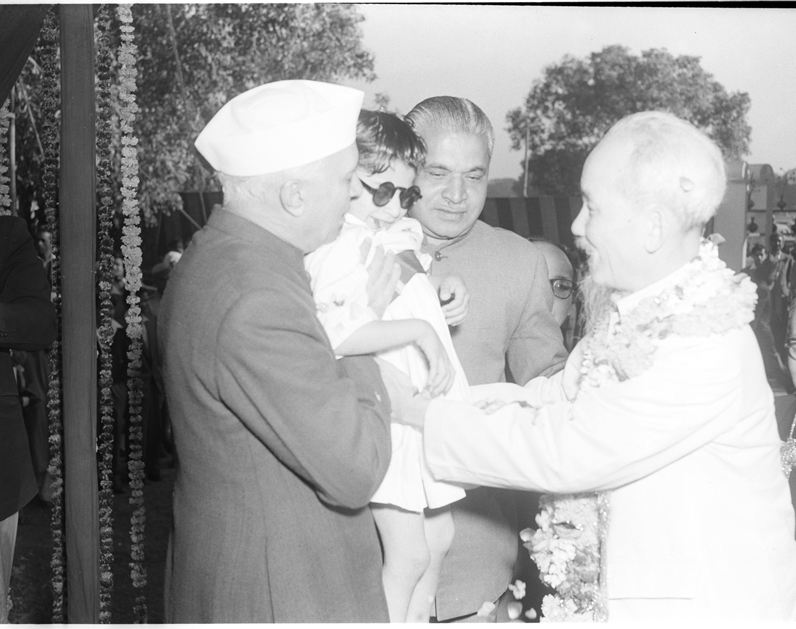
In the post-modern view, represented by Guha, Spivak and others, the leadership of the Freedom Struggle is viewed as merely representing “Brahmins” or “the bourgeoisie” even though it was manifestly a leadership of the whole people. The masses of people are rarely mentioned, and their liberation is not even a topic of discussion. The masses and their organic leadership that emerged from the struggle is variously criticized as “patriarchal”, “casteist”, and “racist” and these contradictions are then held ultimately responsible for what is wrong with the postcolonial national order. These criticisms have crystallized in the attack on the struggle’s foremost leader, Mahatma Gandhi. Gandhi is seen variously as elitist, racist, parochial, irrelevant or worse. These claims have no truth when examined closely in each case, but they furthermore contradict the testimony not only of the great masses of people who followed him, but furthermore of leaders ranging from Ho Chi Minh to Martin Luther King Jr. who expressed their admiration for him.
The liberal intelligentsia is less critical of the Freedom Struggle and its leadership directly, but has twisted its meaning to make it unrecognizable. For them, the primary meaning of the Freedom Struggle was the struggle for democracy. It is clear, however, that by “democracy” the likes of Sunil Khilnani and Ramachandra Guha mean only Western liberal democracy. They see the Indian experiment as closer to the ideas of the French and the Anglo-American bourgeoisie than to the African and Asian masses and their organic leadership. This is why they are unhappy with the direction of Indian foreign policy, particularly under the period of Indira Gandhi, and mystified at the positive view that the Indian leadership had of the Soviet Union.
Finally, the technocratic elite represented by the likes of Jagdish Bhagwati and Arvind Panagriya identify the problem as the socialistic policies beginning with Nehru but particularly of Indira Gandhi. They do not see capitalism as linked to the imperialist world order, and are open about how much it pays to defend this world order. The Washington Consensus, they claim, was not imposed upon India, it was simply a gift of policies that India already wanted by the IMF and the World Bank.
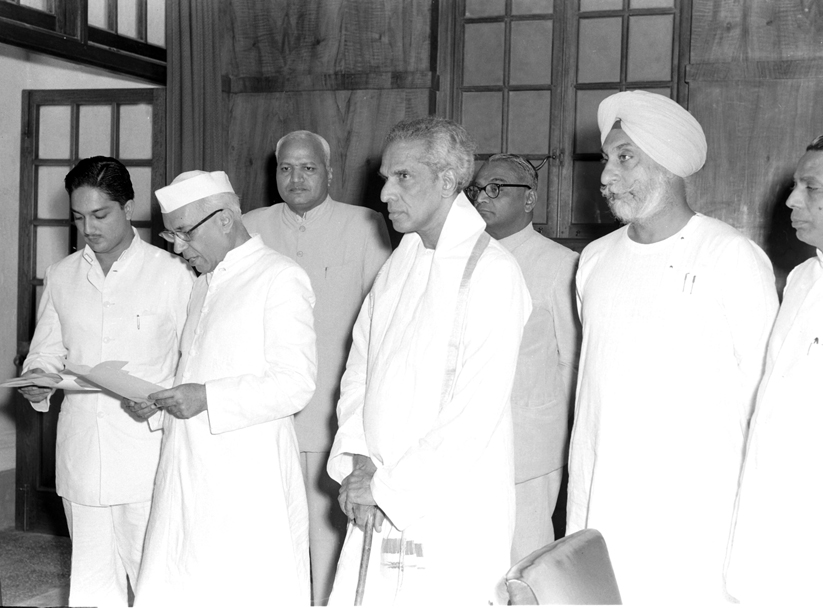
While the generation of intellectuals that emerged from the Freedom Struggle were often trained in the West and were familiar with it, they grew to, in one way or the other, reject it and attempt to get closer to the masses of Indian people. In return, they were treated quite literally as savages by the West. Whether it was Gandhi’s classic rejection of western civilization, Rabindranath Tagore’s plea for a return to the East, Kamladevi Chattopadhyaya and Lala Lajpat Rai’s critique of the American racial order, K.M. Panikkar’s de-centering of Europe from world history, D.D. Kosambi’s scientific study of Indian history, Krishna Menon’s tireless argument against imperialism or Mulk Raj Anand and Sajjad Zaheer writing of the beauty and humanity of the Indian poor, Indian intellectuals exposed the pathology of western civilization and guided their people in struggle against colonialism. This was done with a basic idea in mind: that the masses of people should be freed from exploitation. That past generation faced challenges much larger, and even if they were not able to completely resolve them, they conducted themselves with a basic commitment to the truth, and with a spirit of honor and self-sacrifice. They loved their people, and in turn, they were loved by people.
Our current crop of Indian intellectuals have abandoned any notion of having to give back to the people. They very probingly question the class interest and composition of our national leadership but rarely question what class interests they themselves serve. They are most comfortable in the polite atmosphere of Western Universities even as these universities are ideologically and morally bankrupt and at the centre of a reactionary system of imperialism. These civilized representatives of the Indian peasant politely reassure the westerner that colonialism was not so bad after all and their society was befuddled by contradictions to begin with. There will have to be no moral reckoning for the two hundred years of exploitation, degradation and violence that millions had to face, for they deserved it in the first place.
The Way Forward, the return to civilization and the Unity of Africa and Asia
We see the Freedom Struggle not as a failure, not as a movement for the elite, but ultimately as a movement of the masses of Indian people. In that sense, we see the period after the formation of the Indian state as a period of continuing national revolution. We thus see the Freedom Struggle as incomplete and our task today as the completion of the Freedom Struggle. However, the form that this will take is different from the form it took under British rule. It is important that we preserve and defend the Indian state, as the state is the only democratic instrument that can be leveraged by the people against imperialism. The period of liberalization was a turning point which led to the weakening of the Indian state and our self-reliance. The centre of empire has shifted to the U.S. which finds itself today in a deep crisis.
The crisis of the Indian intellectual is deeply linked to the crisis of the West. The West is faced with a civilizational crisis where the twin poles of liberal democracy and capitalism both face an uncertain future. When combined with the rising economic power of China and the demonstrated success of the Chinese political system, we are further provided with the possibility of a different world order. The Chinese state, sometimes referred to as a civilizational state, has been successful in eliminating extreme poverty. Furthermore, Chinese political theorists have emphasized the unique nature of their state which ensures peoples’ participation in a way distinct from western liberal democracy. The Indian intellectual is at cross-roads: whether to attach oneself to a decaying western civilization or whether to return to the source, to creatively renew themselves on the foundation of their own civilization and people. To continue the legacy of the Freedom Struggle means building the Indian civilizational state and to leverage it in the struggle against poverty.
One tendency that we do not explicitly cover but attracts a lot of attention is cultural nationalism. This is the idea that nationhood should be defined by an essentially static culture. We instead see revolutionary possibilities in the culture and civilization of India and the people of India. Even as cultural nationalist elements may be in power today, it is precisely a retreat of the intellectuals from the people, and the alternative of the rule by westernized experts that has opened up the space for cultural nationalism to dominate. Cultural nationalism remains a marginal position within the intelligentsia and has no basis in the Freedom Struggle. Nevertheless, the liberal criticism of cultural nationalism tends to be hollow and lazy. It does not seek to examine why the people have rejected the elite technocrats and post-modern intellectuals, which is our primary focus. We will examine the concept of the civilizational state further in the third part of this article.
Ultimately, the task before the intellectual today is to make an epistemological break with the West. It is to synthesize the revolutionary traditions of the 20th century and creatively apply them in our current context. The Freedom Struggle provides us with an ample basis for this epistemological break. The Indian Freedom Struggle was a world historic struggle. This is why it made such a deep impact on revolutionaries around the world, including Kwame Nkrumah, Ho Chi Minh, Julius Nyerere, W.E.B Du Bois and others. This Freedom Struggle attempted to return to old civilizational traditions and contribute to the making of a modern revolutionary civilization. Furthermore, it attempted to unite the colonized peoples of Asia and Africa in the common struggle against imperialism. It stood in solidarity with the socialist experiment done in the Soviet Union.

We are faced with a world where it is now possible to return to the Freedom Struggle’s visions of unity and peace in Asia, of the construction of a civilizational state which retains elements of one’s own civilization, and to the task of removal of hunger, poverty and illiteracy combined with social reform. This will require both a reworking of the elements of the state as well as a return to a socialist economy. The task is not so simple as to combine elements of the West with our own culture. It is necessary for us to reject the West before we can accept its progressive aspects, because our acceptance today is based on our debasement. The idea of India was deeply connected to a rejection of Western civilization. As Gandhi said, “I refuse to be blown off my feet by any [culture].”
This rejection will create the possibility of a world free from the dominance of the dollar and Western financial institutions, free from meaningless violence and war to impose Western style democracy on countries, free from cultural domination by a tiny cosmopolitan elite. It will create relationships between civilizations and countries unmediated by the west and based on the commonality of their conditions and a renewal of pre-colonial civilizational ties.
This was the direction and legacy of the Bandung conference. The great African-American theorist W.E.B Du Bois, who had keenly followed the Indian Freedom Struggle, and called it one of the most significant events of the 20th century, had theorized the possibility of such a world. In speaking of the unity of Pan Africa and Pan Asia in works like The Dark Princess, Du Bois laid the theoretical foundation for a civilizational unity between the darker nations of the world. An epistemological break from the West will mean a return to the Indian people, but it will also liberate us to examine our commonalities with China, with South East Asia and with Africa. This unity can lay the basis of an alternative world order free from the inhuman effects of Western civilizational dominance.
Read The Crisis of the Indian Intellectual Part 2- Philosophical Assumptions here.


 Avant-Garde: A Journal of Peace, Democracy, and Science
Leave a comment