
We are republishing the call of the Saturday Free School’s conference, Strategy for Freedom: The Life and Vision of Henry Winston, hosted at the Church of the Advocate in North Philadelphia on November 5–7, 2021.
Event details can be found on the conference website; each day of the conference will be live-streamed on Facebook. Donations can be made on GoFundMe to support the Church of the Advocate and conference expenses.
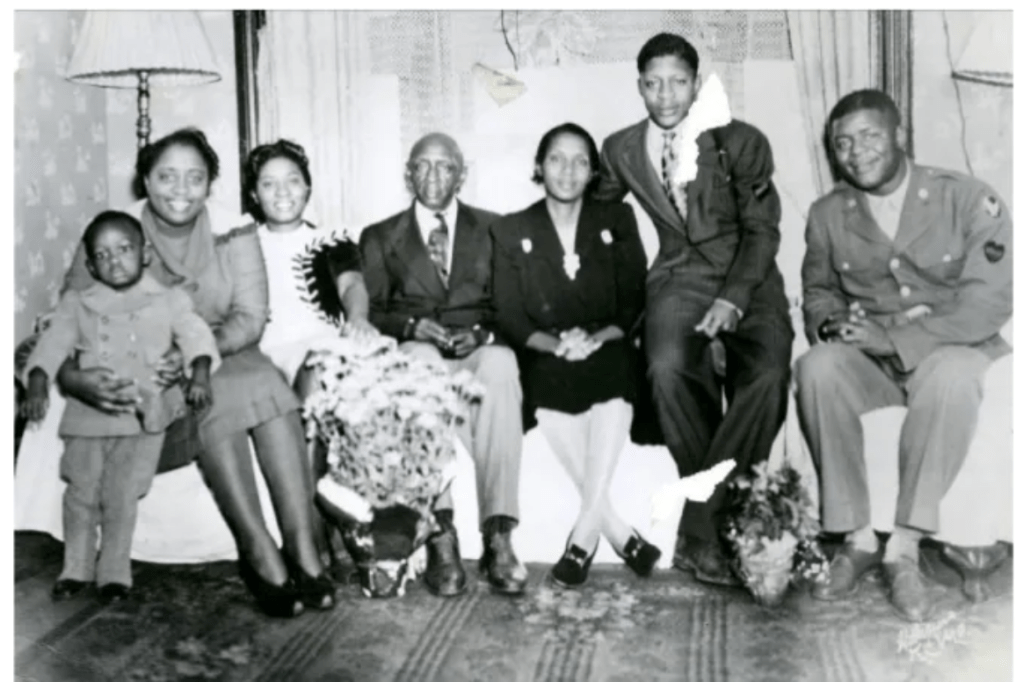
Henry Winston was born in 1911 in Mississippi in the very shadow of the defeat of Black Reconstruction. The lives of Black folk at that time were not that different than during chattel slavery. They had no rights, worked land they could not own, and never rose beyond crushing debt and deep poverty. The working mass of Black folk ultimately constituted a Black proletariat, super exploited and racially oppressed. Many of Winston’s relatives and neighbors had been slaves. His mother headed his family, which included two sisters. Escaping Mississippi, the family moved to Kansas City, Missouri. The poverty and racial oppression of Mississippi followed them, forcing Winston to drop out of school and seek work by going on the road. Amid the collapse of the world capitalist economy and the start of the Great Depression in the 1930’s, Winston found himself part of a generation of young people who were a stranded population; uneducated, unemployed, homeless, hungry and without futures. They were a vast army of the unemployed. They travelled in freight cars, lived in hobo camps on the side of railroad tracks. Of this vast army, many gave up, some turned to crime and hopelessness. Winston found among youth like himself the unemployed movement and the unemployed councils that believed in fighting back rather than giving up. Here he met members of the Young Communist League and the Communist Party. He began to study politics, philosophy and economics. He came to realize that there were few, if any, individual answers for the mass of impoverished and destitute youth, and that struggle was their sole hope. The life lessons Winston learned in his early life would be a compass helping him navigate contradictions and obstacles for the rest of his life.
Winston joined the Young Communist League, rising quickly to become its national organizational secretary. He studied Marxism-Leninism in the Soviet Union at the Lenin School. Here he met communist and revolutionaries from around the world. He saw that the revolutionary process was a world process and the class struggle in the US was part of a vaster struggle that included the anticolonial struggles in Africa, India and China. He learned that the Black struggle was linked to the movements of the darker peoples around the world. More than a decade before Winston arrived at the Lenin School figures like Zhu De, Deng Xiaoping and Zhou Enlai, leaders of the Chinese revolution, Ho Chi Minh of Vietnam, as well as revolutionaries from Haiti, South Africa, and Egypt had attended.
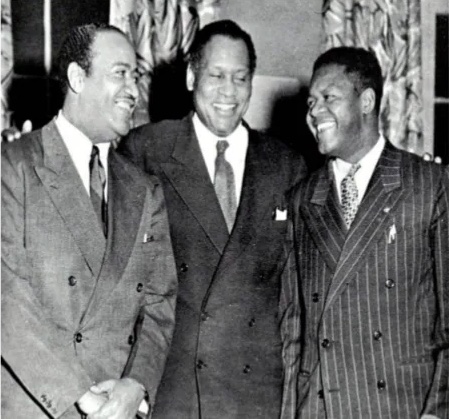
In the throes of the economic collapse, Winston concluded that to prevent another such crisis, and to save the young generation from complete ruin, the system of capitalism had to be replaced by socialism. He believed reforms, like many of those enacted by the Roosevelt Administration, were significant but could not solve the general and intensifying crisis of capitalism. He saw the fight as two sided: for radical democratic, political, and economic reforms under capitalism and for socialism. This was not an academic matter; to be achieved, an alliance of the multiracial working class with the Black Freedom Struggle was necessary. For him the working class could not effectively fight for itself and its class interests if it could not overcome all the elements of ruling class ideology which infected its ranks, first and foremost white supremacy. In this regard, he saw the rise of the Congress of Industrial Organizations (CIO) and the organizing into unions of unorganized workers in the automobile, steel, mining, shipping, electrical and transportation and other industries based on the principle of Black and White Unite and Fight as an important step forward. But the working class must fight all instance of racist terror against Black workers and Black people generally. In the fight against racism, Winston joined the struggle for the freedom of the “Scottsboro Boys”, the nine Black youth charged with raping two white girls on a freight train. Crimes they did not commit. The fight was to save them from being executed and ultimately to win their freedom. This became an international campaign in the fight against US racism and for the rights of Black folk. They were saved from execution but spent long years in prison. For the rest of his life Winston fought for the freedom of political prisoners, highlighted by his leading the struggle to free Angela Davis. During this time Winston joined the Council on African Affairs (headed by the revolutionary and anti-colonialist Paul Robeson) connecting, as he would throughout his life, Black freedom with African independence.
Winston rose quickly in the Communist Party and was elected to its Central Committee. The rise of fascism as a world movement and a threat to democracy and socialism found Winston becoming a fighter against fascism in Europe and in the US. He supported the democratic forces in Spain and defended the Soviet Union when it was attacked by Hitler. After Japan’s attack on the Pearl Harbor, he joined the US navy, which at that time was a completely racist and segregated institution, like all the armed forces.
Winston, like the Communist Party and most progressives, would be tested after the end of WWII. The US rose to be the dominant economic and military power in the world, committed to restoring the global capitalist system, including a new form of colonialism in Asia and Africa. This included a Cold War with the Soviet Union, the buildup of nuclear weapons, war in Korea and attacks upon democratic and civil rights at home. At the same time, a movement from within the Communist party arose to turn it into an association of leftists and, essentially, the leftwing of the Democratic party or something like the Democratic Socialist of America today — rather than a unique revolutionary and independent political party. Winston and others successfully resisted this.

However, figures like W.E.B Du Bois, Paul Robeson and Winston were soon targeted by the US government as foreign agents because of their opposition to nuclear weapons and colonialism, especially in Africa. Winston was indicted, convicted and sentenced to serve six years in federal prison. He lost his sight in prison due to medical neglect.
In prison Winston restudied W.E.B Du Bois’s writings on race, democracy and Pan Africanism. This study would define his theoretical practice for the rest of his life. His search for the essence of the US revolutionary process and its connections to the world’s anticolonial and revolutionary struggles drew him deeper into Du Bois’ writings. He must have certainly been drawn to the chapter in Black Reconstruction in America on the “dictatorship of the Black proletariat in Mississippi,” the state of his birth. Du Bois’s groundbreaking conceptualization that the African slaves were a proletariat further opened scientific possibilities for Winston’s thinking. Certainly, like Du Bois, Winston viewed the colonization and neocolonization of Africa as central to the enormous profits of the West and its financial and industrial corporation and to the stability of the capitalist world system. He viewed Pan Africanism in Du Bois’s articulation as part of the world struggle against imperialism.
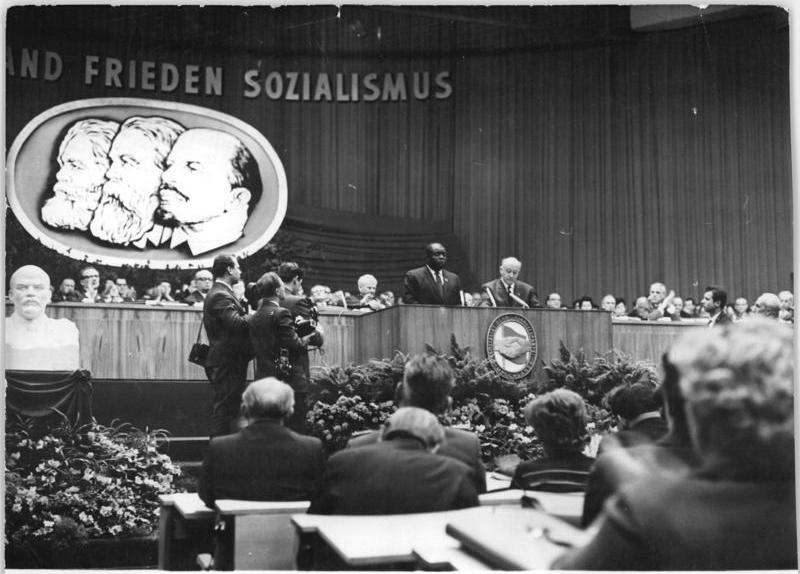

Upon his release from prison Winston threw himself completely into the struggle, rising to be chairman of the Communist Party and a respected figure in the world communist moment. He viewed the world communist movement as the leading force for peace and democracy on a world scale. He sought to link the world communist movement to the broader global struggles, drawing him to the World Peace Council and its leader Romesh Chandra.
Winston viewed the special position of the Black working class in the overall fight for democracy, peace and socialism as the central, leading to his formulation of the centrality of the Black Freedom Movement. The concept of centrality meant that the Black Freedom Movement is part and parcel of every progressive and radical current of struggle in the US. For Winston rather than a separate struggle the Black Freedom Movement was a strategic component of the revolutionary and democratic processes in the US. For him, it stood alongside the class struggle in importance to understanding the essence of the revolutionary process in the US. For this reason Winston fought ideologically against all efforts to diminish the historic role of Black people in the US or the African anticolonial struggle. He was committed to building the Black left within the Black movement and within the general struggle in the US.
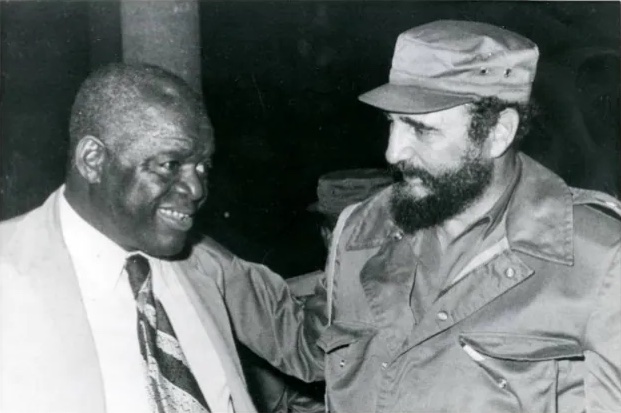
As for Africa, he was particularly concerned with Communist Parties and left and radical movements in Africa. For instance, he had particularly close ties to the Communist Parties of the Sudan and South Africa. He also had close ties to the African National Congress of South Africa and revolutionary democratic parties in Guinea, the People’s Republic of the Congo and Cape Verde and Guinea Bissau. He was particularly close to the Cuban Revolution and its paramount leader Fidel Castro.

Henry Winston’s vision is anchored to his efforts to scientifically understanding the unique essence of the revolutionary process in the United States; its substance and multiple forms. It was his view that such an understanding could ground a practice of unity and struggle against the monopoly capitalist system. This effort found him joining communist theory to Du Boisian theory. These theoretical discoveries ultimately constitute a new synthesis, which advances a practice of unity and struggle in our time.
Henry Winston, as a thinker, is an important contributor to the struggles for peace, democracy and socialism. In two books, Strategy for A Black Agenda and Race, Class and Black Liberation and many essays and speeches; we witness him working out this new theoretical synthesis.
The Saturday Free School organizes this three-day symposium to honor and study the vision of Henry Winston, and to further develop that vision. In this moment of deep crisis for the youth and people, the struggle for ideological clarity is critical. There is, moreover, a pressing need for what Martin Luther King Jr. called a radical revolution of values, to shift the thinking of the youth and people from a thing oriented and materialistic way of viewing the world, to a people and humanity centered way of thinking. Side by side with new values, people’s culture, including music, poetry, novels, dance, films and videos, painting and all forms of culture, has to be created.
What Henry Winston fought to achieve is now passed on to a new generation; a generation that can spare no effort to know the world in order that it might be changed. We are optimistic that the youth and people of the US can achieve the lofty goal of radically transforming our society.
 Avant-Garde: A Journal of Peace, Democracy, and Science
Leave a comment