
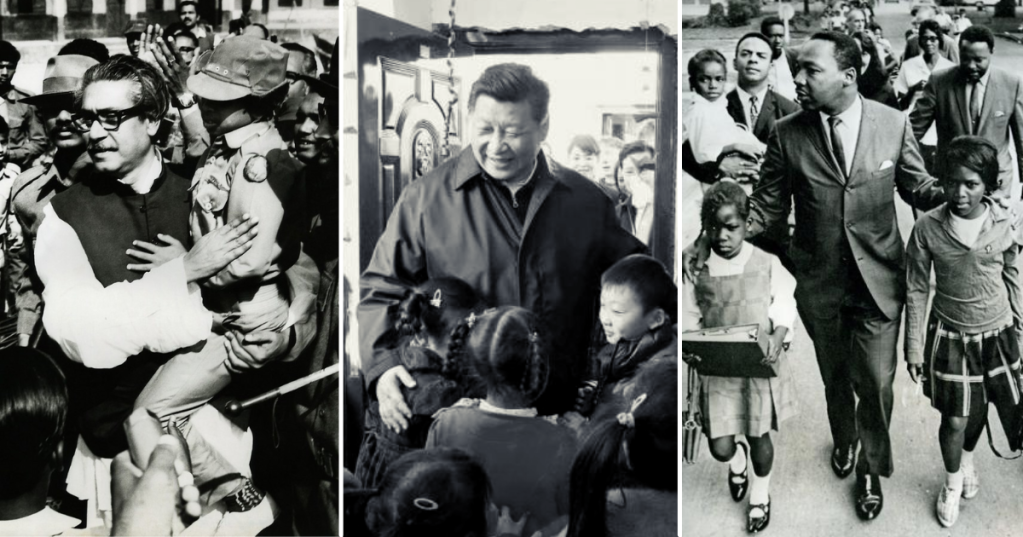
In a world where Asia is rising and the West is in collapse, it is more important than ever to study for our times a leader like Sheikh Mujibur Rahman, whose leadership reflected the aspirations of his people of Bangladesh. Bangabandhu’s dream for Bangladesh until his last breath, a nation free from poverty and war, is inextricably linked to China today, the plight and yearnings of the American poor, and finally of all humanity. Emerging from Sheikh Mujib’s unfulfilled dream, from the rise of China and Asia in partnership with Africa, may be an unfolding fruition of Bandung and the world revolution for peace and democracy that Martin Luther King Jr. hoped America could join.
When China today talks about its goal, it references achieving what Xi Jinping calls the “Chinese Dream for National Rejuvenation.” It’s the dream of building a “moderately prosperous society” after a century of humiliation and economic devastation from semi-colonialism, imperialism, and civil war. In other words, as a primary goal of Chinese socialism, Xi Jinping and the Chinese people are determined to eliminate poverty, defend their self-determination, and develop their country for the betterment of their 1.4 billion people.
Most significantly, this is the dream Xi Jinping explicitly said weaves the people of China and Bangladesh tightly together in friendship and solidarity. In his recent message to the people of Bangladesh to commemorate Sheikh Mujib’s birth and the 50th independence anniversary, Xi said:
“[China and Bangladesh] have supported each other and made progress together. Today, both countries are at a crucial stage of revitalisation and development. The Chinese dream of great national renewal can well connect with the ‘Sonar Bangla’ dream.”
Xi also emphasized that with the Silk Road as our witness, Bangladesh and China’s friendship outlives Europe. Across thousands of years are ancient links of intercivilizational economic and cultural exchange—Buddhism, tea, textiles, porcelain, and philosophy—all which mutually enriched the crystallization of human civilization.
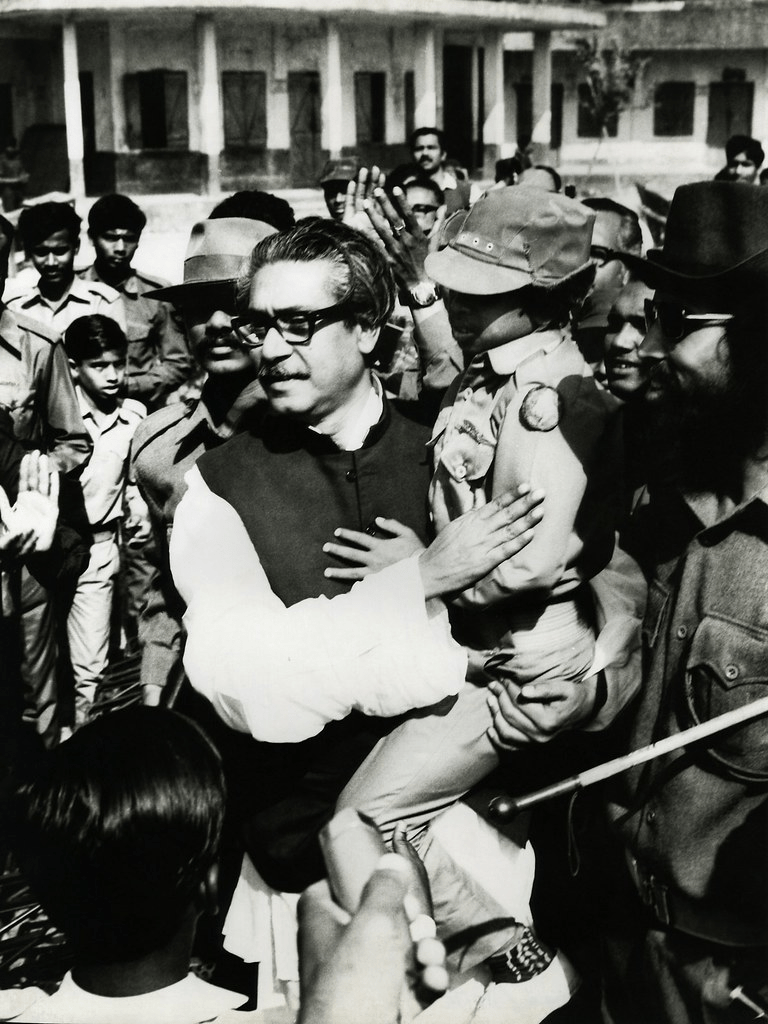
Xi’s reference to Sonar Bangla, Golden Bangladesh, is a reference to Bangabandhu’s enduring dream for Bangladesh, similar to that of the Chinese people in reconstructing their independent nations after Western domination. In his last speech in 1975 before his brutal assassination, Sheikh Mujib described this dream for Bangladesh, one that is still aspired to and in the process of being completed today. It’s a future where the Bengali people are free from hunger and poverty:
“You think we are poor; we will have to sell at the price you set. But this day will not last forever. We the people of Bangladesh, we have land, we have Shonar Bangla, we have jute, we have gas, we have tea, we have forests, we have fish, we have livestock. If we can develop these resources, Inshallah, this day will not last.”
“Without economic independence, political independence is defeated. If suffering people cannot have full stomachs, cannot clothe themselves, if unemployment is not eradicated, peace cannot return to people’s lives.”
Both Sheikh Mujib and Xi Jinping emphasize over and over again how horrible hunger is. They critically understood the first goal of their independent nations as eliminating basic, terrible issues of impoverishment due to centuries of subjugation: unemployment or indecent means of living, hunger, homelessness, and illiteracy. It is why, along with the other independent Asian and African nations who attended the Bandung Conference in 1955, the primary focus of the Communist Party of China’s Five Year plans since its founding has been to permanently lift Chinese people from the most extreme forms of poverty. The Chinese dream and Sonar Bangla are not simply dreams of individual leaders—they are the darker peoples of the world’s universal call for the abolition of war and the abolition of poverty.
In his manuscript Russia and America, W.E.B. Du Bois said these two ideals of abolishing war and poverty unite humanity—in particular the world’s poor, workers, and peasants, from Asia and Africa to America. The Chinese dream and Sonar Bangla are extremely relevant for America’s own people. From China’s announcement in 2020 that it successfully eradicated extreme poverty, to Sheikh Mujib’s Second Revolution to consolidate the state and plan efficiently to feed and clothe exhausted Bengali people, this is what American people crave. Why else do Americans remain skeptical and suspicious of their “democratic” government? Americans wonder why the richest country in the world needs to go $1.9 trillion into deficit to “rescue” its infrastructure.
What China is focused on doing for its people is what the American poor has been calling for and the yearnings that Martin Luther King and the Civil Rights Movement understood. The full title of the famous March on Washington in 1963 is the March on Washington for Jobs and Freedom. Many people forget that King’s famous “I Have a Dream” speech spoke on the devastation America has inflicted on its people by the false promise of the American dream and unfulfilled ideals of the American revolution, especially Black Americans who despite achieving emancipation were not given true freedom from white supremacy, homelessness, and joblessness. King emphasized that all of America, including the whiter workers and other poor, faces the devastation of this unfinished American revolution and unrealized ideals of equality, liberty, and the pursuit of happiness:
“But one hundred years later, the Negro still is not free. One hundred years later, the life of the Negro is still sadly crippled by the manacles of segregation and the chains of discrimination. One hundred years later, the Negro lives on a lonely island of poverty in the midst of a vast ocean of material prosperity. One hundred years later, the Negro is still languished in the corners of American society and finds himself in exile in his own land.”
Today, this American island of poverty may be even larger. It is not just Black Americans on this island but now more than ever white workers whose industries and communities have been gutted and left to die.
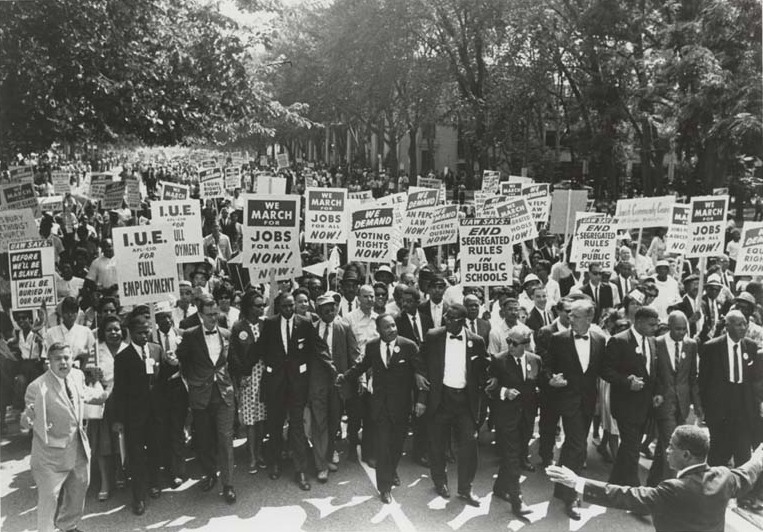
In the same tradition as Bangabandhu, the tradition of world revolution for self-determination and positive peace, King proposed his dream for America:
“We refuse to believe that the bank of justice is bankrupt. We refuse to believe that there are insufficient funds in the great vaults of opportunity of this nation. And so we’ve come to cash this check, a check that will give us upon demand the riches of freedom and the security of justice.”
King’s words have perhaps even more relevance today, showing us our great task of and possibilities for uniting the people of America to each other and to the whole world. They describe the connected grievances and interwoven dreams of working people worldwide: The desire to be free from war, poverty, and white supremacy. And missing today above all is the firm belief of leaders like King, Bangabandhu, and Xi Jinping in the masses of ordinary people, inheriting and carrying deep traditions of humanity, to determine their own destinies and shape history.
Sheikh Mujib and Sun Yatsen, the father of modern China and a leader who inspired Sheikh Mujib, both saw their struggles for freedom as an assertion of China and Bangladesh’s ancient civilizations. They had unwavering confidence in the Bengali and Chinese people, descendants of deep civilizational and folk traditions, to free themselves from imperialism and backwardness and move humanity forward with them.
As Sun Yatsen said, although his Three Principles of the People takes the best of Western revolutionary ideals, such as Abraham Lincoln’s “for the people, by the people, of the people,” he does not see something like nationalism as a Western idea but rather a continuation of Chinese civilization—an independent state of diverse peoples connected by values and history, fighting for sovereignty, ready to be strengthened through economic and cultural exchange as Chinese civilization has done since ancient times, and hopeful to contribute to “the goal of ideal brotherhood”:
“Nationalistic ideas in China did not come from a foreign source; they were inherited from our remote forefathers. Upon this legacy is based my principle of nationalism, and where necessary, I have developed it and amplified and improved upon it.”
Today China is the world’s second-largest economy but will soon surpass the United States. Beyond building its own economy, China under Xi Jinping’s leadership has begun building economic partnerships based on mutuality, most of which are in Asia and Africa. Xi significantly identifies that the Belt and Road Initiative and partnerships such as ASEAN’s Regional Comprehensive Economic Partnership (RCEP) are continuations and renewals of the “Bandung Spirit” and the “Silk Road Spirit”. Xi often references Indian monks Kasyapa Matanga and Dharmaraksa, who traveled to China to translate the Buddhist scriptures into Chinese for the first time; Chinese scholar and monk Xuanzang who made the arduous pilgrimage to India and the West to learn Buddhism; and the great Chinese navigator Zheng He who made seven voyages into the Indian Ocean without ever conquering an inch of foreign land.
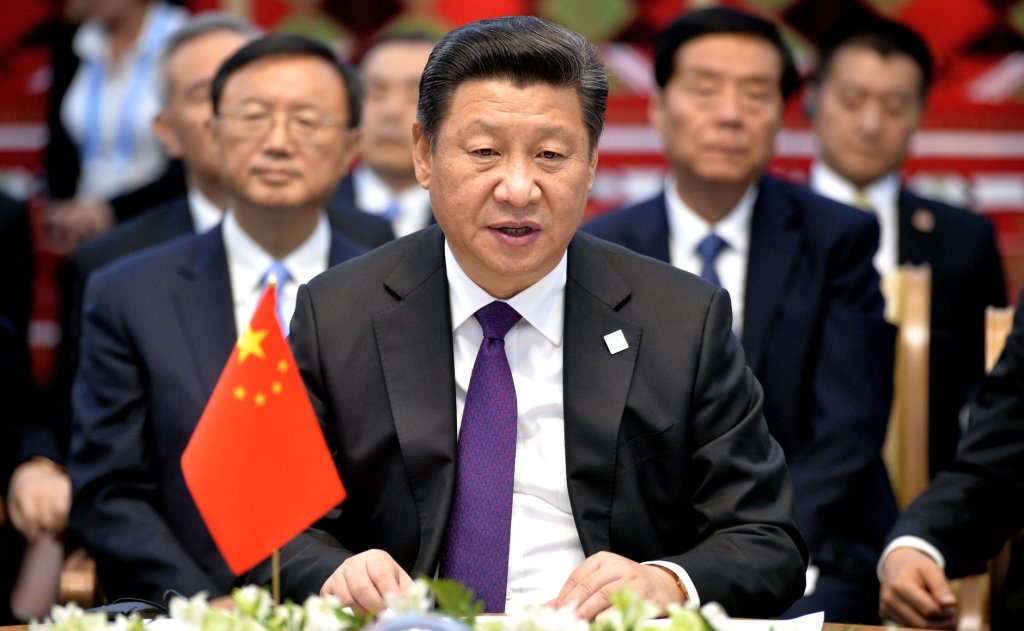
In a dying age of Western civilization, Xi Jinping’s references to ancient examples of intercivilizational unity and exchange as well as Bandung solidarity offer hope for cooperation between Asia, Africa, and the world in the common goal of uplifting mankind. It is in this nexus of Bangabandhu’s contribution to humanity’s freedom and the Chinese dream where the whole world has a way out. As King said, America increasingly has a chance to be on the right side of world revolution—if not for the world’s survival, for its own exhausted and impoverished people. America has an opportunity to fulfill its founding revolution for equality and freedom. Today we have hope that the rule of right, given substance in values and revolution from the East, will prevail over the rule of might and move humanity into a new world.
 Avant-Garde: A Journal of Peace, Democracy, and Science
Leave a comment