

by Brandon Hai Do.

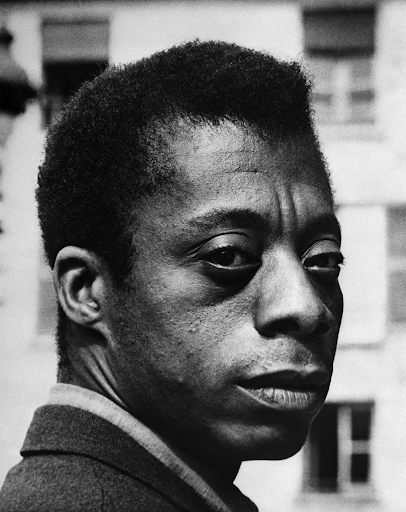

It is popularly argued that men of color are guilty of oppressing their own people. This belief emerges from institutions rooted in the interests of the ruling circles of this country and has produced a disastrous outcome in our very lives. Young people today do not possess a love for one another that has the potential to truly change the foundational values of white supremacy into values that can make peace a reality. Consumed by fear and resentment, we’ve become blinded to our undeniable need for each other. Under the influence of a decadent celebrity culture, our worldview has become foundationally rooted in the desire to become popular. Instead, we must be willing to adopt a set of principles that give us the agency to raise the moral standards of this collapsing society and thus raise more complete human beings.
In “Revolutionary Hope”, a conversation between James Baldwin and Audre Lorde published in 1984, Lorde criticizes black men for oppressing black women. Lorde, the celebrated black feminist of the Combahee River Collective, claims that black men are to blame for “black women’s blood flowing in the streets”. She makes the argument that black men have the same power over black women as white men, thus deeming black men a liability to black people’s collective struggle for freedom. Lorde chastises black men for their situation in America, creating the conditions for black men and women to blame each other for the crimes inflicted on their community.
On the other hand, Baldwin understands how poverty and racism dictates the lives of black men and crushes their potential. He argues that society debases black men to neutralize their capacity to subvert the system of white supremacy and that this inevitably plays a role in the debasement of black women. While he acknowledges that there are problems between black men and women, he asserts that the handling of differences between them should not come at the cost of leaving the U.S. empire unchecked. Furthermore, they cannot be resolved without first questioning and picking apart the foundational notions of the system of white supremacy. Upon Lorde’s accusation, Baldwin rebuttals, “I’m not trying to get the Black man off the hook – or Black women, for that matter – but I am talking about the kingdom in which we live.”
Men of color must reject the values of white manhood and strive toward exemplifying a new manhood that is foundationally rooted in love for humanity. But how do we make a clearer path toward this moral choice? How do we encourage a more positive approach toward men that inspires endless growth rather than a stagnating guilt?
For a deep fundamental transformation in men to take place, we must call into question our identity as racialized and oppressed men in a white-dominated society and reflect honestly on the lives we live. Then we can make the choices that will shape us into fuller beings capable of contributing toward a more promising human future. To have a strong grasp of the question of manhood in America, we must analyze what manhood means in the white world and how it has been redefined through the ideological framework of James Baldwin’s understanding of the Black Freedom Movement. This way, we can begin to develop a criteria for what being a man ought to mean. Thus, laying the foundation for who we ought to become.
The Assault Against Black Men
The truth about the black man as a historical entity and as a human being has been hidden from him, deliberately and cruelly; the power of the white world is threatened whenever a black man refuses to accept the white world’s definitions. So every attempt is made to cut that black man down — not only as made yesterday but is made today.
— “The Fire Next Time”, James Baldwin
The issue of manhood does not only have to do with men. At its core, it is inextricably bound to the future of the world and especially children. And so, as we examine the condition of men in society, it is important to understand that we are also examining the condition of humanity.
Black American men are the most marginalized demographic in the United States. They are among the lowest earning group and the least likely to rise out of poverty among males in this country. Despite black people being only 13% of the U.S. population, black men make up the majority of the prison population and are the most unemployed demographic. This high rate of poverty and incarceration among black men has greater implications on the state of the black community as a whole, who are also the poorest racial group in the United States.
Consequently, black children are thrown into insufferable realities. This is evident in majority-black cities like Philadelphia, where the rate of child hunger has risen 300 percent in ten years, and in 2020, had the second highest number of homicides in the country. In terms of the black family, the incarceration and impoverishment of the black father is not only a financial loss, but a moral loss which puts the freedom, dignity and future of the family in danger.
Examples of revolutionary manhood today are scarce, but we can find them through studying the Black Freedom Movement. In his autobiography, “Revolutionary Suicide”, Huey P. Newton, a co-founder of the Black Panther Party, writes of his father’s deep influence on his family growing up in Oakland:
As an adult he never let a white man humiliate him or any member of his family; he kept his wife at home, even though whites in Monroe, Louisiana, felt she should be working in their kitchens, and made that plain to him. He never yielded, always maintaining his stand as a strong protector, and he never hesitated to speak up to a white man.
My father’s pride meant that the threat of death was always there; yet it did not destroy his desire to be a man, to be free. Now I understand that because he was a man he was also free, and he was able to pass this freedom on to his children. No matter how much society tried to steal our self-esteem, we survived on what we got from him. It was the greatest possible gift. All else stems from that. This strong sense of self-worth created a closeness among us and a sense of responsibility for each other.
The moral leadership of Huey’s father protected him and his brothers and sisters from a humiliating erosion of self-confidence which happens so often to black children. Witnessing their father stand up to white men gave them a sense of pride and agency over the direction of their lives. The model of manhood he provided for his children and wife allowed them the freedom to reimagine themselves as people capable of overcoming the challenges of living in a white-dominated world. His leadership meant that even though they lived in poverty, there was still possibility for a better tomorrow.

The social system of white supremacy emasculates black men from assuming the role of a protector in order to brutalize their women and children. Incarceration, poverty, and a poor education makes it almost impossible for a man to take up his responsibility to defend his family the way Huey’s father did. The culture of American society humiliates black men, nullifying their influence within the household. This leaves black women and children susceptible to the physical and psychological violence of white men. In “No Name in the Street”, James Baldwin describes:
In the case of American slavery, the black man’s right to his women, as well as to his children, was simply taken from him, and whatever bastards the white man begat on the bodies of black women took their condition from the condition of their mother: blacks were not the only stallions on the slave-breeding farms! And one of the many results of this loveless, money-making conspiracy was that, in giving the masters every conceivable sexual and commercial license, it also emasculated them of any human responsibility—to their women, to their children, to their wives, or to themselves.
How the emasculation of men of color is furthermore a way white inhumanity forges a path toward the degradation of non-white women is examined in “Women, Race, and Class”, where Angela Davis exposes the motive behind the white American soldiers that raped the heroic Vietnamese women who fought side-by-side with their men to defend the Vietnamese people’s struggle for independence.
It would be a mistake to regard the institutionalized pattern of rape during slavery as an expression of white men’s sexual urges, otherwise stifled by the specter of white womanhood’s chastity. That would be far too simplistic an explanation. Rape was a weapon of domination, a weapon of repression, whose covert goal was to extinguish slave women’s will to resist, and in the process, to demoralize their men.
These observations on the role of rape during the Vietnam War could also apply to slavery. In Vietnam, the U.S. Military Command made rape ‘socially acceptable’; in fact, it was unwritten, but clear, policy. When GIs were encouraged to rape Vietnamese women and girls and they were sometimes advised to “search” women “with their penises” a weapon of mass political terrorism was forged…
In the same way that rape was an institutionalized ingredient of the aggression carried out against the Vietnamese people, designed to intimidate and terrorize the women, slaveowners encouraged the terroristic use of rape in order to put Black women in their place. If Black women had achieved a sense of their own strength and a strong urge to resist, then violent sexual assaults—so the slaveholders might have reasoned—would remind the women of their essential and inalterable femaleness. In the male supremacist vision of the period, this meant passivity, acquiescence and weakness.
Here, Angela Davis’ draws parallels between the rape of enslaved african women and Vietnamese women. The white imagination seeks comfort in men and women of color who see themselves as victims and lack the courage to defend the integrity of their people against the assault of racism. Any man or woman who stands up to white power and refuses to live in the image of a morally defeated slave must be crucified for the system of white supremacy to remain functional.
Western powers implemented rape as a weapon in their wars of expansion to destroy the fighting spirit of proud African and Asian women who bravely defended their men, their children, and the sovereignty of their civilization against white invaders. Therefore, the fate of men and women are undoubtedly intertwined and any attempt to place the blame on one gender is a detriment to the freedom of oppressed people and a justification of war.
Today, in the wake of the police killings of black men, activists have called for justice for the murders of black trans women and the oppression of black women. The call to center the oppression of black women and black trans women at the hands of black men is a veiled attack on black people at large and works in the interests of institutions that profit from the destruction of working class black communities.
By accusing the black man — whose role is to protect the black family — of being an oppressor without offering them a positive way forward, the weaponized identity politics of Lorde and the queer movement fails to offer a new possibility for black people. This attack is intensely waged against the black poor most often by public intellectuals and celebrities who align their political positions with the politics of state.
When put into practice, this cowardly pessimism leaves black youth defenseless to the cruel onslaught of white supremacy that manifests itself in the moral destitution, violence, and extreme poverty we see in black communities today. Evidently, Audre Lorde and other feminists see working class black men the same way the white world sees them as– what Hillary Clinton called, “Super Predators”.
A revolutionary human solidarity which cultivates positive change is grounded in Baldwin’s belief that “our real responsibility is to endlessly redefine each other. I cannot live without you, and you cannot live without me – and the children can’t live without us”.
The Foundational Notions of White Manhood
At the heart of racism is the idea that a man is not a man.
Reverend James Lawson
Institutions of the ruling class obscure the fact that this society was created in the interests of white men at the expense of darker men. In “Revolutionary Hope”, Audre Lorde fails to reimagine a new relationship between black men and women that unites them against white supremacy. She lets white supremacy off the hook by placing the blame for the problems of the black community on black men rather than holding white men and the black misleadership class responsible for their stake in the degradation of darker people through war and world-scale theft.
White men inherit the racialized social system of America from Europeans who created it through the enslavement of black people. White supremacy is designed to subjugate black people to lives of indignity so that white men can remain the beneficiaries of whiteness: a status which gives them access to material wealth and the upperhand in society of self-identifying as “white”. But this gift is in actuality a curse, and in fact, turns white men into “moral monsters”. James Baldwin writes in “Being White and Other Lies”:
this cowardice, this necessity of justifying a totally false identity and of justifying what must be called a genocidal history, has placed everyone now living into the hands of the most ignorant and powerful people the world has ever seen. And how did they get that way? By deciding that they were white. By opting for safety instead of life. By persuading themselves that a black child’s life meant nothing compared with a white child’s life. By abandoning their children to the things white men could buy. By informing their children that black women, black men, and black children had no human integrity that those who call themselves white were bound to respect. And in this debasement and definition of black people, they debased and defined themselves.
And have brought humanity to the edge of oblivion: because they think they are white. Because they think they are white, they do not dare confront the ravage and the lie of their history. Because they think they are white, they cannot allow themselves to be tormented by the suspicion that all men are brothers.
Baldwin reveals the condition of American men who need to debase other men to feel more manly. He asserts that men who degrade the duty of other men to defend their families and their people consequently descend into moral erosion. And by defining themselves as the beneficiaries of the inferiority of others, this in turn makes them inept lovers toward their wives and incompetent fathers to their children.
Illustrating the failure of white men to come to honest terms with their history and trajectory, Baldwin reveals how this cowardice leaves them without a basis to connect themselves with the rest of humanity. The white model of manhood teaches men to carelessly disregard the well-being of others and commit acts of degradation as a means to uphold their sense of self. This abdication from a man’s responsibility to protect and love is the core foundational notion behind all of the wars waged by the United States, the greatest force of destruction in the world.
Fighting for Universal Brotherhood
By having no family,
I inherited the family of humanity,
By having no possessions,
I have possessed all.
By rejecting the love of one,
I received the love of all.
By surrendering my life to the revolution,
I found eternal life.
Revolutionary Suicide.
— Huey P. Newton
In “Where Do We Go From Here”, Martin Luther King Jr. poses the question: “Do we have the morality and courage required to live together as brothers and not be afraid?”. As opposed to white manhood’s need to debase and emasculate other men, the role of manhood as defined by the Black Freedom Movement is for men to honor and cultivate in other men the desire to strive for a life that puts into practice the principles of justice and peaceful coexistence. All in all, it is to endow future generations with the responsibility of raising a world that is deserving of humanity.
Therefore, men must be willing to challenge the world’s greatest force of destruction: the war machine of U.S. imperialism. As seen with the catastrophic consequences of U.S. interventions in Syria, Libya, Iraq, and Afghanistan, wars eliminate the possibility of a better tomorrow and violently divide the people of peaceful civilizations by religion and ethnicity. For this reason, when one takes a stand against war, this inseparably means that he is building a more solid foundation for a future that seeks to establish love and kinship between all people.

In an open letter to Muhammad Ali , Huey P. Newton writes that Ali refused to “compromise black manhood” by refusing to fight for America against the Vietnamese people waging their struggle for independence. Although the boxing commission suspended him from the sport for three years during the prime of his career, Huey makes the principal argument, “They immobilized you as a boxer for three years, but they did not immobilize your mind nor your spirit”.
Muhammad Ali’s courage gave other black men the freedom to maintain their dignity by refusing to serve in this American war of aggression and extending a hand of solidarity to the Vietnamese people. In denouncing U.S. aggression in Vietnam, he defended both the children of black america being bombed in churches and the children of Vietnam who were napalmed by the United States military.
In James Baldwin’s monumental essay, “Take Me to the Water”, he tells the story of his experiences in the South during the struggle against segregation. Making his journey in 1957 in the midst of widespread poverty, segregation, and white supremacist violence, he finds himself in the “teeth of southern terror”. Seeing the contradictions of American society and coming face to face with the question of how manhood should be defined, he writes, “One could not be in any Southern community for long and not be confronted with the question of what a man is, should do, or become.” It is here that he bears witness to the heroism of the black men who were waging a battle against the enforcement of the evil laws of Jim Crow.
The example of a combined courage and deep love for people lives in James Baldwin’s moving depiction of his interaction with Reverend Fred Shuttlesworth, one of the great leaders of the Civil Rights Movement at a time when Shuttlesworth was “a marked man” in Birmingham, Alabama. Despite his life being threatened by white supremacists who had already bombed his home, he exemplified a manliness rooted in love for all. He, like many men of the Black Freedom Movement, defended peace and refused to abandon his principles in the heat of battle.
What leaves a great impression on Baldwin is the way the Reverend carries himself behind closed doors, away from the public eye. Upon meeting Reverend Shuttleworth late at night in an Alabama motel, Baldwin notices him constantly checking the window facing the parking lot to spot anyone attempting to plant a bomb on his car. When Baldwin asks Shuttlesworth about his well-being, the Reverend “smiled as though I [Baldwin] were a novice, with much to learn, which was true, and as though he would be glad to give me a few pointers, which, indeed, not much later on, he did.” Baldwin further observes and concludes:
There was no hint of defiance or bravado in his manner. Only, when I made my halting observation concerning his safety, a shade of sorrow crossed his face, deep, impatient, dark; then it was gone. It was the most impersonal anguish I had ever seen on a man’s face. It was as though he were wrestling with the mighty fact that the danger in which he stood was as nothing compared to the spiritual horror which drove those who were trying to destroy him. They endangered him, but they doomed themselves.
Reverend Shuttlesworth encapsulated the heroism of southern black men who bore the burden of their cross. He came to terms with his responsibility to fight for the truth and this ultimately made him at peace with death. Consumed by his love for mankind, he was willing to sacrifice his life to give the people the agency to fight for their freedom.
The common thread between all of these men, including Baldwin, is that they sacrificed their personal comfort to give the people the consciousness they needed to set themselves free. They teach our generation to prioritize principles over popularity, and in doing so, upholding the strivings of oppressed people. When this approach to self sacrifice is made a daily mantra, it brings to life a more complete understanding of what Martin Luther King Jr. said: “injustice anywhere is a threat to justice everywhere. We are caught in an inescapable network of mutuality, tied in a single garment of destiny. Whatever affects one directly, affects all indirectly”. In a society where manhood is associated with violence and the disregard for others, young men of our generation must follow the tradition of the Black Freedom Movement to mold themselves into contributors toward world peace.
Raising Our Future
The institutions of American society responsible for designing weapons used to murder darker people in African and Asian nations and the displacement of black people from their communities are invested in pushing the agenda of Audre Lorde. Her politics which stem from the pessimistic ideology of postmodernism, queerness and feminism — all inventions of the elite — are a barrier to forming a unified movement against racism, war and poverty. Her argument in “Revolutionary Hope” aims to nullify black women in the struggle for freedom and encourages them to abandon their duty to exemplify a revolutionary motherhood anchored in the aspirations of the black working class. Her ideology distorts our understanding of the system by making black women’s freedom an issue unto itself rather than an issue concerning the black community at large and its relation to the Western world. Within the scope of her imagination, neither men nor women can redefine themselves beyond the values that the white world imposes on them — which is precisely what the ruling class wants so that they can remain the beneficiaries of war and hunger.
Furthermore, the ruling class attempts to disarm Baldwin’s impact on the youth by praising him as a fragile and traumatized “queer” man — an assumption thrown upon his reputation which he repudiated during his lifetime. Public intellectuals who seek acceptance from the establishment have sided with Lorde upon the resurfacing of “Revolutionary Hope”, concluding that Baldwin was a misogynist. However, understanding the important role of black men as demonstrated throughout the course of history, we can conclude that her stance against black men is as anti-black-women as it is anti-black-men, and at its core, anti-black-people. In reforming racism, Audre Lorde and those who share her politics are ironically using the “master’s tools” to re-decorate the master’s house.
Through the ideological framework of James Baldwin, we learn that the legacy of the Black Freedom Movement bestows upon all men the responsibility to reject war while striving for peace and familial solidarity. Unlike the self-congratulatory and cynical social justice movements of today, their humility speaks to an impenetrable faith in ordinary people. Now, more than anything, we need the courage and clarity Baldwin gives us to put humanity before ourselves.
Many young men live in fear over the uncertainty of what will become of them and what will become of the world. Perhaps this fear exists because we have yet to realize that the world needs our moral commitment to make it a place where purpose can be discovered and dreams can be fulfilled. The basis of our new identity must be founded upon James Baldwin’s heroic declaration, “every bombed village is my hometown.” Only then can we begin to truly live for our future.
References
- Revolutionary Hope, James Baldwin and Audre Lorde
- No Name in the Street, James Baldwin
- Being White and Other Lies, James Baldwin
- The Fire Next Time, James Baldwin
- Revolutionary Suicide, Huey P. Newton
- I Am A Man: Dr. King & the Memphis Sanitation Strike

 Avant-Garde: A Journal of Peace, Democracy, and Science
Leave a comment