
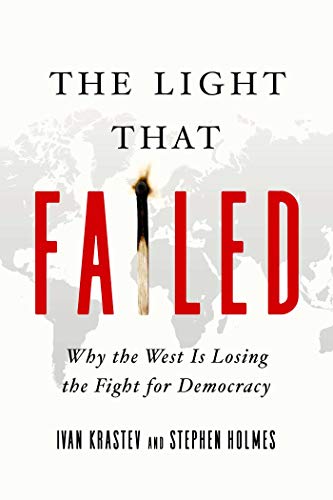
A review of ‘The Light that Failed’ by Max Gaeta.
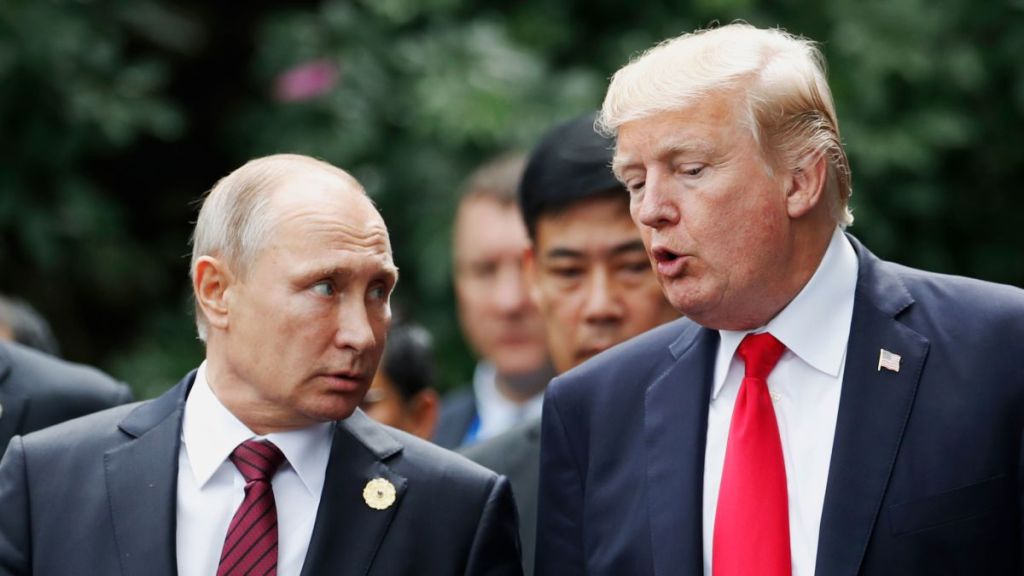
As November approaches, rumors of Russia’s involvement in the 2020 elections are a daily point of discussion in the news. References to Vladimir Putin as a “dictator” or a “threat to democracy” are nearly as common, and an already desperate Democratic Establishment seeks to project the pervasive distrust in their party onto Russia by smearing Trump as a satellite of Putin. This fear of Russia dates back to the days of the Cold War, but it’s not simply Russia that Americans fear. It is a much deeper anxiety over the undeniable decline of America and the West’s sinking place in the global order.
The authors of The Light that Failed try to make sense of the West’s current decline amidst the rise of China as a serious economic rival and the recent wave of anti-liberalism that has spread across Eastern Europe and the United States. They show us how the failings of liberal democracy over the past three decades have caused great damage to the world and why Putin is deeply admired in Russia but demonized in America. They refer to the post-Cold War decades as the “Age of Imitation,” an era of unipolar domination in which countries around the world modeled their government, economy, and way of life in the image of Western powers.
The book develops an understanding of the prevalent anti-liberalism of today by linking Trump, Putin, and Viktor Orbán as a part of a broader movement against the Western elite. This rebellion is clear in Eastern Europe, where following the collapse of the Soviet Union, Western-style democracies were thrust upon the previously communist governments and Western values were imposed on its people. These new liberal governments gave the illusion of self-governance and the promise of material security, but were in reality controlled by Western bureaucrats and financial institutions who arrogantly celebrated the victory of democracy while enacting destructive economic and political policies from afar. The authors, Krastev and Holmes, explain how Eastern Europeans have grown resentful from living under this faux-democracy, making them feel powerless and inferior to those in the West, ultimately giving rise to anti-liberal leaders like Orbán in Hungary and Jarosław Kaczyński in Poland.
In Russia however, the years following the collapse of the Soviet government took on a different form. The authors point out how up until its dissolution, the Soviet Union was the greatest economic and ideological enemy of the United States, yet almost overnight it no longer served as a rival but instead a serious candidate to further the spread of Western democracy. For the first decade after, Russia experienced a severe economic and psychological depression during which the West carried out its signature “shock therapy” in an attempt to transform Russia into a subservient power and further the plight of the Russian people. This changed at the 2007 Munich Security Conference, when Vladimir Putin highlighted the hypocrisy of the Western powers and declared that Russia would pursue its own path and no longer take its authority from the West. Krastev and Holmes argue that after this decisive moment, Russia has since acted as a “mirror” to the West — mocking its foreign policy, meddling in elections, and ultimately exposing the dishonesty, violence, and narcissism of Western democracy.
The authors judge that these sentiments in Eastern Europe are not so different from the ones of Trump and his supporters in the United States, arguing that the election of Trump is the working class’ response to the arrogance of liberal elites who have reaped the benefits of their labor and are most responsible for the poverty and suffering of millions of Americans. Trump isn’t supported simply because he normalizes unpopular (among liberals) views, but because he poses a direct opposition to the war-mongering ruling class, and many Americans would prefer his lack of decorum to the grave indifference of the Democratic Establishment. In a time when most liberals reduce Trump and his supporters to mere racists and bigots, Krastev and Holmes show a level of reflection rarely seen in today’s discourse.
Furthermore, the authors show that Trump is a “disruptor” to the American Empire saying,
“He has explicitly renounced, as no previous American President ever has, the deep-seated American belief that the United States has a historical mission to teach the inhabitants of foreign countries about how to organize their societies and live their lives.”
While the reasoning behind Trump’s decision making isn’t fully clear, his presidency certainly represents a deviation from the normal imperialist order. For example, there have been rumors about Trump pulling out of NATO — which was exerting immense pressure on Russia — yet this is framed by the American media as a move that surely must be influenced by Putin. In fact, it seems most actions of Trump that contradict the interests of the ruling class are denounced as an act of Russia. However, the decline of the American empire is not just in the best interests of Putin, but an entire oppressed world that is sick of the centuries of exploitation and violence carried out by the West.
In the final chapter, Krastev and Holmes declare that “the rise of China marks the end of the Age of Imitation because Xi sees the future of global competition with America through purely military and strategic lenses.” The Age of Imitation may be over, but the nature of this confrontation between the West and China is still to be determined. China is nonetheless providing a vital alternative to nations who have the opportunity to look East for support instead of relying on a decaying Western world for their livelihood.
Trump, Putin, Orbán, and Xi Jinping are all part of a cosmic shift towards a world without the domination of the West. This book correctly examines and mourns the failures of liberal democracy after the Cold War, however it is ultimately trapped in trying to save a system that contains no path towards peace and human progress. It succeeds in analyzing many of the failures of liberal democracy in Eastern Europe over the past thirty years and gives a different perspective on why Putin or Trump are popular. However, the spread of liberal democracy failed not only because the Western powers were too arrogant and lacked self-critique, but because it is impossible to imitate a model that has never taken the idea of democracy seriously. The West was never a light of hope — it has represented the suffocating darkness of oppression for the billions that suffered under its slavery and colonialism, and we can no longer follow a dying ember that cannot lead us towards a brighter future.
 Avant-Garde: A Journal of Peace, Democracy, and Science
Leave a comment