

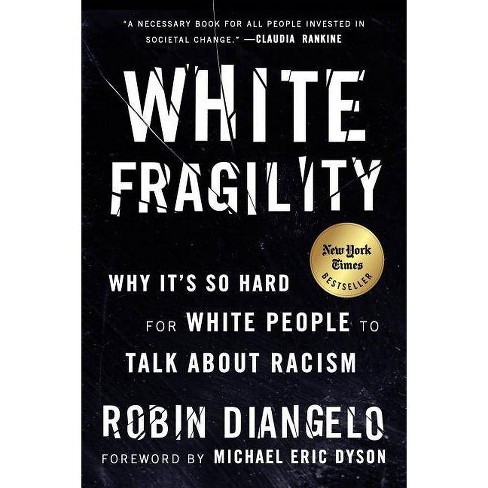
As an architect of the early church, the Apostle Paul was primarily concerned with the human endeavor of building an institution that would last. In her book White Fragility, Robin DiAngelo functions as a kind of distorted Paul-like figure who aims to protect the ruling institutions of white America by targeting the hearts and minds of those who are “included” within them.
This is an enormous tragedy because we have, in our history, examples of figures like Martin Luther King Jr. who took up the spirit of Paul and sought to establish a new moral basis upon which America could be rebuilt. The vast gulf separating a work like “Letter from Birmingham Jail” and White Fragility must be understood, then, as the contradiction between the freedom fighter who struggles to transform society, and the obscurantist who repackages the ideology of the ruling elite.
Although White Fragility was published before the coronavirus pandemic, it is important that the book has enjoyed its highest levels of publicity in the past several months, when Western societies – the United States especially – have been wracked with their worst crisis since the Great Depression. Given that the professional classes of America are being forced to question the purpose of their lives and careers now more than ever before, White Fragility is not simply a reflection of the crisis, but offers a psychological way out of the chaos for certain sections of our society.
To be clear, whiteness is the problem at the heart of our crisis. It is the source of the stubbornness with which so many Americans refuse to accept the fact that we, as a nation, have no moral authority which the rest of humanity ought to respect; and that if we currently feel disgraced on the international stage, this says less about Donald Trump than it does about our own blindness to the wars and devastation we have waged throughout the world. However, any attempt to deal with a crisis must begin with an honest, concrete assessment of the forces involved. In that sense, White Fragility takes place in a bizarre, upside-down world that is utterly disconnected from reality. No matter how many times she mentions class, colonialism, and segregation, DiAngelo is ultimately speaking to a specific subset of white collar professionals who comprise the unnoticed infantry of American imperialism and inequality. Within this sphere, DiAngelo continually describes the unwillingness of whites to acknowledge their racial privilege and complicity in oppression. Visit any major university or company in America, and you will find the exact opposite: rooms full of upwardly mobile white people who self-flagellate over their white privilege at every opportunity, who continually confess the ‘harm’ they have committed against people of color through unconscious acts of insensitivity.
The pseudo-sociological framing of White Fragility offers the clearest sign that the book’s intended audience is corporate, upper-middle-class America. The central concept of ‘white fragility’ is premised on DiAngelo’s observations from her own work as an ‘anti-racist consultant’ for various companies. White Fragility’s Introduction begins with an anecdote from a workplace anti-racism training led by DiAngelo and another consultant. DiAngelo presents a “definition of racism that includes the acknowledgment that whites hold social and institutional power over people of color,” upon which a white man erupts in anger: “A white person can’t get a job anymore!” Similar anecdotes and quotes appear ad nauseam throughout the book.
Simply stated, the concept of white fragility refers to white people getting defensive when they are called racist or informed that their behavior is racially biased because they are white. It only takes a few pages for DiAngelo to convey this, and she devotes the rest of the book to repeating the same essential concept with slight variations, in a tone that is intended to sound coolly unsentimental but comes off as smug and patronizing.
And yet, repetitiveness and tone aside, White Fragility is remarkable for what it attempts to conceal, deflect, and ultimately justify. DiAngelo takes up an admittedly serious project by stating that her aim is to help make white people see that they are not isolated individuals but agents of history whose identities have been shaped by whiteness. She even goes so far as to invoke revolutionary thinkers like James Baldwin and W.E.B. Du Bois, who probed the depths of whiteness in its ideological and civilizational dimensions. She includes compelling quotes like, “There isn’t a Negro problem; there is only a white problem,” by Richard Wright. The only problem is that these invocations are empty gestures; DiAngelo’s primary frame of reference comes not from the Black Radical Tradition represented by Du Bois and Baldwin, but from identity politics, the anti-Trump movement, the nonprofit complex, corporate consulting, academia, and the liberal literary circuit. DiAngelo’s references to Baldwin, Du Bois, King, and the Civil Rights Movement are not merely an instance of a liberal co-opting radical politics; White Fragility constitutes a clumsy, yet potent attempt by the ruling class to further confuse and divide the American people by superimposing two ideological traditions that are absolutely opposed to each other.
Conservative writer Ross Douthat notes that New York Times bestsellers like DiAngelo’s White Fragility and Ibram X. Kendi’s How to Be an Antiracist are canonical texts for an emerging ‘successor ideology’ that has gained immense traction among younger white people, “for whom it seems to supply a substitute for the structures of civic and religious meaning that their baby boomer parents overthrew.” To any person who grew up in the church, these books are reminiscent of the style of admonishment and moral correction practiced by particularly pious pastors or congregation members. But the crusading ideology perpetuated by White Fragility must be seen as far more powerful, at this point, than any church. White Fragility is used as a resource by Fortune 500 companies. The Bible is not. While millions of Americans face poverty, unemployment, homelessness, and hunger, members of the professional class are being trained to find new meaning for themselves in the doctrine of anti-racism by calling out problematic behavior and confessing to their privilege. Young, college-educated people, white or otherwise, are given a sense of moral righteousness to attack their parents and the nation’s unenlightened “deplorables” while they climb the ranks of elite institutions, NGOs, and corporations.
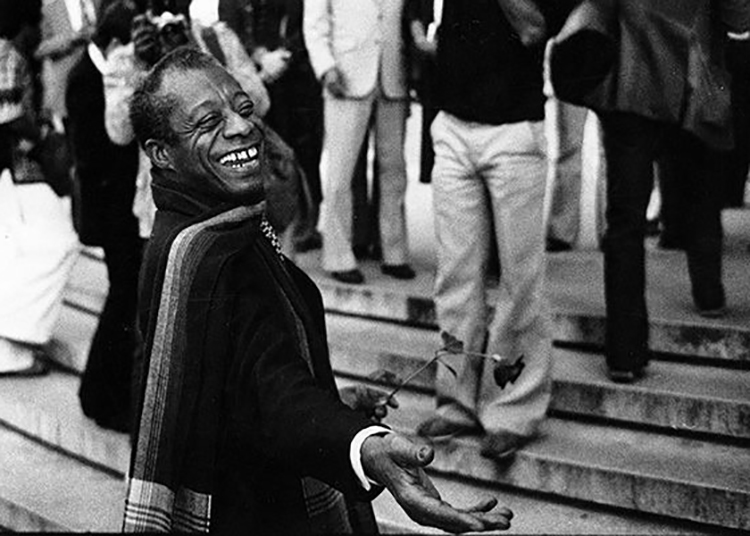
DiAngelo asserts that “White is a false identity, an identity of false superiority.” Simultaneously, she writes in the Author’s Note: “This book is unapologetically rooted in identity politics. I am white and am addressing a common white dynamic.” You cannot have it both ways. If whiteness is a false identity, then it cannot be understood on the basis of modern identity politics, which itself emerged as a reaction to the conservative white identity politics of the 1970s and 80s. Rather than indulging one’s personal guilt by calling out microaggressions or joining a racial justice nonprofit, any attempt to address whiteness must be guided by the thought of a figure like James Baldwin, whose understanding of white people was rooted in his genuine commitment to creating a new society as part of the long tradition of the Black freedom struggle:
“I cannot accept the proposition that the four-hundred-year travail of the American Negro should result merely in his attainment of the present level of the American civilization… White people cannot, in the generality, be taken as models of how to live. Rather, the white man is himself in sore need of new standards, which will release him from his confusion and place him once again in fruitful communion with the depths of his own being. And I repeat: The price of the liberation of the white people is the liberation of the blacks—the total liberation, in the cities, in the towns, before the law, and in the mind.”
Our failure to take the freedom fighters of the past seriously – the fear which prevents us from forging a new human identity that transcends whiteness – is not reflected in the election of Donald Trump, as Robin DiAngelo would have us believe. It is reflected in the dizzying hall of mirrors which now traps the guilty American conscience, that strange wasteland where anti-racism has become the new gospel of white supremacy.

 Avant-Garde: A Journal of Peace, Democracy, and Science
Leave a comment